Tshisekedi’s 3rd term long game pays off as court backs referendum law
While the Constitution still limits presidents to two terms, the ruling has reignited fears of a constitutional overhaul, deepening political divisions and raising fresh questions about the future of democracy in Africa's largest francophone nation.

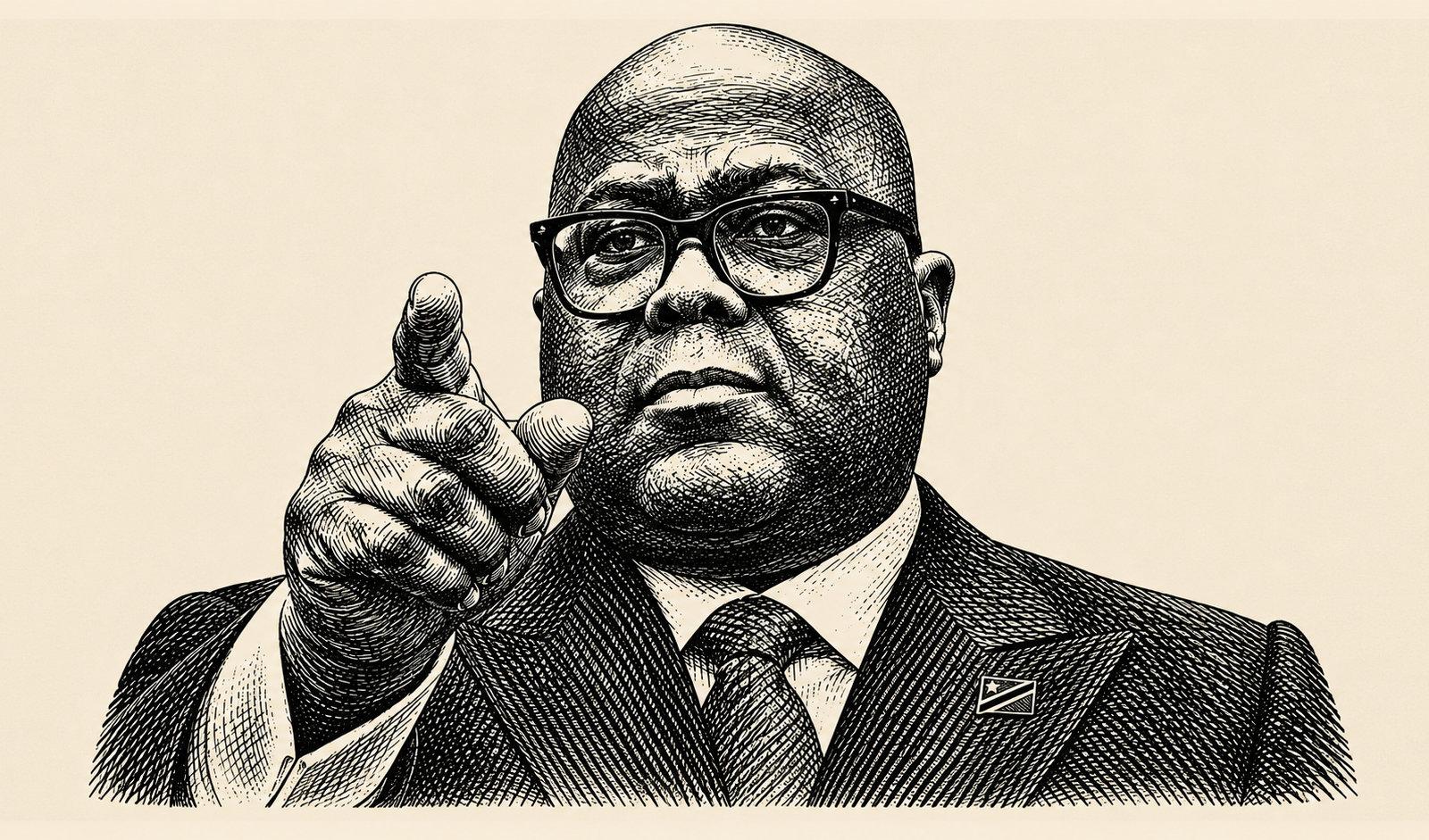
A ruling by the Democratic Republic of Congo’s Constitutional Court has approved legislation governing constitutional referendums, opening the door to reforms that could allow President Félix Tshisekedi to seek a third term in office.
For months, it has been the question hanging over Congolese politics. Now it has taken a decisive turn.
On Tuesday, the Democratic Republic of Congo’s Constitutional Court ruled that legislation setting out the legal framework for holding a constitutional referendum complies with the country’s Constitution. Although the judges attached reservations to several provisions, the ruling removes one of the biggest legal obstacles facing a constitutional overhaul, one that could ultimately enable President Félix Tshisekedi to remain in office beyond the end of his second term in 2028.
Mr Tshisekedi, first elected in 2018 before securing a landslide re-election in the disputed 2023 presidential vote, is now halfway through what should, under the current Constitution, be his final term. The Constitution adopted in 2006 appears unequivocal: the length and number of presidential terms are among the provisions that cannot be amended.
Yet the legislation endorsed this week offers a possible route around that constitutional safeguard.
The idea of rewriting the Constitution did not emerge overnight.
Towards the end of 2024, Mr Tshisekedi began publicly questioning whether the country’s post-war Constitution remained fit for purpose. The charter, drafted in the aftermath of years of devastating conflict, he argued, no longer reflected the political, institutional and security challenges facing one of Africa’s largest nations.
Those remarks immediately raised suspicions among opposition leaders, who saw constitutional reform less as an exercise in modernising the state than as a vehicle for extending presidential rule.
The parallels with former president Joseph Kabila were difficult to ignore. Between 2015 and 2018, attempts to delay his departure from office plunged the country into repeated political crises. Protesters took to the streets, security forces cracked down, and dozens of people were killed before Mr Kabila eventually stepped aside following the 2018 election.
The government has consistently rejected comparisons with that period, insisting that any constitutional debate is about strengthening institutions rather than removing presidential term limits.
Parliament firmly behind the president
Politically, the numbers favour the head of state.
Since the December 2023 general election, the ruling Sacred Union coalition has enjoyed an overwhelming majority in Parliament. It was that majority which passed the referendum bill in mid-June, sending it to the Constitutional Court for review.
Among its most significant provisions is one allowing the president, in the event of what is described as a “major institutional dysfunction”, to launch a constitutional revision process through a constituent assembly before submitting the proposed changes to a national referendum.
The Constitutional Court upheld the legislation but expressed reservations about several articles. Judges questioned, among other things, provisions that would have allowed the president to call a referendum on virtually any issue deemed to be of “fundamental importance”, arguing that such powers required tighter constitutional safeguards.
For the opposition, the court’s decision is about far more than legal procedure.
Its leaders believe the ruling represents the opening move in a gradual effort to dismantle the two-term presidential limit, following a pattern seen in several African countries over the past two decades.
To many Congolese, the 2006 Constitution is more than a legal document. It emerged from the peace agreements that ended years of civil war and is widely regarded as one of the country’s most important protections against the concentration of executive power.
That explains why opposition parties have treated constitutional reform as a political red line.
In June, demonstrations in Kinshasa against the proposed legislation descended into violence after clashes involving opposition supporters, pro-government activists and police. Several people were injured, while the United Nations condemned the killing of at least one protester and urged authorities to respect the right to peaceful assembly.
Another nationwide protest planned for 22 July was postponed after the government unexpectedly announced plans for a long-awaited national dialogue.
Constitutional reform unfolds against the backdrop of war
The political debate comes as the government continues to grapple with one of the country’s most serious security crises in years.
The M23 rebel movement, which Kinshasa says is backed by neighbouring Rwanda, still controls significant parts of North Kivu despite regional peace initiatives and international diplomatic efforts. The conflict has displaced hundreds of thousands of civilians and exposed the fragility of state authority in eastern Congo.
Against that backdrop, the government says it wants to launch an inclusive national dialogue.
Whether that dialogue proves genuinely inclusive remains uncertain. Opposition leaders have long demanded talks but accuse the government of attempting to control both the agenda and participation. Kinshasa, meanwhile, insists that individuals it believes maintain links with the M23 rebellion cannot be included.
The Constitutional Court’s ruling does not, by itself, amend the Constitution.
It merely confirms that the legal framework governing a constitutional referendum complies with existing constitutional principles. President Tshisekedi must still decide whether to promulgate the legislation before any wider constitutional reform process can begin.
If he does, the political battle is likely to intensify.
Speaking during a rare press conference in May, the president insisted he had “not asked for a third term”. But he added a remark that continues to fuel speculation across Congolese politics.
“If the people want me to serve a third term,” he said, “I will accept.”
In a country where constitutional amendments have repeatedly triggered political upheaval, those words are no longer being heard as a hypothetical. They are increasingly viewed as a signal that the debate over who governs the Democratic Republic of Congo after 2028 has already begun.