Uganda-Rwanda: Muhoozi Kainerugaba rekindles the dangerous question of ethnicity
A family feud in Kampala has awakened the ghosts of the Great Lakes. By invoking Hutu and Tutsi identities, Uganda’s powerful army chief has crossed one of Kigali’s most sensitive red lines and Rwanda is refusing to stay silent.

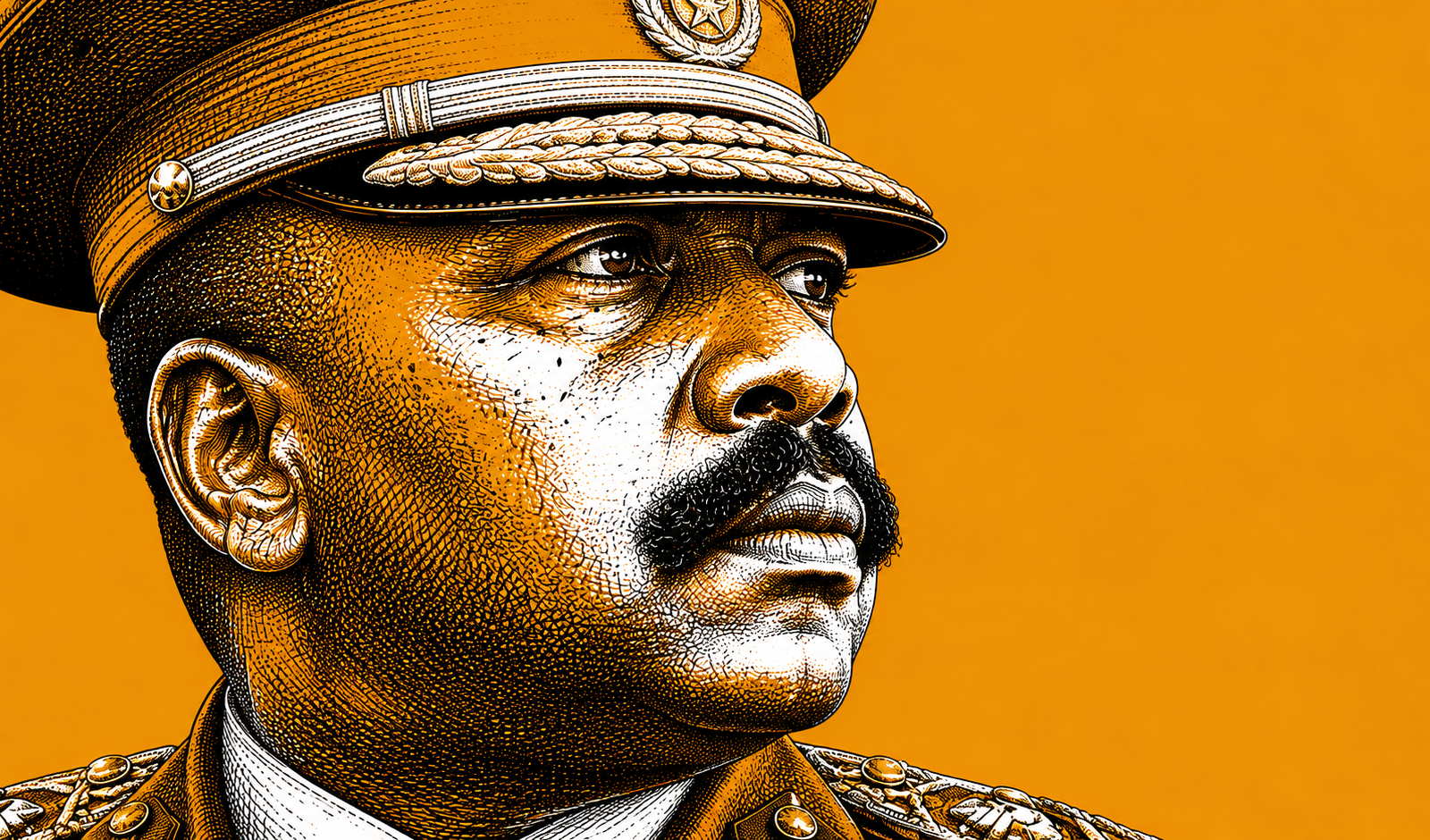
The Ugandan president’s son and commander of the armed forces has provoked an unusually public exchange with Kigali after invoking Hutu, Tutsi and Hima identities in a quarrel with his own brother-in-law. Behind the apparent disorder of a social-media feud lies one of the most sensitive questions in the Great Lakes region.
In the Great Lakes region, certain words are never entirely innocent. Three decades after the genocide against the Tutsi in Rwanda, the vocabulary of ethnicity remains charged with memories that governments ordinarily handle with extreme caution. Gen. Muhoozi Kainerugaba, however, has never been known for excessive caution.
The son of Uganda’s President Yoweri Museveni, commander of the Uganda People’s Defence Forces and one of the most powerful figures in Kampala, has triggered a remarkable exchange with neighbouring Rwanda after publishing a succession of messages on X concerning the ethnic origins of his brother-in-law, Odrek Rwabwogo.
The affair began as an unmistakably Ugandan quarrel.
Rwabwogo, a businessman married to Museveni’s daughter Patience, chairs the Presidential Advisory Committee on Exports and Industrial Development (PACEID), an organisation intended to promote Ugandan exports and industrial development. Muhoozi has attacked the committee, questioned its legality, accused people associated with it of corruption and threatened arrests. PACEID and Rwabwogo have rejected allegations made against them.
The dispute soon became personal. Muhoozi publicly declared that he did not recognise Rwabwogo as his brother-in-law. Then came ethnicity.
“I doubt that Odrek is a Muhima. He doesn’t behave like one. He might be a Muhutu,” the general wrote.
It was a short sentence, but in this part of Africa it carried a considerably longer history.
Kigali enters the quarrel
Muhoozi subsequently widened the controversy by invoking the man who has dominated Rwanda for more than three decades.
“The most dangerous Mututsi I have ever met in life is President Kagame,” he wrote, adding ominously that when the Rwandan leader “laughs a lot,” one should know that one is “already dead.”
The remark was characteristic of the mixture of familiarity, provocation and menace that has become associated with the Ugandan general’s prolific social-media presence. Muhoozi has long presented Kagame as an “uncle,” reflecting the intimate political and personal connections binding the elites of the two neighbouring states.
This time, however, Kigali chose not to remain silent.
Yolande Makolo, Rwanda’s government spokeswoman, intervened after Ugandan lawyer Ivan Mwijukye questioned the ethnic language appearing in Muhoozi’s posts.
“We saw that post and the questions it raised, and we do not agree with the ethnic extremism expressed,” Makolo wrote.
Her response was carefully framed but unusually direct. Rwanda, she said, should neither be misrepresented nor associated with such thinking. If the dispute concerned Uganda, “it should be kept Ugandan and not drag us into it.”
The essential point followed: “Rwanda does not subscribe to ethnic extremism.”
For Kigali, this is not merely a matter of diplomatic etiquette. It touches upon one of the foundations of the political order constructed after 1994.
Following the genocide against the Tutsi, in which more than 800,000 people were killed, the Rwandan authorities made the rejection of institutionalised ethnic politics central to the reconstruction of the state. Official discourse has since emphasised a common Rwandan identity rather than the Hutu-Tutsi distinctions that played such a catastrophic role in the country’s history.
Makolo invoked precisely this legacy. Rwanda, she said, had spent 32 years working to unite its citizens and intended to protect this “fundamental political choice.”
“Is this the official position?”
Muhoozi did not retreat.
“Madame spokesperson, is this the official position of the government of Rwanda on something I tweeted that had nothing to do with Rwanda?” he asked publicly.
The question contained its own accusation: that Kigali had inserted itself into a Ugandan controversy.
Yet the distinction is difficult to maintain entirely. The initial quarrel concerned Rwabwogo and the internal politics of Uganda. But Muhoozi had himself invoked Kagame — and identified the Rwandan president through an ethnic designation. This gave Kigali an obvious reason to consider that Rwanda had already been brought into the argument.
For the moment, there is no indication that the exchange has developed into a formal diplomatic crisis. But neither is it an ordinary quarrel between anonymous users of X. One protagonist commands Uganda’s armed forces; the other speaks publicly for the Rwandan government.
In this region, titles matter.
The shadow of Congo
Muhoozi then pushed the controversy beyond Rwanda and Uganda and towards the third point of the Great Lakes triangle: eastern Democratic Republic of Congo.
In another message, he claimed that the FDLR had entered his social-media feed. He then asked those who denied the existence of Hutu extremism who, in that case, was killing members of what he called his “Hima/Tutsi/Hema tribe” in Congo.
Here again, a few lines on X opened onto decades of war.
The Democratic Forces for the Liberation of Rwanda, or FDLR, operate principally in eastern Congo. The movement’s history is tied to Rwandan Hutu militants, including figures associated with the forces responsible for the 1994 genocide. Kigali has long regarded the organisation as a security threat.
Eastern Congo, meanwhile, remains the theatre of overlapping conflicts in which ethnicity, land, nationality, mineral wealth, local political power and the interests of neighbouring states are almost impossible to disentangle neatly.
Muhoozi’s decision to speak of Hima, Tutsi and Hema as a single transnational “tribe” is therefore politically significant. It suggests a conception of solidarity that does not stop at Uganda’s borders.
That is precisely what makes the rhetoric so sensitive.
Museveni, Kagame and an old fraternity
The controversy also revives memories of the complicated relationship between the regimes in Kampala and Kigali.
The histories of Yoweri Museveni and Paul Kagame are intimately connected. Kagame was among the Rwandan refugees who fought in Museveni’s guerrilla movement before it seized power in Uganda in 1986. Members of that Rwandan exile generation subsequently formed the core of the Rwandan Patriotic Front, which invaded Rwanda in 1990 and took power in Kigali after the genocide four years later.
The fraternity did not last.
Uganda and Rwanda later became rivals, most dramatically when their armies fought one another in the Congolese city of Kisangani during the Second Congo War. In more recent years, relations again deteriorated amid mutual accusations of espionage, political interference and support for hostile groups.
The border was eventually reopened and relations improved. Muhoozi himself played a conspicuous role in the rapprochement, travelling to Kigali and publicly displaying his closeness to Kagame.
This history lends an additional ambiguity to his latest provocations. The general attacking a “dangerous Mututsi” is also the man who has repeatedly advertised his affection for the Rwandan president.
Whether this is political theatre, personal familiarity pushed beyond diplomatic convention, or an expression of something more consequential is difficult to establish from social-media posts alone.
Kigali, however, has chosen to draw a line.
A general who speaks for himself — and more than himself
Muhoozi’s use of X has long presented observers of Ugandan politics with an unusual problem.
His pronouncements can be erratic, provocative and intensely personal. Yet they cannot simply be dismissed as the indiscretions of a private citizen. He is the president’s son. He commands the armed forces. He heads a political movement. And his ambitions have increasingly become part of the debate over Uganda’s eventual succession.
Every provocation consequently raises the same question: where does Muhoozi the social-media personality end and Muhoozi the representative of Ugandan power begin?
His challenge to Makolo exposes this ambiguity particularly clearly. He asks whether the Rwandan spokeswoman is expressing an official government position. Kigali could reasonably ask the same question of him.
This is the paradox surrounding the Ugandan general. He communicates with the apparent freedom of a private individual while occupying an office from which almost no statement can remain entirely private.
The return of forbidden words
Beyond the personalities involved, the episode reveals something more profound about the Great Lakes.
The political borders drawn across Uganda, Rwanda and Congo do not correspond neatly to the identities, languages, family histories and communities inhabiting them. Hima, Tutsi and Hema are distinct identities, with different histories and political contexts. Yet arguments about their relationships have repeatedly become entangled with regional struggles over belonging and power.
Rwanda has sought, with particular determination, to remove ethnic categories from legitimate political competition at home. Kigali’s message in this dispute is therefore straightforward: it does not wish to see the vocabulary of Hutu and Tutsi restored as a normal instrument of contemporary politics.
Muhoozi’s rhetoric proceeds from a markedly different register. He invokes ethnicity openly, treats identities as politically meaningful and, in his latest intervention concerning Congo, explicitly presents communities across several countries as sharing a common fate.
Between these two approaches lies a disagreement considerably more serious than an exchange of insults on X.
For now, Kampala and Kigali have not transformed the episode into an interstate confrontation. There have been no public announcements of diplomatic measures, and the dispute remains largely confined to statements and social media.
That restraint matters.
But so do the words.
The Great Lakes have known too many occasions when arguments over identity ceased to be semantic disputes and became questions of citizenship, territory and ultimately survival. Political leaders in the region know this history better than most.
This is why an apparently eccentric online quarrel between members of Uganda’s ruling family has attracted attention far beyond Kampala.
Muhoozi Kainerugaba may insist that his original dispute had nothing to do with Rwanda. Kigali’s answer, implicitly, is that once the language of its darkest history is invoked — and its president is named — the matter can no longer be entirely somebody else’s affair.
In the Great Lakes, history has a stubborn habit of entering conversations to which it was not invited.