Rethinking the Imbonerakure narrative: What Burundi can learn from Rwanda’s Indangamirwa
Reputation can outlive reality. While Rwanda tells a story of civic education, Burundi is still trapped in the shadow of the Imbonerakure. Perhaps it's time to write a different narrative.

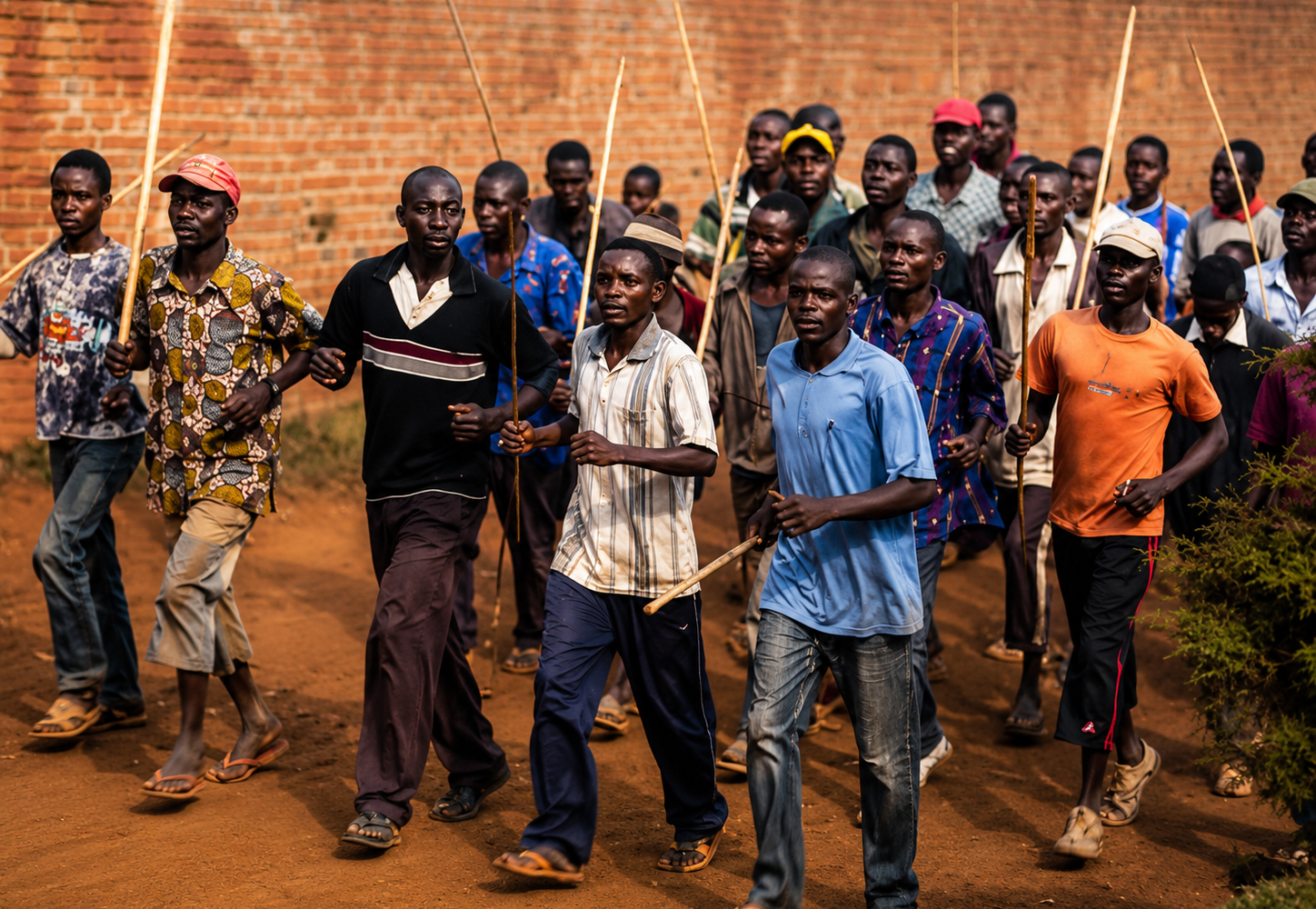
Some words carry more baggage than others. In Burundi, “Imbonerakure” doesn’t merely describe an organisation. Imbonerakure, which loosely translates from Kirundi as “those who see far” or “those with vision,” is the youth wing of Burundi’s ruling party, the CNDD-FDD. But it has, over the years, become far better known internationally for allegations of political intimidation, violence and human rights abuses, particularly during periods of electoral tension.
Originally conceived as a movement to mobilise young people around patriotism, political participation and community development, supporters often describe it as a patriotic youth movement that contributes to local security and development, while critics and many international organisations have portrayed elements of it as a partisan force accused of intimidating political opponents.
As a result, the name today evokes sharply different perceptions depending on who is asked.
Now travel roughly 250 kilometres north.
In Rwanda, nearly 800 young people recently gathered at the Gabiro Military Training Centre for the 16th edition of Indangamirwa, a civic education programme that mixes patriotism, leadership, history and military instruction.
President Paul Kagame addressed the graduates with a message that was both simple and ambitious: Rwanda’s future now belongs to them. Protect what has been built. Know your history. Be disciplined. Never assume someone else will solve Rwanda’s problems.
Curiously, the international reaction was not “Rwanda is militarising its youth.” Instead, the headlines spoke of civic education, nation-building and patriotism. Same region. Young people. Military training.
Entirely different story.
That difference deserves closer examination, not because Burundi should copy Rwanda, but because it should perhaps start asking better questions. Not whether young people should be organised.
But how.
Indangamirwa is a Kinyarwanda word meaning “the exemplary ones” or “those who lead by example.” It draws its roots from Rwanda’s traditional Itorero, a pre-colonial institution where young people were taught leadership, patriotism, discipline, culture and, when necessary, the skills to defend the nation.
Revived after 2007 as part of Rwanda’s nation-building efforts, the modern Indangamirwa programme prepares outstanding youth to become responsible, disciplined and patriotic citizens through civic education, leadership training and basic military instruction.
The Burundian baggage
Let’s be honest.
Burundi cannot discuss organised youth without eventually arriving at the Imbonerakure. Whether one views the movement positively, negatively or somewhere in between, its international reputation is already written.
Human rights reports, diplomatic briefings and foreign newspapers have repeated the same narrative for years. Fairly or unfairly, the words “Imbonerakure” and “militia” have become frequent travelling companions. Reputation is a funny thing.
Spend years building a house and people remember the one cracked window. Spend years repairing the window and people still ask about the crack. That is Burundi’s communication challenge.
Today, if the government announced a three-week leadership camp for university students, many people would imagine secret drills before they imagined leadership workshops. If uniforms were involved, speculation would outrun facts before the first bus even reached the training centre. In Burundi, perception often arrives several days before reality.
Rwanda’s different story
Rwanda tells a different story, and perhaps more importantly, it tells it consistently. Indangamirwa is presented as civic education first and military instruction second. Participants study Rwanda’s history, national unity, governance, leadership, self-reliance and responsibility. They exercise. They train together. They even receive basic firearms instruction.
But notice the order. The rifle is never presented as the purpose. It is presented as one tool within a much broader philosophy of citizenship. Kagame often returns to the same theme: no foreign government will build Rwanda. No donor will protect Rwanda’s sovereignty. No outsider has a greater stake in Rwanda’s future than Rwandans themselves.
Agree or disagree with his politics, that message has remarkable consistency. It also happens to be one that many successful countries have embraced.
Singapore expects nearly every young man to complete National Service before pursuing university or a career. Switzerland has long relied on a citizen army built around national responsibility.
Finland combines military preparedness with a culture of resilience in which ordinary citizens are expected to contribute during crises. Even in countries like France and the United States, military academies, cadet corps and reserve programmes are often viewed as opportunities to develop leadership rather than as threats to democracy.
Apparently, military discipline only becomes controversial once you cross certain borders.
Is military training really the problem?
Here’s an uncomfortable question. When most people hear “military training,” what exactly do they imagine? Hollywood has not helped. People picture commandos crawling under barbed wire while explosions erupt in the background and dramatic music plays.
Reality is considerably less cinematic. Ask anyone who has completed formal military training and they’ll probably tell you the hardest battle was against punctuality. Wake up at dawn. Fold your blanket properly. Clean your boots. Run. Run again. Stand straight. Learn teamwork. Learn discipline.
Then discover that making a bed to military standards somehow requires engineering skills. By the time someone touches a rifle, they’ve probably spent more hours learning responsibility than marksmanship. That distinction matters.
Military institutions are among the few places where society still insists that discipline is a habit rather than an inspirational quote posted on Instagram.
So what could Burundi do differently?
Suppose Burundi decided to create a completely new institution. Not a party programme. A national one. Imagine a National Civic Service bringing together young Burundians from every province, every political background and every community.
Morning begins with physical exercise. Afternoons include constitutional law, entrepreneurship, conflict resolution, first aid, disaster response, environmental protection and digital skills. Weekends are spent building classrooms, planting trees or helping communities recover from floods.
Military drill exists, not because everyone is expected to become a soldier, but because discipline, coordination and resilience are valuable whether one becomes a doctor, engineer, teacher or farmer.
Imagine graduates returning home able to organise emergency relief after heavy rains instead of simply posting photographs of flooded roads on Facebook with the caption, “Government should do something.”
Imagine young people trained to extinguish fires before the fire brigade arrives. To administer CPR before the ambulance appears. To organise blood donation campaigns. To assist elderly neighbours during disasters. Suddenly, uniforms begin to look less political and more practical.
Learning from the Imbonerakure without becoming the Imbonerakure
This is perhaps the most important distinction. Burundi does not need to pretend the Imbonerakure never existed. Nor should it simply rebrand the same structure with a shinier logo and expect applause.
People are surprisingly good at recognising old wine in new bottles. A genuine National Civic Service would need to belong to the Republic, not to whichever political party happens to occupy government offices.
Recruitment should be transparent. Participation should never depend on political affiliation. The curriculum should be public. Parents should know exactly what their children are learning. Journalists should be allowed to visit. Independent observers should occasionally inspect the programme.
Nothing destroys rumours faster than open doors. Secrecy, on the other hand, is public relations’ worst enemy. If nobody knows what happens behind the gates, everyone invents their own version. And human imagination rarely chooses the boring explanation.
Winning the story before winning the argument
Perhaps Burundi’s greatest lesson from Rwanda has less to do with military training than communication. Words matter. Names matter. Purpose matters.If your first press conference focuses on rifles, don’t be surprised if tomorrow’s headlines focus on rifles.
If your first press conference focuses on citizenship, leadership, disaster response and national service—with military instruction clearly explained as one component among many, you are already telling a different story. Policy and communication are partners. One without the other is like trying to clap with one hand.
Burundi has often allowed others to define its narrative. Maybe it is time to write its own.
Beyond politics
Ultimately, this debate is bigger than uniforms. It is about whether a country believes citizenship should be taught. Schools teach mathematics. Universities teach engineering. Driving schools teach road safety.
Yet somehow we expect patriotism, civic responsibility and public service to emerge spontaneously, as though young people wake up on their eighteenth birthday suddenly inspired to put the nation before themselves.
It rarely works that way. Citizenship is learned. Discipline is practised. Leadership is developed. Patriotism is cultivated. None of these qualities are genetic.
Burundi stands at an interesting crossroads. It can continue allowing every conversation about organised youth to begin and end with the Imbonerakure. Or it can imagine something larger. A national institution that produces disciplined graduates recognised not for political slogans but for community service.
Young people who respond to floods before television cameras arrive. Who rebuild schools after storms. Who organise vaccination campaigns. Who donate blood. Who mentor younger students. Who understand both the Constitution and the importance of arriving on time, a surprisingly underrated contribution to national development.
Perhaps that is the quiet genius behind Rwanda’s Indangamirwa. Not that it teaches young people to handle weapons. But that it reminds them they have a stake in the nation they inherit. Burundi deserves a conversation just as ambitious. Not about creating another Imbonerakure.
But about creating the first youth service that every Burundian, regardless of politics, could proudly call their own. Because every generation inherits a country.
The question is whether it also inherits the responsibility to improve it. Or simply the habit of complaining about it over Amstel.
Selah!