Why is it so painful (Or Not) to watch President Évariste Ndayishimiye’s BBC interview?
International interviews are rare opportunities to reassure a nation and persuade the world. Instead, President Évariste Ndayishimiye's conversation with the BBC left many Burundians doing something unexpected: replaying answers, not because they were profound, but because they struggled to understand whether the questions had actually been answered.

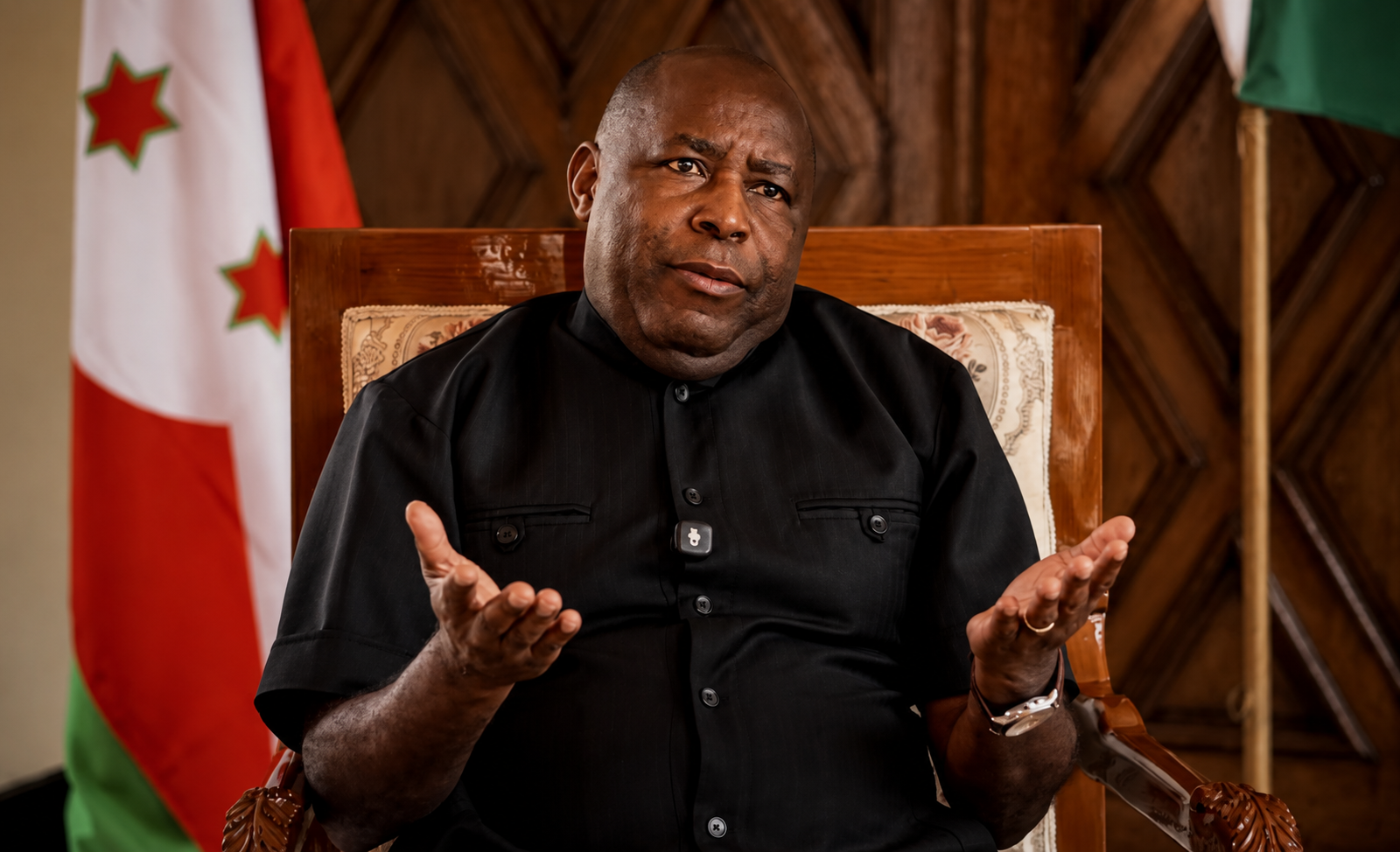
Let me begin with a confession. Writing about the President of Burundi is not something I do lightly. In fact, I often talk myself out of it.
The first reason is obvious: I’ve never been president of anything. Not a country. Maybe a company ( a small one I am afraid). So I know better than to pretend I understand every calculation that comes with carrying the weight of a nation. The closest I often come to exercising executive power everyday is deciding what to have for lunch, and what story to write about.
The second reason is less obvious. Over the years, I’ve worked around people in positions of power, myself as a videographer, speechwriter, and social media manager for presidents, ministers, ambassadors, and business leaders. One lesson keeps coming back: the higher you climb, the less freedom you often have to say exactly what you think. Public words are rarely just words. They are strategy, diplomacy, damage control, negotiation, and sometimes survival, but also in some cases it can be just plain foolishness .
That is why I hesitate before judging what a head of state says in a televised interview.
Still, silence isn’t an option either. If we care about our country, we have a responsibility to pay attention when its leaders speak, especially on international platforms like the BBC. We should listen carefully to what is said, but also to what is left unsaid.
That is what this piece is about.
I’m interested in reading between the lines: the choices, the framing, the moments of confidence, the moments of discomfort, and what they reveal beyond just statements.
One more thing. I dislike the now rampant habit of speaking about presidents as if they were our drinking buddies at Chez Gerard ( Burundi’s famous pub brand). They are not. I believe criticism and respect can coexist. In fact, they should. The office deserves respect, even when the person holding it deserves scrutiny.
Whether you support them or oppose them, leading a country of millions is a responsibility most of us have never had to shoulder. It’s easy to say, “I would have handled it better.” Maybe. But a quick look at how many of us manage our own families, businesses, or bank accounts should make us a little less certain. (That’s the same the reason we elect the most clever (or not) among us as our Presidents to lead us)
So I write this with respect, humility, and enough curiosity to ask difficult questions even those that will never get answered (I was trained to do so, as a journalist).
Now that the disclaimers are out of the way, let’s get to the interview.
Preparation, preparation, rehearsal please anyone
The interview opened with what should have been the easiest question of the evening. After six years in office, what would President Évariste Ndayishimiye consider his greatest achievement?
It is the sort of question most heads of state secretly hope to be asked. No hostile framing. No hidden trap. Just an invitation to tell the story of your presidency.
Curiously, the President seemed reluctant to take it.
His first instinct was almost admirable. He argued that achievements should not be judged by the person in power but by the people who have lived through the changes. Fair enough. Politicians rarely resist the temptation to grade their own homework, so a little humility was refreshing.
But before the thought could settle, the answer took an unexpected detour.
Instead of describing what had changed since 2020, the discussion drifted into a philosophical reflection about achievement itself, that development is an endless process and therefore no one can really claim to have “achieved” anything because there is always more to do.
There is some truth in that. The problem is that this was not the question. The BBC journalist wasn’t asking whether history had ended. He was simply asking what had changed under his administration.
Only after the question was reframed with concrete examples did the President begin offering actual answers.
Among the examples he highlighted was the now familiar slogan Turikumwe Twese Birashoboka—”Together, everything is possible.” According to the President, Burundi in 2020 was a country that had lost its sense of direction. The slogan, he argued, helped unite citizens around collective work, including the practice of combining farmland to improve agricultural production.
He also pointed to the PAEJ programme as one of his administration’s major successes, saying it had encouraged young people to embrace entrepreneurship rather than waiting for employment to come looking for them.
These are important claims. The unfortunate part is that they were left almost entirely unsupported. There were no figures. No percentages. No investment totals. No indication of how many young entrepreneurs had benefited, how many businesses had survived, or how agricultural production had changed since the programme began. I find it difficult to believe those numbers do not exist. Which raises a more interesting question. If the data exists, why wasn’t it sitting in front of the President?
Watching the exchange, one gets the impression that preparation happened, but perhaps not enough of it. At several moments, the President moved effortlessly between formal presidential statements and relaxed conversation. It gives his interviews an unusual character. One minute he sounds like a head of state addressing the nation. The next, he sounds like someone chatting across the table after Sunday lunch. There is nothing inherently wrong with being approachable. But there is a difference between sounding accessible and sounding unprepared.
International interviews are not neighbourhood conversations. They are moments where every sentence contributes to how a country is perceived abroad. Facts matter. Numbers matter. Precision matters. As the interview continued, another pattern slowly emerged. In fact, it became difficult not to notice it.
Again and again, questions about government policy were answered with personal stories. This, to me, was perhaps the most striking feature of the entire interview.
There seemed to be a persistent confusion between personal initiative and institutional solutions. Those are not the same thing. A president can inspire citizens through personal experience. He should.
But when citizens ask how the state intends to solve a national problem, they are usually expecting something larger than one person’s life story. The distinction matters because institutions are supposed to outlive presidents. Personal anecdotes do not.
Perhaps the clearest example is the President’s now well-known story about starting a poultry and livestock business after borrowing from a White shopkeeper in his early days as a civil servant. It is an interesting story. Actually, it is a very good story. It speaks to initiative, resilience and entrepreneurship. The problem is not the anecdote itself.
The problem is how frequently it is presented as an answer to structural economic questions. The President often uses it to encourage civil servants to develop businesses after working hours rather than spending evenings in bars.
On the surface, it sounds like sensible advice.
After all, there are certainly more productive ways to spend an evening than arguing over football scores with three bottles of Primus.
But beneath that advice lies an uncomfortable implication.
If the official message to public servants is that government salaries are insufficient to support a family, isn’t that itself a policy problem? Surely the bigger question is not whether teachers, nurses or administrators should all become part-time poultry farmers.
The bigger question is whether public service should provide enough dignity and stability for those employees to focus on…well…serving the public.
Because it is difficult to demand excellence from civil servants while simultaneously suggesting that survival depends on finding a second career after five o’clock.
That is not an entrepreneurial strategy. It is an admission that something deeper may require attention. The same pattern resurfaced when the discussion turned to more painful realities.
Teachers leaving their classrooms to seek construction jobs abroad. Young Burundians crossing borders in search of opportunities they cannot find at home.
These are serious questions. Questions that naturally invite equally serious explanations.
Instead, many of the responses drifted back toward personal observations about work ethic and responsibility.
At several points, the President suggested that years of humanitarian assistance had created a culture in which some Burundians had become accustomed to expecting help rather than creating their own livelihoods. He even suggested there are people who have reached old age without ever truly taking responsibility for generating an income.
Perhaps there is evidence supporting that assessment. Perhaps there isn’t. The interview never tells us. And that is precisely the difficulty.
When a president makes broad claims about an entire society, listeners naturally expect those claims to rest on more than personal impressions. Otherwise, the line between diagnosis and opinion becomes increasingly difficult to see.
The BBC journalist sensed the same gap. He challenged the President on another recurring statement that Burundians leaving the country are, in many cases, simply looking for easier lives or waiting for handouts elsewhere.
Again, rather than explaining what government institutions are doing to retain talent or create opportunities, the discussion returned to personal experience. Listening carefully, one notices another small but revealing detail.
The President frequently speaks in the first person.
“Jewe…”
“Me…”
“I…”
Ordinarily that would mean very little. Except that it happens consistently. Over time, the centre of gravity shifts. The conversation becomes less about what the state is doing and more about what the President himself believes, observes or would personally do.
It may seem like a subtle distinction. It isn’t. Strong institutions speak in terms of systems. Strong personalities speak in terms of themselves. The two sometimes overlap. But they should never become interchangeable. One particular exchange illustrates this better than any theoretical discussion could.
The President explained that people regularly call him looking for work. His solution? He directs them toward managers working on his own farms in different parts of the country. I confess I had to replay that answer. Not because I misunderstood it. Because I thought perhaps I had. Of course, helping people find employment is commendable. No reasonable person would criticise someone for creating jobs.
But unemployment cannot be solved by directing citizens toward the President’s private businesses. That is not how public policy works. Citizens should not have to depend on presidential phone calls to find work. They should be able to rely on functioning institutions that create opportunities regardless of who occupies Ntare House.
When criticism of this approach was mentioned, the President dismissed it as jealousy. Perhaps. Or perhaps some listeners were simply asking a different question altogether. Not whether the President can employ a few hundred people. But how Burundi intends to create opportunities for hundreds of thousands.
Those are two very different conversations.
Then came the fuel question.
And this is where, at least for me, the interview stopped being merely frustrating and became genuinely difficult to watch.
The BBC journalist returned to something President Ndayishimiye himself had said during an interview with the same broadcaster in 2024. At the time, the President had publicly taken personal ownership of the fuel crisis. A year later, with shortages still affecting daily life, the obvious follow-up was simple enough:
What has changed?
It was an opportunity to walk viewers through the government’s response. Explain the obstacles. Share the progress. Admit what had worked and what had not.
Instead, the answer went somewhere few expected.
“I am lucky,” the President replied, “because fuel shortages are no longer only in Burundi.”
I paused.
Not because the statement is entirely false. Fuel markets around the world have experienced disruptions at various points. That is true. But that wasn’t the question.
The question wasn’t whether other countries also struggle. The question was why Burundians were still queuing for fuel after the President had personally promised to address the problem. Those are not the same conversation.
The discussion then drifted toward the idea that fuel cannot simply be fetched from a tap; it must be purchased, and purchasing it requires foreign currency. Again, perfectly reasonable. Then came one of the evening’s more awkward exchanges. The President asked the journalist where the money should come from.
The journalist calmly replied that governments normally finance imports through revenue generated from taxpayers.
For a brief moment, it looked as though the conversation might finally move toward economic policy.
Instead, it circled back to a familiar theme. Burundi, the President argued, cannot import what it cannot afford. Unless the country exports more goods, foreign currency will remain scarce. In principle, that observation is difficult to dispute.
Every economics student would probably nod along. The disappointment lies elsewhere. The interview never quite reached the next question.
What is the government doing about it?
That is what viewers were waiting for. Not because they expect miracles. But because presidents are elected not merely to explain problems. They are elected to organise solutions. There were glimpses of those solutions.
Mining exports were mentioned. Avocados suddenly entered the conversation. Apparently, avocado oil exports have been growing for two or three years, and the President expressed optimism that Burundi is only beginning its export journey.
One could almost hear his communication advisers collectively wishing they had packed a folder with statistics. How much has export revenue increased? How many processing plants have opened? How much foreign currency has been generated? Those numbers almost certainly exist somewhere inside a ministry filing cabinet.
Unfortunately, they never made it to the BBC Interview set. The journalist, sensing that the conversation was slipping away, tried another angle. Perhaps, he suggested, the shortages were not simply an issue of exports but also one of management.
After all, hadn’t the leadership of SOPEBU been dismissed? If management was not part of the problem, why replace the management? The President acknowledged that corruption and theft had occurred.
Yet he insisted that poor management was not the principal cause because there simply wasn’t enough fuel entering the country in the first place. He then made a broader argument.
For years, Burundi had survived on foreign aid and donor dollars. Those days, he said, are largely over. The country must now learn to live according to its means, produce what it consumes and finance its own development. There is something undeniably admirable about that vision. Self-reliance is hardly an outrageous ambition.
Few countries have prospered indefinitely by depending on other people’s generosity. But once again, the interview struggled to distinguish philosophy from policy.
The President spoke passionately about producing more, processing more and exporting more. He encouraged entrepreneurs to invest in small processing plants instead of expensive vehicles. He compared fuel to blood, arguing that just as blood comes from what we eat, fuel ultimately depends on what the country produces.
It is a memorable analogy. Whether it answered the original question is another matter. By the end of the exchange, one was left with a clearer understanding of the President’s personal economic philosophy than of the government’s economic programme. Those are not necessarily the same thing. And perhaps that is precisely the challenge.
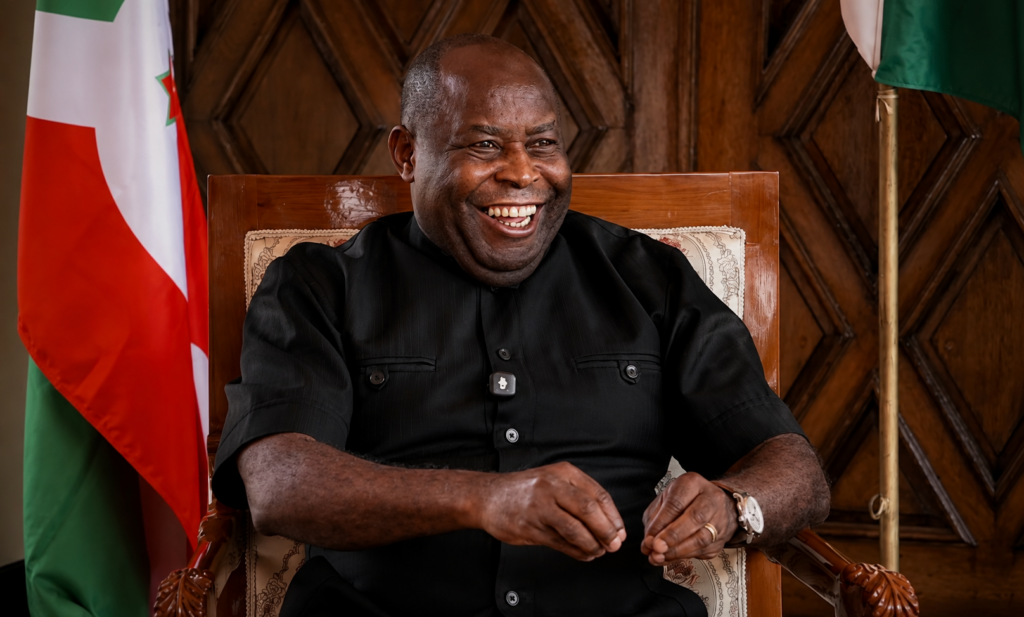
The final section of the interview followed much the same pattern.
When asked about corruption, the President insisted that things had improved considerably since 2020.
To illustrate the point, he reached for another analogy.
Imagine, he said, a container filled with milk. If someone throws a handful of mud into it, the milk does not suddenly become mud. I confess this was another moment where I found myself reaching for the rewind button.
Not because the analogy was incomprehensible. Because I wasn’t entirely sure what problem it was trying to solve. Eventually the point became clearer.
Corruption still exists, the President argued, but it no longer defines the entire system. That is a perfectly defensible position. The journalist, however, wasn’t interested in metaphors. He wanted to understand something much more concrete.
Why, he asked, do relatively small offenders sometimes end up in prison while individuals accused of stealing millions are occasionally allowed to repay the money and return to normal life?
It is an uncomfortable question. One that many Burundians have asked themselves. The President’s answer was perhaps the most surprising of the INTERVIEW.
He argued that imprisoning certain offenders imposes significant costs on the state. Feeding prisoners, providing healthcare and maintaining prisons can be more expensive than allowing offenders to remain economically productive after recovering stolen assets. From a purely economic perspective, one can at least follow the logic.
From the perspective of justice, however, many viewers are likely to have drawn a different conclusion. Justice is not simply an accounting exercise. It is also about deterrence. Public confidence. Equality before the law. The danger is that economic reasoning, however rational, may unintentionally sound like moral leniency.
Interestingly, the President later described tougher disciplinary measures intended to prevent individuals dismissed for corruption from simply resurfacing elsewhere in public life, with similar restrictions potentially extending into the private sector.
Which leaves the audience in an odd place. At one moment, corruption appears to be treated pragmatically. Moments later, it appears to deserve permanent professional consequences. The two ideas are not necessarily incompatible.
But they were never fully reconciled during the interview.
So why was the interview painful to watch?
It was not because every answer was wrong. Far from it.
Several observations made by the President contain genuine truth. Burundi does need to export more. Productivity matters. Entrepreneurship matters. Citizens cannot rely forever on external assistance. Those are serious arguments.
The difficulty lies in how they were presented. Again and again, questions seeking institutional answers received personal reflections. Questions asking for measurable results produced broad philosophies. Requests for accountability turned into lectures about individual responsibility.
By the end, one almost felt that Burundi’s greatest challenge was not merely economic. It was conversational. The country and its President often seemed to be answering different questions. Perhaps the problem is communication. Perhaps the policies are stronger than the explanations.
Perhaps the achievements are more substantial than the presentation suggests. If so, that should concern the communication team as much as anyone else. Because in politics, perception is not everything. But it is certainly not nothing.
As I said at the beginning, I did not write this piece because I enjoy criticising presidents. Quite the opposite. I would much rather watch a Burundian head of state confidently explain measurable progress, defend difficult decisions with evidence and leave both supporters and critics better informed than before. That is what international interviews are for.
Instead, I finished this one with more questions than answers. And perhaps that is why it felt so painful to watch. Not because it revealed that Burundi has problems.
We already knew that.
But because it suggested that even when given a couple of uninterrupted minutes before one of the world’s biggest audiences, we still struggle to explain with clarity, precision and confidence how we intend to solve them.