How RED-Tabara got lost in its own labyrinth?
The shortest path to power is almost never through the battlefield. It runs through classrooms, churches, trade unions, neighborhoods, and ordinary citizens who decide that fear is no longer worth obeying.

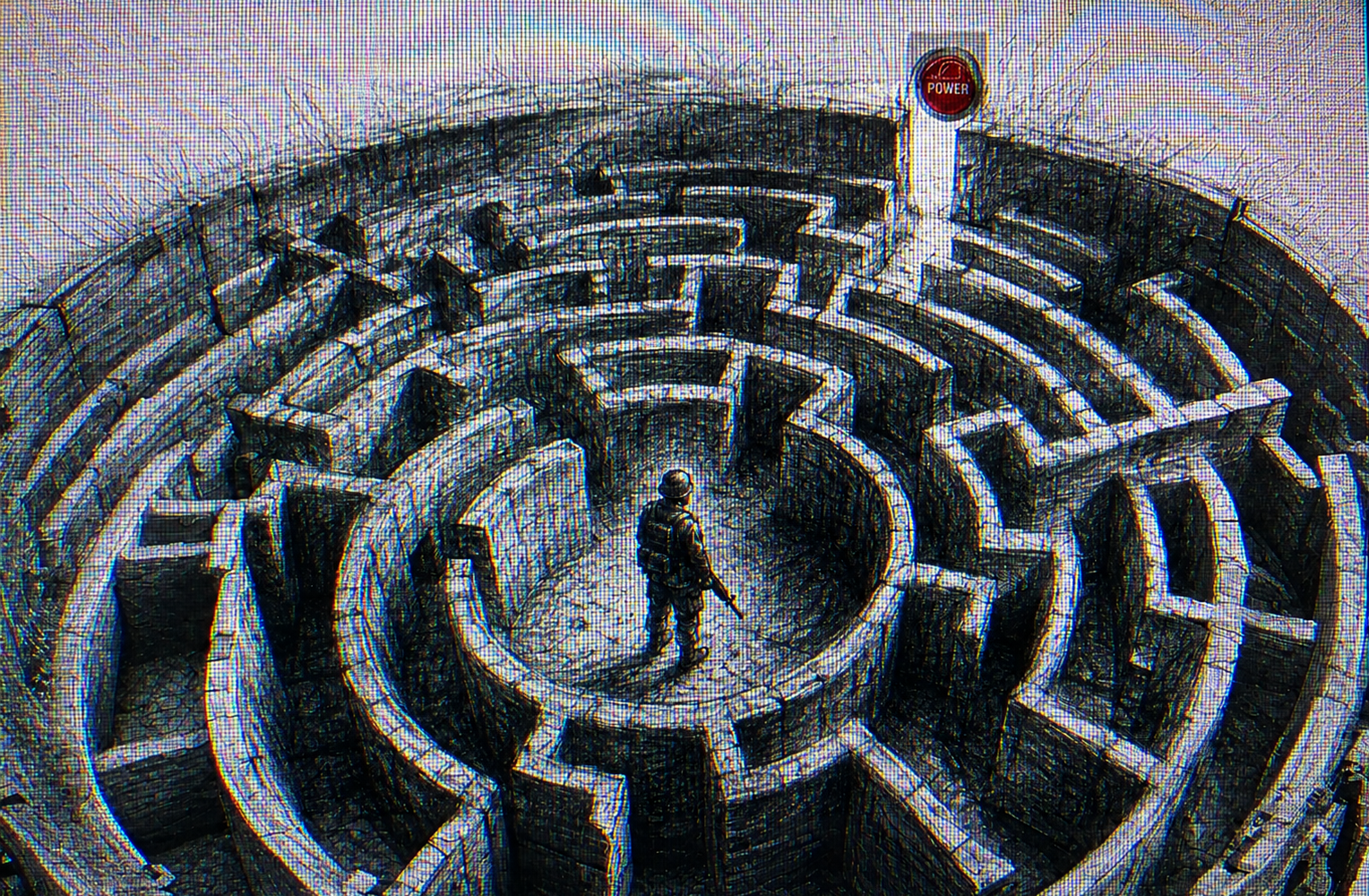
Every rebellion begins with a map. Not a geographical one, but a mental map. A theory of how power works. A belief that if you push here, something over there will eventually collapse. Some maps are brilliant. Others lead people in circles until they mistake motion for progress.
RED-Tabara, the Burundian armed movement born from the political turmoil of 2015, appears to have spent the better part of a decade wandering inside such a labyrinth.
The following lines are not about whether the grievances that gave birth to RED-Tabara were real. They were. Burundi’s 2015 constitutional crisis, triggered by President Pierre Nkurunziza’s controversial third-term bid, fractured the country, forced thousands into exile, and shrank political space dramatically.
The United Nations, Human Rights Watch, and numerous independent observers documented arbitrary arrests, disappearances, restrictions on opposition parties, and a climate of fear. In that sense, RED-Tabara did not emerge from fantasy. It emerged from frustration.
But history has an inconvenient habit of asking a different question. Not why a movement was born. But How did it expect to win? And this is where the story becomes less heroic and, frankly, a little ironic.
RED-Tabara identified a political crisis but prescribed a military solution. It reached for the rifle before it reached for the citizen. That is a surprisingly common mistake.
Political scientists have spent decades reminding us that governments rarely fall because rebels become stronger. More often, governments fall because they become weaker—from the inside. Charles Tilly argued that revolutions are fundamentally about mobilization.
Theda Skocpol emphasized the breakdown of state structures. Gene Sharp practically built an entire library around the idea that regimes survive because people cooperate with them, and collapse when that cooperation disappears.
Notice what is missing from those theories. An AK-47.
That doesn’t mean armed struggle never matters. It does. The African National Congress maintained Umkhonto we Sizwe throughout the struggle against apartheid. But Nelson Mandela never imagined that a handful of guerrillas could militarily defeat one of Africa’s most sophisticated security states. The armed struggle complemented politics; it did not replace it.
RED-Tabara seems to have reversed the formula.
The movement became increasingly effective at conducting raids and cross-border attacks while becoming progressively less visible as a political force inside Burundi. According to successive UN Group of Experts reports on the Democratic Republic of the Congo, its operational footprint shifted largely into South Kivu, from where fighters launched incursions across the border. Operationally, that may have made sense. Politically, it came at a cost.
You cannot organize a revolution from a neighboring country forever. At some point, you have to organize people. That is the part the movement never quite figured out.
A revolution is not simply a collection of armed men with good boots and bad tempers. It is teachers deciding they have had enough. Civil servants quietly refusing illegal orders. Religious leaders speaking when silence becomes unbearable. Students discovering that fear has an expiration date.
Business owners calculating that instability is now more expensive than dissent. Even parts of the security apparatus beginning to wonder whether they are defending a government or merely postponing its inevitable headache. None of those people can be mobilized with mortars.
They require politics.
Instead, RED-Tabara found itself trapped in what might be called the guerrilla paradox. Every successful ambush demonstrated military capability but made it easier for the government to frame the conflict as one of national security rather than political legitimacy. Every attack shifted public attention away from constitutional questions and toward immediate concerns about violence.
Governments, after all, generally know how to fight armed groups. They are far less comfortable fighting ideas. History offers enough examples to make the contrast uncomfortable.
Solidarity in Poland did not defeat communism by hiding in forests. It organized workers. Otpor! in Serbia made Slobodan Milošević look ridiculous before he looked vulnerable. Tunisia’s 2011 revolution was carried by ordinary citizens whose numbers eventually outweighed the regime’s capacity for repression. Even Sudan’s 2019 uprising depended more on professional associations, neighbourhood committees, and sustained civic mobilization than on insurgent warfare.
These movements understood something profoundly simple. Power is social before it is military.
Even the French philosopher Michel Foucault, who loved making simple things sound complicated, insisted that power is exercised through relationships rather than existing as an object someone simply possesses. If that is true, then revolutions are less about destroying power than about rearranging those relationships.
RED-Tabara appeared to focus overwhelmingly on the state’s coercive machinery while paying comparatively little attention to its social foundations.
Perhaps that was inevitable. Exile changes movements. Distance changes politics. Leaders operating from outside the country often begin seeing military operations because military operations are what remain available. Organizing teachers in Bujumbura from the hills of South Kivu is considerably harder than organizing an armed unit.
Still, difficulty does not make strategy correct. There is another irony here.
The movement’s very name invokes the rule of law. Yet the pursuit of that objective became increasingly associated with armed confrontation rather than the painstaking work of building broad political legitimacy. One can sympathize with the frustration that produced this choice while still questioning its wisdom.
That distinction matters. Critiquing strategy is not the same as dismissing grievances.
The United Nations has repeatedly documented concerns about political freedoms and human rights in Burundi. Those concerns are real. But acknowledging injustice does not automatically validate every response to it.
History is full of movements that were morally persuasive and strategically disastrous. Perhaps RED-Tabara belongs somewhere on that list. Or perhaps it is simply unfinished history.
Either way, one lesson seems difficult to escape. Revolutions are not won by convincing your enemies that you can shoot. They are won by convincing everyone else that you no longer need permission to imagine another future.
That requires organization. It requires patience. It requires politics. It even requires the deeply unglamorous work of meetings—those endless meetings where nothing seems to happen until, one day, everything suddenly does.
There is no romance in committee minutes. No songs are written about coalition-building. Nobody dreams of becoming Secretary for Grassroots Mobilization. Yet those dull, forgettable activities have toppled more governments than spectacular firefights ever have.
Perhaps that is the real labyrinth of RED-Tabara. Not the forests of eastern Congo. Not the mountains separating Burundi from its neighbours. But the enduring illusion that political legitimacy can be captured through military confrontation. It cannot.
The shortest road to power has almost always turned out to be the longest detour. And somewhere inside that maze, the movement seems to have mistaken movement for direction.