DR Congo announces FDLR disarmament deal as Rwanda dismisses accord as ‘stalling tactic’
Kinshasa claims it has persuaded one of Central Africa's most notorious armed groups to lay down its weapons. Kigali calls it a dangerous illusion.


The Democratic Republic of Congo says it has secured a significant breakthrough in efforts to end decades of conflict in the country’s east after the Democratic Forces for the Liberation of Rwanda (FDLR) agreed to begin disarming and ultimately dissolve the group.
But Rwanda has dismissed the agreement as a political manoeuvre that falls outside the framework of the US-backed Washington peace accords, accusing Kinshasa of attempting to avoid its obligation to dismantle the militia.
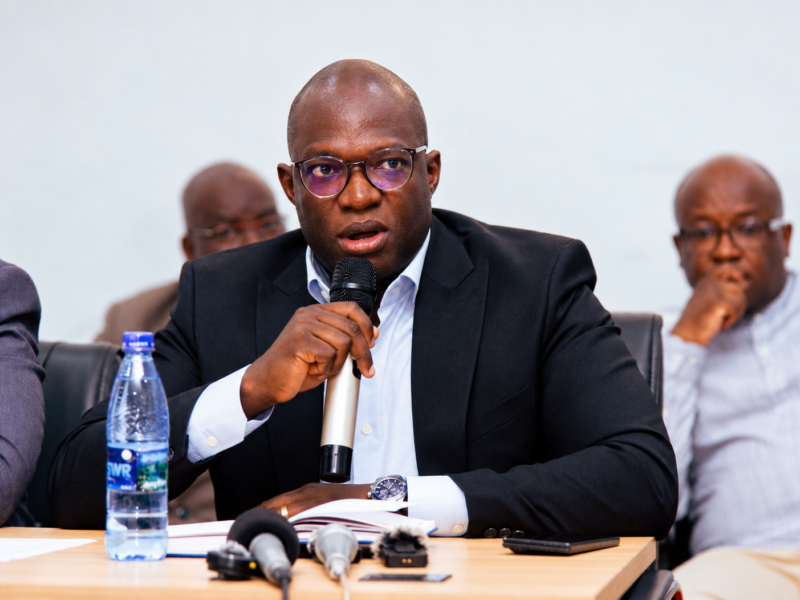
The announcement was made on Tuesday by DR Congo’s Minister of Regional Integration, Floribert Anzuluni, who said the FDLR had signed a protocol committing to a phased process of disarmament, demobilisation and cantonment.
According to Congolese officials, the agreement represents an important step in implementing commitments made under regional and international peace initiatives aimed at ending violence in eastern Congo.
Kinshasa argues that neutralising the FDLR — an armed group founded by remnants of the former Rwandan army and Interahamwe militia responsible for the 1994 Genocide against the Tutsi — would remove one of Kigali’s principal security arguments for maintaining military operations and defensive measures linked to eastern Congo.
Conditions for disarmament
Mr Anzuluni said the FDLR had agreed, in a first phase, to surrender its weapons and enter a process of demobilisation, provided several conditions were met.
The group has requested secure and viable cantonment sites where former fighters can be housed during the process, arguing that previous disarmament efforts collapsed because camps lacked adequate protection.
“The FDLR have agreed, as a first phase, to accept demilitarisation, demobilisation followed by cantonment,” Mr Anzuluni told reporters.
“The first condition is that this demobilisation and cantonment take place in sufficiently secure camps.”
The militia also insisted that any return of its members to Rwanda must be voluntary. Congolese officials said they had accepted the condition, stressing that no former combatants would be forcibly repatriated.
Mr Anzuluni added that, following the disarmament phase, the FDLR had committed to dissolving the organisation altogether.
Congolese officials described the protocol as a milestone in efforts to stabilise eastern Congo, arguing that successful implementation could remove the security rationale cited by Rwanda for maintaining forces across the border.
Rwanda rejects protocol
Kigali, however, swiftly dismissed the announcement.
Foreign Affairs Minister Olivier Nduhungirehe said the protocol was not recognised under the Washington Accords signed between Rwanda and DR Congo and did nothing to alter Kinshasa’s existing obligations.
“The signing of this so-called ‘protocol’ between the father (the Congolese government), the son (the FDLR), and the evil spirit (genocidal ideology) is in no way consistent with the Washington Agreements,” he wrote on X.
“The FDLR genocidaires are not a party to these Accords; rather, they are the subject of them.”
Patrick Muyaya, the Congolese government spokesman, had earlier described the protocol as “a major turning point” and said it was being implemented “in accordance with the Washington agreements and the associated CONOPS.”
Rwanda disputes that interpretation.
Competing interpretations of the Washington Accords
The Washington Accords, signed by Rwanda and DR Congo in December 2025 with US backing, commit Kinshasa to implementing a jointly agreed Concept of Operations (CONOPS) and Operational Order (OPORD) to neutralise the FDLR, a militia sanctioned by both the United Nations and the United States.
The accords reaffirm earlier peace commitments reached in April and June 2025 and established a Joint Oversight Committee to monitor implementation and resolve disputes between the two governments.
Crucially, the framework is an agreement between Rwanda and the DRC. The FDLR is not a signatory.
Under the implementation roadmap, Congo committed to cooperate in dismantling the militia, after which Rwanda would lift what it describes as defensive security measures taken in response to the FDLR threat.
Mr Nduhungirehe argued that negotiating directly with the militia was never envisaged under the accords.
“This is… a crude manipulation by Kinshasa and its cronies, a stalling tactic by the DRC to try to wriggle out of its primary security obligation,” he said, referring to the 90-day implementation timetable contained in the military framework.
He also accused the Congolese government of strengthening rather than weakening the FDLR since the Washington Accords were signed, alleging that elements of the group remained integrated within the Congolese armed forces and that Kinshasa had encouraged the militia’s political organisation. The Congolese government has consistently rejected accusations that it supports the FDLR.
Long-standing security challenge
Formed by remnants of Rwanda’s former army and Interahamwe militia after the 1994 genocide, the FDLR has operated from eastern Congo for more than three decades and has been accused by Rwanda of carrying out cross-border attacks and promoting genocidal ideology.
Its continued presence has been one of the central points of contention between Kigali and Kinshasa, with Rwanda arguing that the group’s existence poses a direct threat to its national security. Congo, meanwhile, has repeatedly accused Rwanda of using the FDLR as a pretext for military intervention and support for the M23 rebel movement—an allegation Kigali denies.
An operation to disarm and repatriate FDLR fighters was launched by the Congolese army in Kisangani in March, but little visible progress had been reported before this week’s announcement.
Whether the newly signed protocol marks a genuine breakthrough or simply exposes divergent interpretations of the Washington peace process remains unclear. While Kinshasa portrays it as evidence that diplomacy is delivering tangible results, Kigali insists that only the full implementation of the agreed military roadmap—and the effective dismantling of the FDLR—will satisfy the commitments undertaken by both governments.