Burundi reappoints truth commission under Ndayicariye for four more years
A presidential decree signed in Gitega keeps the 13-member body unchanged as it takes on tens of thousands of disputed land claims and investigations into the crises of 1988 and 1993.

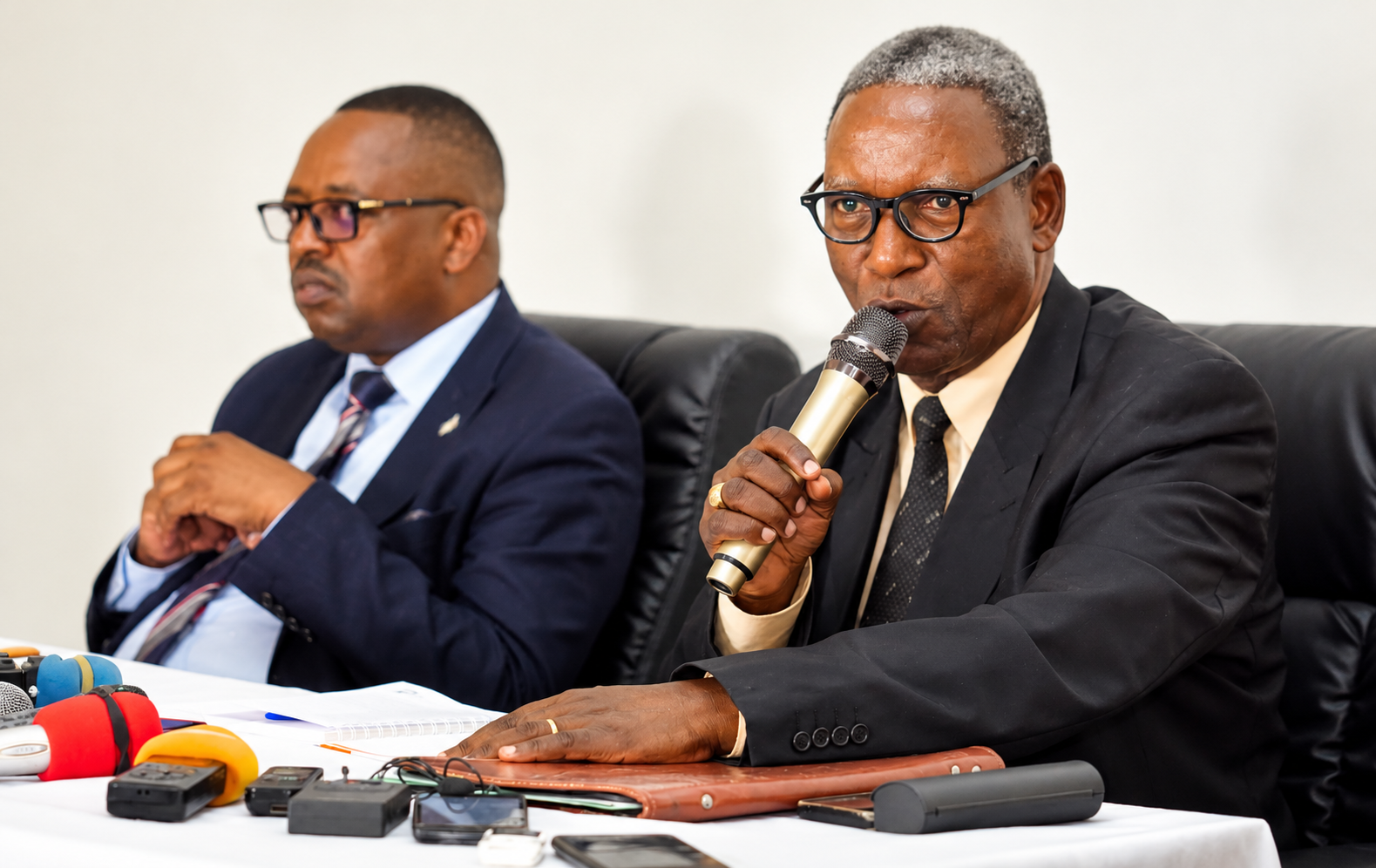
President Évariste Ndayishimiye on Tuesday reappointed the 13 members of Burundi’s Truth and Reconciliation Commission (CVR), confirming Ambassador Pierre Claver Ndayicariye as its chairman for a new term. Decree No. 100/160, signed in Gitega on 20 October and in force from the day of signature, names Anglican bishop Aimé Joseph Kimararungu as vice-chairman and Léa Pascasie Nzigamasabo as secretary.
The decree formalises a decision taken by parliament. Meeting in congress on 9 October, the National Assembly and Senate extended the commissioners’ mandate by four years, with lawmakers summoned at short notice because the previous term was close to expiring. Daniel Gélase Ndabirabe, the Assembly speaker who chaired the session, offered a choice between applause and a show of hands; the chamber chose applause, and the extension was declared adopted that way. The commissioners themselves were not present; Mr Ndabirabe said they were abroad at a retreat to assess their record. The outgoing term was due to end on 25 October.
The renewal matters because the CVR is the only functioning transitional justice body to emerge from the Arusha peace accord of 2000, and its conclusions carry political weight in a country still divided over how to name its past. On 20 December 2021, Mr Ndayicariye told parliament the commission had found that genocide was committed against Hutus in 1972-73, citing 692 identified mass graves, 190 of them opened, containing the remains of 19,897 victims. Parliament adopted that conclusion and called on the government to recognise the killings as genocide. Yet in May 2022, President Ndayishimiye himself said it was not yet time to declare the 1972 killings a genocide.
The membership confirmed on Tuesday is the one in place since early 2025. When the commissioners were sworn in in August 2024, the vice-chairman was Pastor Clément Noé Ninziza; in February 2025 parliament elected Bishop Kimararungu, head of the Anglican Diocese of Gitega, to that post. Another commissioner, Aloys Batungwanayo, was forced out in January 2025, a removal he later described to the newspaper Iwacu as brutal and illegal. The roster also includes Laurent Kavakure, a former foreign minister, and two former ambassadors, Stella Budiriganya and Selemani Mossi.
The commission’s workload has grown well beyond historical inquiry. A law of 28 May 2024, cited in Tuesday’s decree, handed it the cases left unresolved by the National Commission for Land and Other Properties (CNTB) when that body’s mandate ended in 2022, as well as new land disputes. The Forum for the Strengthening of Civil Society (FORSC) puts the inherited CNTB caseload at roughly 35,000 files. A legal opinion published by Iwacu argues that the law makes the commission’s land rulings final and closed to court challenge.
Mr Ndayicariye has signalled a firm approach. He warned that those who threaten commissioners, withhold information or submit false evidence face one to three years’ imprisonment and fines of five to ten million Burundian francs, and said investigations into seized property had begun, with first decisions to be published within two weeks.
Critics argue that the commission is partial. In an analysis published on 12 October, FORSC opposed the extension and warned of a selective reading of history, urging the commission to address the violence of 1965, 1972, 1988, 1993 and 2015. Tutsi advocacy groups accuse it of failing to give equal attention to reported mass graves of Tutsi victims, and of minimising the violence that followed the assassination of President Melchior Ndadaye in October 1993, which a 1996 international commission of inquiry concluded amounted to genocide against the Tutsi minority.
Questions about independence have followed Mr Ndayicariye since his appointment. He headed Burundi’s electoral commission during the 2010 and 2015 elections, and AFP has described the commission as made up almost entirely of ruling-party cadres. He has said the criticism is politically motivated.
The new term will move into more recent and equally contested territory. The mandate opening on 25 October will focus on the crises of 1988, 1991 and 1993, the civil war and land disputes. The four-year term runs past the 2027 presidential election, and the first land rulings, promised imminently, will be the earliest test of how the commission uses its enlarged powers