Burundi can win East Africa’s refinery race without a refinery. Here’s how.
Burundi doesn’t need a refinery. It needs to make the refineries compete for its corridor, securing cheaper fuel, better financing and investment in strategic infrastructure.

East Africa is preparing to spend serious money refining oil. Burundi should pay attention, there is no need to join the fashionable business of announcing multibillion-dollar refineries, but to focus on the obvious (or not) opportunity based on the fact that somebody will eventually have to buy, transport, store and distribute all that fuel. That somebody could be Burundi.
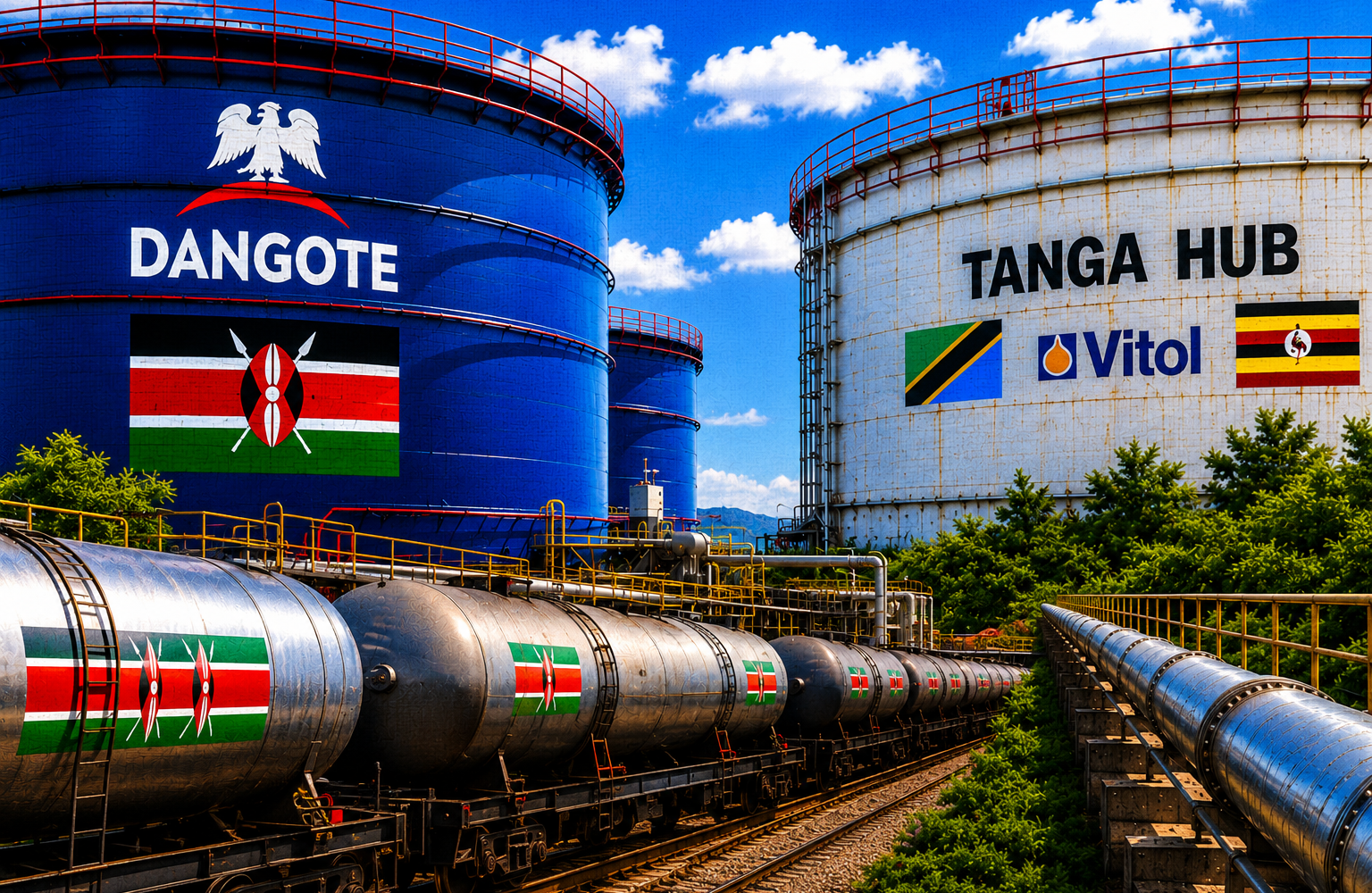
In Kenya, Aliko Dangote is advancing plans for a massive refinery at Lamu capable of processing around 700,000 barrels a day. Tanzania and Uganda, meanwhile, are working with Vitol on an energy hub at Tanga, where the East African Crude Oil Pipeline terminates.
If even a substantial part of these ambitions materialises, East Africa’s petroleum map will change dramatically. A region that has long shipped crude out and imported expensive refined products back could increasingly refine its own fuel.
For Burundi, which imports virtually all the petroleum it consumes, this looks at first like somebody else’s party. It isn’t. Burundi’s mistake would be to look at Lamu and Tanga and ask: where is our refinery? Please, no.
A country does not need a refinery simply because its neighbours are building them, any more than every household needs a bakery because it eats bread.
Burundi consumes perhaps 4,000 to 5,000 barrels of petroleum products a day. Dangote’s proposed Lamu refinery alone would process around 700,000 barrels daily. Building a Burundian refinery to compete in that environment would be an excellent way of converting scarce dollars into very expensive steel.
The smarter question is different: how can Burundi make these refineries compete for access to Burundi and the markets beyond it?
That is where things become interesting. In this piece let us explore various piece of the puzzle and how it can all come together to benefit Burundi.
Burundi may be landlocked, but it is not geographically useless. Quite the opposite. It sits between Tanzania and the Democratic Republic of Congo, on Lake Tanganyika, with commercial connections towards Rwanda and access to the Central Corridor leading to the Indian Ocean.
And Tanzania and Burundi are already pursuing something that could completely change the economics of this geography: a standard-gauge railway connection.
Put the pieces together.
Fuel arrives at Tanga or another Tanzanian terminal. It moves inland, eventually by rail, towards Burundi. It enters large storage facilities around Bujumbura. Some supplies the Burundian market. Some could, where conditions permit, move across Lake Tanganyika and into eastern Congo.
Suddenly Burundi is no longer merely the unfortunate customer waiting at the end of a very long petroleum supply chain. It is part of the supply chain. That distinction is worth money.
Negotiate as a corridor, not as a small country
Burundi’s domestic market will never frighten Dangote or Vitol into offering extraordinary concessions. It is simply too small. So Burundi should stop negotiating as a market of roughly 14 million people and start negotiating as a corridor.
The pitch to Tanga, Vitol, Dangote and prospective financiers should be simple: Burundi offers its own petroleum demand, strategic storage, the emerging Tanzania-Burundi railway, Bujumbura Port, Lake Tanganyika and potential access towards eastern DRC.
Bundle those together and the conversation changes.
Burundi could tell suppliers: we will guarantee a certain volume of purchases over five or ten years. In return, we want competitive benchmark pricing, guaranteed supply during disruptions, extended payment terms and investment in the infrastructure required to move your products inland.
And Burundi should talk to both sides. Tanga is geographically the more natural partner, particularly because Tanzania is Burundi’s principal route to the sea and is developing the railway connection. But that is precisely why Burundi should also be talking to Dangote.
The worst possible outcome would be replacing dependence on distant petroleum suppliers with dependence on a single regional supplier.
Competition is Burundi’s friend. If Tanga knows Bujumbura can buy from Lamu, Tanga has an incentive to sharpen its pencil. If Dangote knows Burundi has an attractive Tanzanian option, he has reason to offer better terms.
There is no need to choose Team Tanga or Team Lamu and start printing T-shirts. Burundi should be Team Burundi.
Build the tank, not the refinery
The physical centrepiece of this strategy should be considerably less glamorous than a refinery: storage tanks. Nobody holds presidential ceremonies to admire petroleum tanks. They should.
Burundi has repeatedly suffered fuel shortages, while foreign-exchange scarcity makes emergency purchases difficult. A properly managed strategic petroleum reserve would therefore be both economic infrastructure and national insurance.
SOPEBU, the state petroleum company, has already identified the ambition of maintaining roughly three months of strategic stocks. Burundi should use the refinery race to turn that ambition into a regional project.
Imagine a large energy and logistics terminal near Bujumbura connected eventually to rail, road and Lake Tanganyika. It could hold Burundi’s strategic stocks, commercial inventories belonging to fuel companies and potentially products destined for neighbouring markets.
Burundi would earn money from storage, handling, transport and transit. More importantly, whoever supplied those tanks would have to compete for the privilege. That is strategic leverage.
But who pays?
Here Burundi must be careful. The government should absolutely not borrow hundreds of millions of dollars commercially, buy enormous quantities of fuel and hope everything works out. Burundi already has limited foreign-exchange reserves and significant debt vulnerabilities. The trick is to finance different pieces differently. Start with the fuel itself.
Afreximbank has a multibillion-dollar programme specifically designed to finance African petroleum imports from African refineries. Burundi is an Afreximbank member, and SOPEBU is exactly the sort of national petroleum entity that could seek a revolving trade-finance facility.
Instead of paying cash before every shipment, SOPEBU could negotiate 90-, 120- or 180-day financing. Fuel arrives today. It is distributed and sold. Cash is collected. The financing facility is repaid. Then it revolves for the next cargo. That is much better than the central bank having a small heart attack every time another tanker needs paying.
The Trade and Development Bank, of which Burundi is also a member, could participate alongside Afreximbank and commercial lenders. Vitol or another commodity trader could provide supplier credit too. Major traders routinely have stronger balance sheets and cheaper access to dollars than governments such as Burundi. Burundi should use that advantage rather than pretend it doesn’t exist. Then finance the permanent infrastructure separately.
A Bujumbura petroleum terminal could be established as a special-purpose company, with SOPEBU, private investors and perhaps a strategic petroleum or logistics company contributing equity. African lenders could provide long-term project debt. SOPEBU would sign a long-term agreement guaranteeing minimum use of the terminal. Those predictable revenues would help repay the lenders.
Meanwhile, public infrastructure—the railway connection, port facilities, roads and border systems—belongs in another financing basket altogether. That is where concessional institutions such as the African Development Bank should play the larger role.
The AfDB is already financing transport infrastructure in the Central Corridor and has backed the Tanzania-Burundi railway programme. Burundi should therefore present petroleum logistics not as an isolated oil project but as an anchor customer for the railway.
Trains need cargo. Fuel is cargo. And once those trains exist, they can carry fertiliser, cement and machinery into Burundi and minerals, agricultural goods and other exports out.
That is how the petroleum opportunity becomes an economic-development strategy rather than merely a fuel-security strategy.
Don’t ask for money. Bring a deal.
This may be the most important part. Burundi should not arrive in Cairo, Abidjan or Nairobi with PowerPoint slides saying it needs $300 million for energy security. Financiers hear versions of that every day. Burundi should arrive with contracts.
Here is our annual petroleum demand. Here is SOPEBU’s five-year purchasing commitment. Here is the land for the terminal. Here are projected storage fees. Here is the railway connection. Here are the potential transit markets. Here is what government will provide. Here is what private investors will provide. Now finance the cash flows.
Banks finance deals more enthusiastically than aspirations. The same principle applies when negotiating with Dangote and Vitol. Burundi should not ask them for favours. It should offer them customers.
The refinery race gives Burundi a rare opportunity because both coastal systems will eventually need inland markets. Refineries make money when they run. Storage terminals make money when products move. Railways make money when trains carry freight. Burundi can provide all three with throughput.
Its small size, paradoxically, may even help. Burundi does not need to dominate East Africa’s petroleum industry. Capturing a modest share of the value generated by storage, financing, transit and distribution would already matter enormously to its economy.
The real prize, therefore, is not owning the refinery. Let Kenya and Tanzania fight over that trophy.
Burundi should quietly build the tanks, secure the railway, modernise Bujumbura Port, arrange the financing and make both sides compete to fill them. Sometimes the smartest person in a gold rush isn’t the one digging the biggest hole.
It’s the one charging everyone to cross the bridge.