Ndadaye’s party will not contest Burundi’s 2027 presidential election
Sahwanya-Frodebu says talks with the government and the electoral commission gave it no reason to expect next May’s vote to differ from the 2025 polls, in which the ruling CNDD-FDD took every elected seat in parliament.

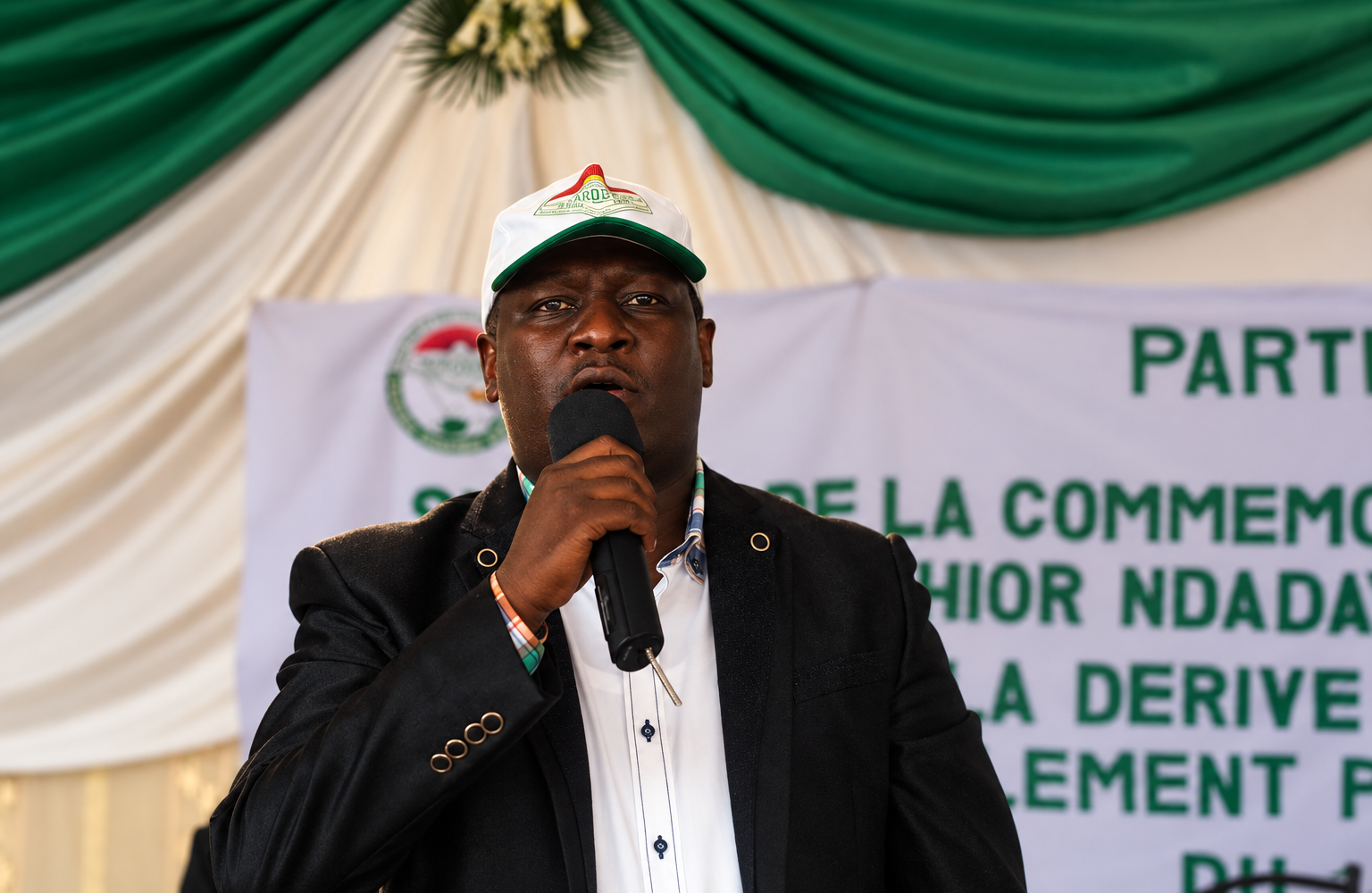
Sahwanya-Frodebu, the party of Melchior Ndadaye, Burundi’s first democratically elected president, will not field a candidate in the presidential election set for 3 May 2027. The party says the vote is being prepared under the same conditions that produced what it calls unprecedented fraud in 2025.
The decision was taken on Saturday, 10 October, at a meeting of the party’s National Council in Bujumbura. It was announced in a statement in Kirundi signed by the party president, Patrick Nkurunziza. Council members, the statement says, found numerous flaws in the preparations and concluded that next year’s election would be no different from the 2025 legislative, senatorial, communal and hill council elections, which the party describes as marked by theft. Frodebu appears to be the first party to withdraw formally from the presidential race.
The party had little chance of winning. In the 2020 presidential election, Sahwanya Frodebu’s candidate received 0.47% of the vote, according to the electoral commission. Its weight comes from its history. iwacu-burundi
Frodebu was formed by followers of Ndadaye in 1986 and legalised as a political party in 1992. In 1993 it won power and put forward Ndadaye as president, making him the country’s first Hutu head of state. Army officers killed him in a coup attempt that October, about three months after he took office. His murder set off massacres and a civil war that lasted more than a decade. The CNDD-FDD, which has governed since 2005, grew out of the armed movement formed after the assassination, which said it was fighting to restore the democracy his death had ended. Frodebu’s letterhead still calls Ndadaye the national hero of democracy. The announcement comes eleven days before the 33rd anniversary of his death.
The statement says the party weighed two options. It could take part in an election it believed would not be held transparently. Or it could press for elections organised in line with the constitution, with results accepted by everyone. According to the statement, discussions with the country’s leaders, including the head of the electoral commission (CENI), gave no grounds for hope that conditions would change.
The 2025 elections give the party’s argument its context. The electoral commission said the CNDD-FDD won 96.51 percent of the vote. No other party reached the 2 percent threshold for seats in the National Assembly, so the ruling party took all 100 elected seats. Olivier Nkurunziza, leader of the Uprona party, which won 1.38 percent, called the elections rigged. Human Rights Watch said the elections took place with free speech and political space severely restricted. The African Union praised the vote as peaceful, while other observers, including the Catholic Church, reported serious irregularities such as ballot stuffing and forced voting. The main opposition party, the CNL, was barred from the elections.
The ruling party has already chosen its candidate. President Évariste Ndayishimiye, whose term ends in 2027, was nominated on 26 April 2026 as the CNDD-FDD’s candidate for a second term. He was first elected in May 2020, in a vote marked by allegations of fraud and the disqualification of his main rival’s candidacy.
Opposition doubts about the 2027 process had surfaced before. The commission announced the election date at a meeting that opposition parties boycotted. In a joint statement, opposition groups said the commission lacked the independence to organise a fair and transparent election. They also argued that preparations were premature without an inclusive political dialogue.
The commission faces practical constraints as well. It has budgeted about 115.9 billion Burundian francs (around $38.9 million) for the election, but had only 3.9 billion francs on hand when it presented the plan, less than 4 percent of the total. Under its timetable, final results are due on 18 May 2027 and the winner will be sworn in on 18 June; any run-off would be held on 1 June.
Frodebu is not leaving politics. The statement says it will continue to propose solutions to the country’s problems, with the aim of elections that satisfy all Burundians, winners and losers alike. It calls on members to prepare for the 2030 legislative elections and, especially, the communal and hill council elections. The council also approved amendments to the party’s statutes and internal rules.
The statement does not say whether Frodebu will back another presidential candidate or ask its supporters to abstain.