The danger of being small and staying small: Xenophobia against Burundians in Kenya
The Burundian selling mandazi did not steal Kenya’s jobs. He is simply visible, foreign, and poor, the perfect scapegoat for failures created far above his pay grade. We may come from a small country, but we do not have to remain small people.

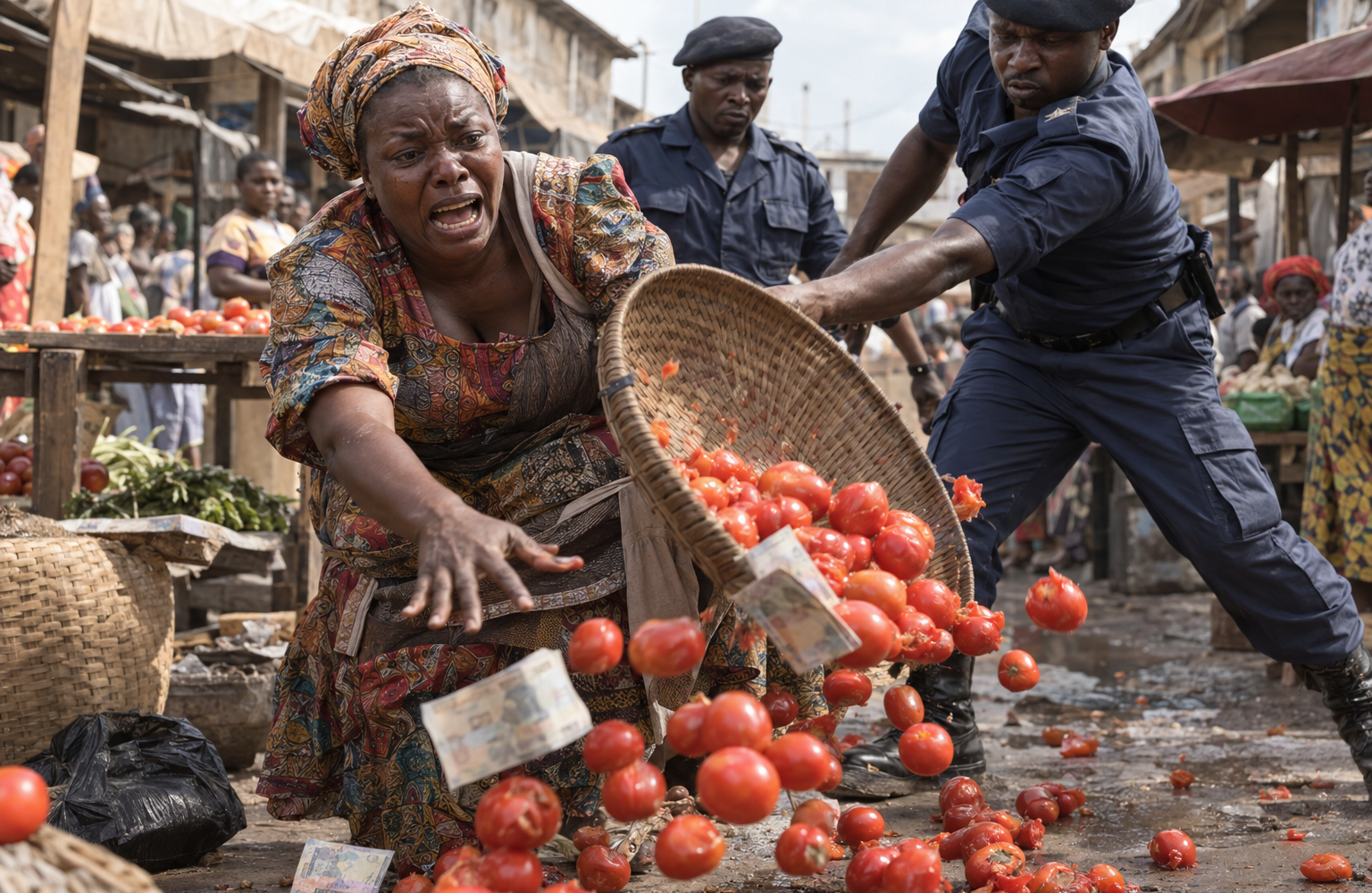
There’s a woman I keep thinking about. Not somebody famous, not somebody with a name you’d recognize. Just a tomato seller at the old central market in Bujumbura, tray balanced on her hip, doing the same hustle her mother probably did before her.
Then the agents show up. Not thieves. Police Agents. State agents, the ones who are supposed to protect commerce, not scatter it across the pavement like she’d committed a crime by trying to feed her children. The tomatoes go flying. The cash goes flying. She goes home with nothing.
Keep that image close, because it’s about to travel. It’s about to cross a border, put on a Kenyan accent, and repeat itself in Nairobi, Mombasa, Kisumu, wherever a Murundi has set up a small stall selling something small to survive.
Now think about a young man selling mandazi and kahawa on a Nairobi street(May be a nephew of that Burundian Tomato seller), he is an unlikely architect of Kenya’s unemployment crisis. He does not control interest rates. He does not write the national budget. He has never awarded a government tender, negotiated a foreign loan or misplaced billions of shillings.
Yet when jobs become scarce and public anger rises, it is remarkably easy to present this man and his flask of tea as an economic emergency. That is the convenience of the small foreigner: he is visible enough to blame but too weak to answer back.
Last month, President William Ruto ordered authorities to close small businesses operated by foreigners without the required permits.
The government later clarified that the directive concerned undocumented traders and announced a temporary registration arrangement for East African nationals. But by then, the political signal had travelled further than the legal explanation.
The same old trick, new country
Let’s be honest about what’s happening in Kenya right now, because pretending otherwise helps nobody. President Ruto has been making noises about foreigners “taking jobs,” the kind of rhetoric that plays extremely well on the radio and extremely badly for the person selling roasted maize by the roadside who happens to have been born in Ngozi instead of Nyeri.
It’s not a new script. South Africa wrote it first with Operation Dudula and years of xenophobic violence before that, Nigerians, Zimbabweans, Malawians beaten, shops looted, all in the name of “protecting local jobs” that, curiously, never seem to materialize once the foreigners are chased out.
Here’s the trick, and it is a trick: when a government fails to create jobs, fails to grow an economy, fails to deliver the basic promise that gets politicians elected in the first place, it needs somewhere to point the anger that builds up.
Somewhere that isn’t a mirror. A small trader without papers, without a union, without a lobby, without an embassy that picks up the phone on the first ring (but big up to Burundi’s embassy in Kenya, they did a good job recently), that’s not a threat. That’s a target. It’s cheaper to blame the mama fua from Bujumbura than to explain why unemployment in Kenya has stayed stubbornly, embarrassingly high despite a decade of “hustler” promises.
This isn’t a Burundi problem or a Kenya problem. It’s an old, tired formula: economic failure plus visible foreigner equals convenient scapegoat. Rome did it. Every failing regime since has done it. Ruto is just the latest man reading from the script, and Burundians happen to be standing where the finger is pointing this time.
Yes, Burundi failed us first
Now, before anyone accuses this piece of being naive about home, let’s not romanticize Burundi. The country that pushed so many of its people out the door is the same country that can’t be bothered to protect the ones who stayed and tried to make an honest living.
That scene at the central market wasn’t an isolated cruelty. It’s policy by default: a state so broke and so threatened by informal commerce it can’t tax that it would rather humiliate a vendor than figure out how to include her in the economy.
Burundi is, by most measures, one of the poorest countries on earth. The job market here isn’t struggling, it’s basically theoretical for most young people. So of course people leave. Of course they land in Kigali, Dar, Kampala, Nairobi, wherever there’s air to breathe and a coin to earn.
But here’s where I want to push back against my own people, gently, like a brother would.
Leaving Burundi because the system there is broken and then rebuilding the exact same posture of smallness abroad, invisible, unorganized, easy to scatter, is choosing the same ending with a different backdrop.
If the vendor scene repeats itself in Nairobi’s version of the central market, whose fault is that, really? The Kenyan mob’s, sure. But also ours, for showing up alone every single time.
Small jobs are fine. A small mindset isn’t.
Let’s separate two things that Burundians abroad tend to fuse into one: the job, and the posture.
There is nothing shameful about selling mandazi, washing dishes, cutting hair, doing boda runs, or any of the thousand honest hustles that keep a person fed while they find their footing in a new country.
Small work is not the enemy. Small work done in isolation, with no plan to grow, no safety net, no collective voice, that’s the enemy.
Burundi is a small country. Fine. That’s geography. It is not, and should never be treated as, a psychology. Somewhere along the way we let “we are small” become an explanation for staying scattered, staying quiet, staying easy to push around.
That’s the real danger this piece is trying to name: not that Burundians do small jobs abroad, but that too many of them treat smallness as a permanent identity instead of a temporary station on the way to something sturdier.
What the ants already figured out
Here’s where biology, of all things, has something to teach us. Ants are tiny, genuinely, laughably tiny compared to almost everything that wants to eat them. A single ant, alone, is lunch for pretty much anything with a mouth.
And yet ant colonies are among the most successful, most resilient social structures on the planet, older than most human civilizations, thriving on every continent except Antarctica. How? Eusociality.
Division of labor. Collective defense. Shared resources. Nobody forages alone and nobody defends the colony alone. The individual ant stays small. The colony becomes formidable.
Bees do the same thing. Termites do the same thing. Nature figured out millions of years ago that smallness plus organization beats bigness plus isolation almost every time. A lion doesn’t fear one ant. A lion absolutely fears a nest of them defending their queen.
Burundians abroad are, structurally, in the position of the individual ant, small, easily dismissed, easily scattered by anyone bigger who decides to make an example of them. What’s missing isn’t strength of character.
Burundians are famously hardworking; ask any employer in Nairobi who’s had one on staff. What’s missing is the colony. The structure that turns a thousand individually vulnerable people into one body that a government thinks twice before harassing.
Killing the curse
There’s a saying that gets repeated so often among Burundians it’s basically folklore at this point: “Ubarundi ntituzi gukorera hamwe” — Burundians don’t come together, Burundians can’t unite, we’re cursed with individualism.
I want to say clearly: that’s not a curse. That’s a habit, and habits can be broken, usually faster than people expect once the cost of not breaking them becomes obvious enough.
And the cost is becoming very obvious. A mob doesn’t ask whether you’re the exception to the “Burundians don’t unite” stereotype before they come for your stall.
Coming together is no longer a nice-to-have, a nostalgic dream for church gatherings and weddings. It’s survival infrastructure. A Burundian association in Nairobi isn’t just a WhatsApp group that shares job leads, though it should do that too.
It’s a body that can negotiate with local authorities, that can put out a statement when a member is attacked, that can pool capital so ten mandazi sellers become one supply cooperative buying flour wholesale instead of ten people separately getting squeezed by the same middleman. It’s a body that gives the Burundian embassy a reason to actually show up.
The blueprint nobody has written yet
So what does this actually look like, in practice, for the guy selling mandazi and kahawa on a Nairobi street corner right now? Something like this, and it’s not complicated, it just requires people willing to build it together instead of waiting for someone else to:
Start with the trade association, even five vendors selling the same thing, pooling a small weekly contribution, is a start. That pool becomes a micro-savings scheme, the kind that lets a member buy in bulk this month instead of always the small daily quantity that keeps margins thin. Bulk buying becomes better pricing. Better pricing becomes actual profit instead of survival money. Profit, saved collectively, becomes access to a loan not from a loan shark, but from a savings cooperative the group itself trusts because they built it.
The loan gets the stall a proper cart, then a rented storefront, then eventually the shop that can register formally, pay the modest tax that makes a government think of you as a contributor instead of a nuisance, and start importing goods from home, coffee, is the obvious one, Burundian coffee is genuinely excellent and painfully underexported or exporting Kenyan goods back the other way.
None of this happens for someone selling alone with no plan past today’s earnings. All of it becomes possible the moment ten, fifty, five hundred Burundians decide the mandazi tray is a beginning, not a destination.
Nobody is asking Burundians to stop selling mandazi tomorrow. Somebody has to sell the mandazi. The ask is smaller and bigger at the same time: stop selling it alone. Stop treating the informal hustle as the finish line instead of the on-ramp. Stop letting “we are a small country” do the psychological work of “we will always be small people.”
Ruto’s rhetoric will fade or it won’t, that’s not fully in Burundian hands. What is in Burundian hands is whether the next time a politician anywhere needs a scapegoat, he looks at the Burundian community and sees an easy target, or sees a colony that bites back.