How an artificial exchange rate is choking Burundi’s economy
Burundi's biggest economic obstacle may not be its poverty, but its exchange-rate policy. As the IMF's departing representative argues, one politically difficult reform could transform the country's future.


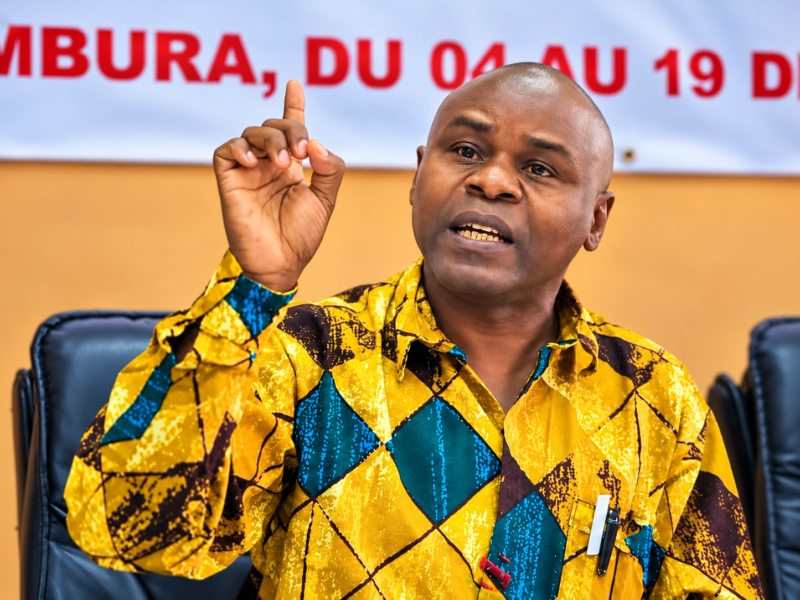
Samuel Delepierre arrived in Bujumbura in 2023 and is now completing three years as the International Monetary Fund’s resident representative. He gave an exclusive interview to Burundi Eco(Economic weekly based in Bujumbura) and said to leave behind a country whose economic position has improved slightly, but which remains constrained by shortages, weak per-capita income growth and an exchange-rate system that, in his view, has become the main obstacle to development.
Samuel Delepierre responding to Mélance Maniragaba’s questions, speaks with the caution expected of an International Monetary Fund representative, but also with a degree of candour rarely heard in the restrained language of international financial institutions. At the end of three years in Burundi, the economist describes his mission as “decidedly positive”. Not because the country’s difficulties have disappeared, they remain considerable, but because a long-weakened dialogue between Bujumbura and the IMF has been restored.
Since 2023, regular economic surveillance missions have resumed, as have consultations under Article IV. The Extended Credit Facility approved that year led to a disbursement of $62 million and opened a new phase of discussions on economic policy. The IMF also expanded its technical assistance in sensitive areas including public finance, tax administration, statistics, banking supervision and monetary policy.
In 2025, with several dozen missions worth nearly $2 million, Burundi even became the largest recipient of IMF technical assistance among fragile states in the region. Yet Samuel Delepierre places less emphasis on the amounts involved than on the method: “frank and constructive” discussions, the gradual development of trust and, above all, the government’s adoption of a macroeconomic stabilisation plan.
An improvement that remains fragile
When the IMF representative arrived in Bujumbura, the country faced a combination of serious imbalances. Growth was weak, inflation was high, and shortages of fuel and sugar were recurrent. Added to this was a dramatic gap between the official exchange rate and the parallel-market rate—a symptom of an economy in which foreign currency was scarce and administratively controlled prices struggled to withstand economic reality.
Three years later, some progress is visible. According to him growth has accelerated slightly. The liberalisation of the sugar sector has helped eliminate shortages. Fiscal discipline has improved. In 2025, gold and coffee exports increased in both volume and value, while inflation fell sharply and the Burundian franc strengthened on the parallel market.
These results are partly due to favourable external conditions, particularly higher gold and coffee prices. They also reflect, according to the IMF, the authorities’ efforts under their macroeconomic stabilisation plan. But none of this can yet be taken for granted. International commodity prices may reverse, fuel shortages continue to slow economic activity, and growth remains only marginally higher than population growth. In other words, income per person is barely increasing.
Burundi nevertheless has considerable ambitions. Its development vision for 2040-2060 requires a radical transformation of the economy. Samuel Delepierre does not question the country’s potential: with the right policies, he argues, Burundi could become one of Africa’s most dynamic economies and achieve double-digit growth. But this promise is obstructed by one central barrier: the foreign-exchange market.
The Exchange rate as the mother of all reforms
For the IMF representative, no measure would be more transformative than unifying the exchange rate. The current system officially keeps the dollar at around 3,000 Burundian francs, while its value on the parallel market is considerably higher. This dual system encourages shortages, discourages investors and creates distortions in the allocation of foreign currency.
A market-based rate would first, according to Samuel Delepierre, help restore fuel supplies rapidly. Fuel remains one of the last products imported at the official exchange rate, which explains both its artificially restrained price and its chronic scarcity. Private operators would be more willing to import it if the price reflected the real cost of foreign currency.
The reform would also make Burundi more attractive to investors. For foreign companies, the inability to obtain foreign currency at a transparent and reliable rate constitutes a major risk. Many choose to delay their projects or turn instead to other East African countries.
Export industries would be among the principal beneficiaries. An exchange-rate adjustment would mechanically double, in Burundian francs, the value of export earnings. In the coffee sector, it would make it possible to increase the price paid to growers for coffee cherries and revive an industry of vital importance to rural communities.
Even international aid would become more effective. Under the current system, Samuel Delepierre explains, $100 converted at the official rate provides beneficiaries—whether children in a school canteen or refugees in a camp—with only about 300,000 Burundian francs. At the market rate, the amount distributed could be almost twice as high.
The weight of symbolism and vested interests
Why, then, has a reform presented as so beneficial still not been implemented? Because the exchange rate is never merely a technical instrument. It touches on purchasing power, sovereignty and the image a country has of its own strength.
The first concern is inflation. An official depreciation of the franc, some fear, could trigger a surge in prices and hurt the poorest households. Samuel Delepierre disputes this argument. The fixed rate did not prevent Burundi from recording cumulative inflation of close to 100% since 2023. More importantly, almost all imported goods are already purchased at the parallel-market rate. Their prices have therefore long reflected the currency’s real weakness.
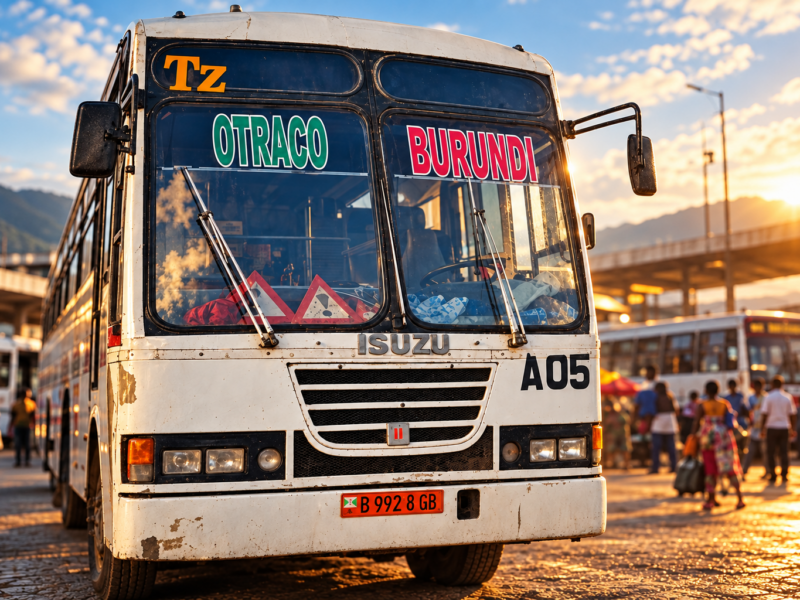
Fuel would be the exception. Its price would have to be adjusted, but the adjustment could be accompanied by targeted subsidies, particularly for public transport and vulnerable households. The IMF representative points to Ethiopia: after a 100% exchange-rate adjustment in 2024, inflation did not rise. On the contrary, it reportedly fell from 21% in 2024 to below 10% at the beginning of 2026.
There is also a powerful symbolic dimension. An officially strong currency is often seen as an attribute of sovereignty. Devaluing it may appear to acknowledge a loss of status. Yet, Samuel Delepierre argues, the strength of an economy is not measured by the administratively declared value of its currency. It rests on its ability to produce, export, attract capital and create jobs.
The reform would also threaten certain economic rents. Every administered exchange-rate system creates beneficiaries: those with privileged access to foreign currency at the official rate can make substantial gains. Ending those advantages requires firm political leadership, clear communication and a long-term vision.
As he prepares to leave Burundi, Samuel Delepierre offers its people a three-part message: “Be optimistic, be ambitious, be demanding.” Optimistic, because the country has a young population, significant resources and a strategic location. Ambitious, because it cannot be satisfied with growth that barely keeps pace with demographic expansion. Demanding, finally, because reforms will succeed only if citizens, public authorities and development partners are prepared to discuss them openly.