Ngozi Market in ashes: One dead and Traders left to face devastating losses
Ngozi’s central market had already burned twice since 2005. On the night of July 9, it burned again. By morning, one trader was dead, nearly 80% of the market was reportedly destroyed, and more than a thousand traders were confronting devastating losses, most of them without insurance.

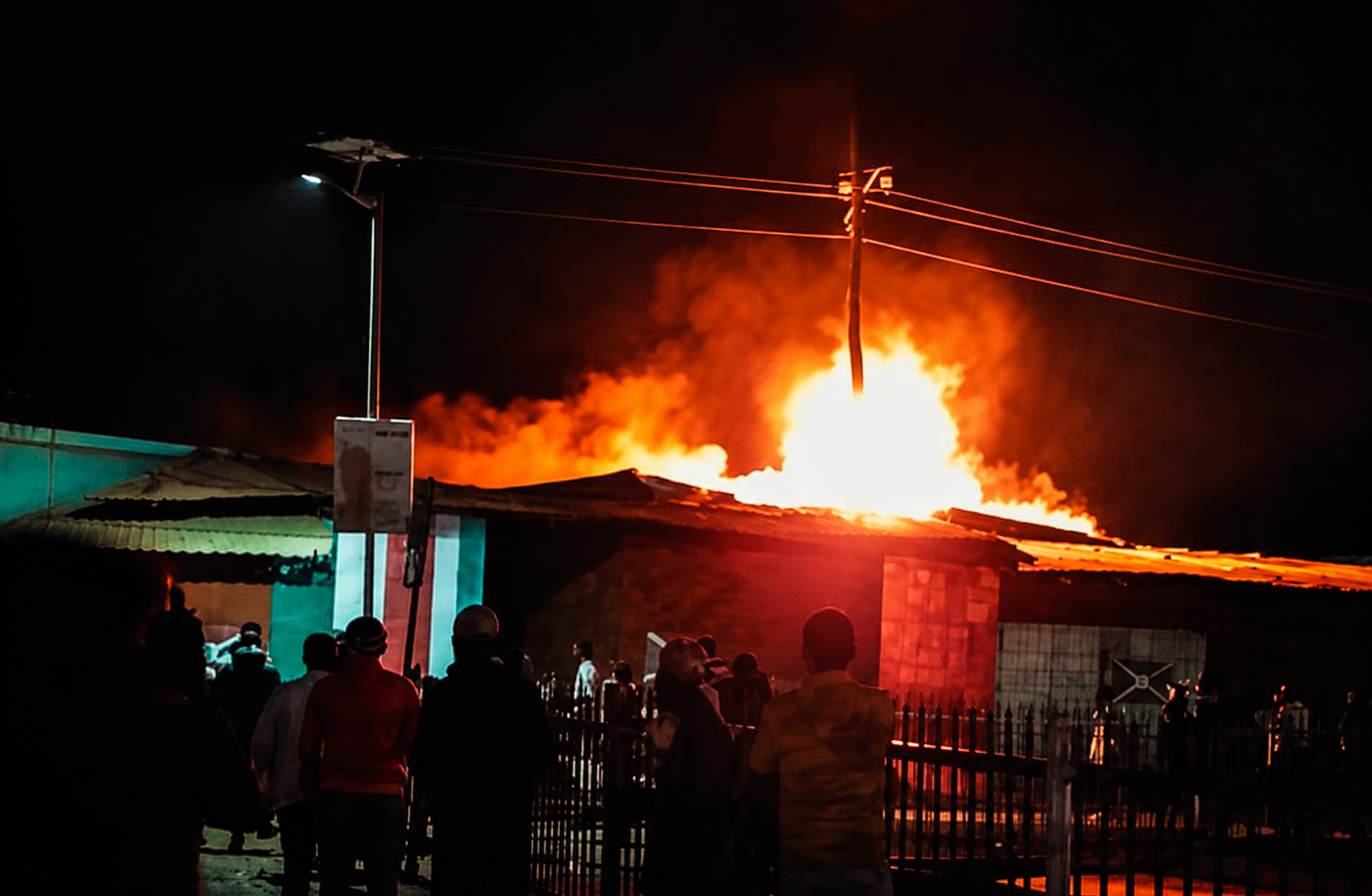
A major fire destroyed much of Ngozi’s central market in northern Burundi on the night of July 9 to 10. One trader died, several people were injured, and hundreds lost their merchandise. Beyond the immediate devastation, testimonies from the scene raise questions about the inadequacy of firefighting resources and expose the extreme vulnerability of traders, the overwhelming majority of whom had no insurance.
In some parts of the market, all that remains are charred sheets of metal, steel structures twisted by intense heat and a few poles standing amid the ruins. On the night of Thursday, July 9, into Friday, July 10, a major fire swept through the central market of Ngozi, one of the most important commercial hubs in northern Burundi.
According to testimonies from the scene, nearly 80% of the market was affected. One person died and several others were injured. The exact scale of the material losses remains unknown, as does the cause of the fire.
But for more than 1,000 traders whose livelihoods depended directly on the market, the devastation is already overwhelming.
A trader dies trying to save his merchandise
The fire broke out on the evening of July 9, at around 8 p.m. according to several witnesses, in the section of the market located above the parking area. Clothes, shoes, cosmetics, beverages and a wide range of other goods were stored and sold there.
The flames quickly spread towards the centre of the market, particularly in the direction of the area commonly known as “BATA”.
During the fire, a trader named John lost his life. According to several accounts, he had attempted to return to his shop to save his merchandise. As the flames advanced, he eventually fled but suffered a sudden medical collapse.
John, who reportedly had a history of hypertension, was taken to hospital, where he died. Several other people injured during the fire were also hospitalised.
His death captures the brutality of the disaster. For many traders, the goods locked inside their shops represented not only their means of earning a living but, in some cases, their entire wealth, often built up through bank loans.
Firefighting response criticised as late and inadequate
Alongside grief, anger is growing. Several traders have criticised what they describe as the inadequate resources deployed to fight the blaze.
According to initial witness accounts, a fire engine dispatched from Kobero, in Muyinga commune, arrived approximately two hours after the fire began. Witnesses said the vehicle was too small and outdated and did not carry enough water to confront a fire of such magnitude.
“The losses are enormous, truly enormous. No one can say they managed to save their property. For most traders, everything went up in smoke before their eyes,” one trader said.
“The fire engine I saw was very small. It kept leaving to fetch water, and every round trip took about 30 minutes. What use could such a vehicle possibly be when everyone knows how vast Ngozi market is?”
These accounts still need to be compared with a detailed report from emergency services and local authorities. There are already conflicting versions of the precise chronology of the disaster: some local witnesses say the fire continued to ravage parts of the market until the morning of July 10, while authorities said it had been brought under control at around 11 p.m.
The discrepancy is significant. It raises questions about the actual duration of the fire, the effectiveness of the emergency response and the resources available to protect a commercial site containing approximately 1,400 trading spaces.
“There is absolutely nothing left”
In the aftermath of the disaster, witnesses described scenes of almost total destruction.
“All the kiosks in the middle of the market burned down. In front of BATA, everything was completely destroyed. There is absolutely nothing left,” one witness said.
“The metal structures burned, the roofing sheets burned. You can see only two or three poles still standing, but all the merchandise that was inside has gone up in smoke. Every trader selling clothes lost everything. Even the area in front of the parking lot was completely destroyed by the fire. Nothing remains there.”
Traders estimate that around 80% of the market was devastated. A multi-storey building located in front of BCB bank was among the few structures left standing, while kiosks and metal structures in the centre of the market were entirely consumed.
The 80% figure, however, remains a preliminary estimate. No comprehensive, publicly documented assessment of the damage was immediately available in the first hours after the disaster.
The disaster has also exposed a profound economic vulnerability.
Ngozi central market contained approximately 1,400 commercial stalls and provided livelihoods for more than 1,000 traders. Yet according to available information, only around 100 had insured their merchandise.
For the overwhelming majority of those affected, there is therefore no guarantee that they will recover the value of the stock destroyed in the fire.
The situation is particularly severe for traders who financed their businesses through bank loans. They may now be forced to continue repaying debts incurred to purchase merchandise that disappeared in the flames within a matter of hours.
Behind the statistics lies the prospect of a broader social catastrophe: hundreds of families suddenly deprived of their main source of income, debts still due and, for many, no insurance compensation to expect.
A regional trading hub reduced to ashes
Ngozi central market’s importance extended far beyond the city itself. Over the years, it had become a major supply centre for traders from across Burundi and from the neighbouring Democratic Republic of Congo.
Goods imported from Tanzania, Kenya, Uganda and especially China passed through the market. Its destruction could therefore have consequences far beyond those who directly lost their businesses, potentially disrupting supply chains and economic activity across parts of northern Burundi.
The fire is all the more troubling because it was not an isolated event. Since 2005, Ngozi central market has been hit by fire three times.
That repeated destruction raises an unavoidable question: what preventive and protective measures were put in place after the previous fires?
So far, no precise answers have been provided regarding the existence of firefighting equipment inside the market, access to water points, the availability of fire extinguishers, emergency access routes or safety inspections conducted before the disaster.
During a visit to the scene, the governor of Butanyerera province, Victor Segasago, expressed solidarity with the victims and announced that the market would be rehabilitated “as soon as possible” to allow commercial activity to resume quickly.
A commission bringing together representatives of traders, the administration, security forces and health services is expected to be established to help accelerate the rehabilitation process.
But for those who lost their businesses, urgent questions remain unanswered. Who will finance the reconstruction? Will traders receive compensation? What will happen to those still repaying bank loans? Will trading spaces be returned to their previous occupants? And, above all, what guarantees will be put in place to prevent a future fire from producing the same catastrophic consequences for a fourth time?
The cause of the fire also remains unknown. An investigation will be needed to establish precisely how the blaze started and whether any failures or responsibilities contributed to the scale of the disaster.
In Ngozi, however, traders do not need to wait for the findings of a commission to understand what they have lost. For many, a lifetime of work, personal savings and merchandise purchased on credit disappeared in a single night.
And as the authorities promise to rebuild the market, another question remains: who will rebuild the lives of those who lost everything?