Burundi drafts El Niño response plan as forecasters warn of heavy rains
Officials will meet in Ngozi next week to write a national operational plan, but residents of flood-prone Gatumba say they have yet to see preparations on the ground.


Burundi’s government will bring together the ministries, agencies and partners involved in disaster response in the northern city of Ngozi from 12 to 15 October to draw up a national operational plan for El Niño, officials said on Thursday. Forecasters expect the weather pattern to bring heavy rain from November until February.
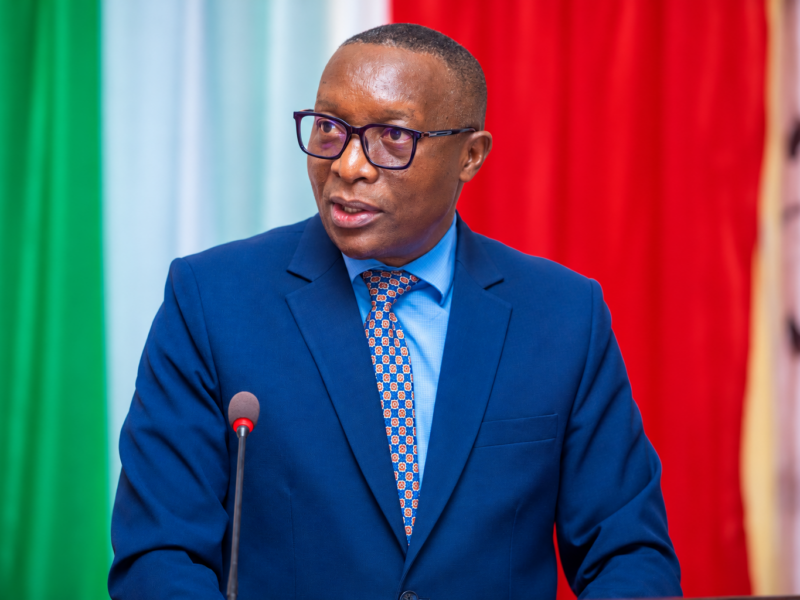
The announcement came at a meeting organised jointly by the government and the United Nations system in Burundi to review the country’s readiness for floods and drought. Colonel Edouard Nzambimana, permanent secretary at the Ministry of the Interior, spoke for the government. He said the authorities had already identified the areas most at risk, among them the communities along the shores of Lake Tanganyika.
“On El Niño, the aim is to prepare before the disaster arrives rather than to confront it once it has struck,” Mr Nzambimana said. The plan, known in French as the Plan opérationnel national El Niño 2026-2027, is meant to set out everything the country needs to cope with the season. “We are still in good time to prepare, because the disaster will begin in November and run until February,” he added.
The warning first came from Burundi’s national meteorological service, IGEBU, on 27 August. It said Burundi was among the countries expected to receive heavy rain during the Agatasi season, the main autumn growing season, with totals of 400 to 600 millimetres. Regional forecasters reached a similar conclusion. The IGAD Climate Prediction and Applications Centre (ICPAC) attributes the expected rise in October-December rainfall partly to a strengthening El Niño and a positive Indian Ocean Dipole. ICPAC also sees a high chance that seasonal rainfall will exceed 400 mm in parts of Burundi.
The precedent is not encouraging. Forecasters have identified 1997 and 2023 as the closest analogue years, and the 2023 event brought one of the worst flood seasons in Burundi’s recent history. The government estimated that the floods affected 203,944 people and destroyed 19,250 homes and 209 classrooms. By April 2024, the number of people internally displaced by flooding had passed 98,000, according to Violet Kakyomya, the UN resident coordinator in Burundi. Researchers who study Lake Tanganyika say its water reached a record 777.2 metres on 23 April 2024.
Gatumba, on the northern tip of the lake near the border with the Democratic Republic of Congo, suffered most. When the lake is swollen, the Rusizi River cannot drain into it, and the resulting floods inundate surrounding areas such as Gatumba. Some residents have been displaced several times in recent years, in particular during heavy floods in 2020 and 2021. In April 2024, then Prime Minister Gervais Ndirakobuca said more than 2,000 flood-affected households in Gatumba would be moved to safer ground. Experts have also pressed for stricter enforcement of the 2012 Water Code, which bans construction within 150 metres of Lake Tanganyika.
Burundi has tried early action before. In November 2023, the World Food Programme and the Burundi Red Cross activated an anticipatory action plan to protect people at risk from El Niño rains and potential floods in two communes of Rumonge province. Thursday’s meeting was intended to set up that kind of coordination at national level.
Diplomats and representatives of international organisations attended. Ms Kakyomya, who leads the UN system in the country, said the organisation would back the government’s efforts. “We commend the government for thinking about preparing early, and we are ready to support this work,” she said. She asked that the plan be made available as early as possible. The UN and the Burundian government launched a joint appeal for financial aid during the 2024 floods, and the country relies heavily on donor support.
In Gatumba, residents interviewed on Thursday said they had seen nothing so far to show that the government was ready to face the season. Several said they feared a return of the exceptional floods of previous years.
The plan’s authors will meet in Ngozi next week. If the forecasts are right, the rains will arrive about two weeks after the workshop ends.