Everyone to the Airport, we have won something!
When real victories are rare, small ones must become enormous. A plaque becomes national pride, a ribbon-cutting becomes transformation, and basic competence becomes visionary leadership. This is the politics of small victories: the less there is to celebrate, the louder the applause.

Human beings have always needed to win.
Long before nations, governments, honorary doctorates, presidential motorcades and television cameras, winning was quite simple. You found food, you survived the night, you escaped whatever animal wanted to eat you, and perhaps you managed to keep your children alive until the next season. That was a good week.
Evolution taught us to recognize success because success meant survival. It also taught us to celebrate. And this makes sense. If you have just escaped being eaten by a lion, nobody should blame you for dancing a little.
But somewhere along the way, human beings discovered another very useful talent: when genuine victory becomes too difficult, we can simply change the definition of winning.
And suddenly, everybody is a champion.
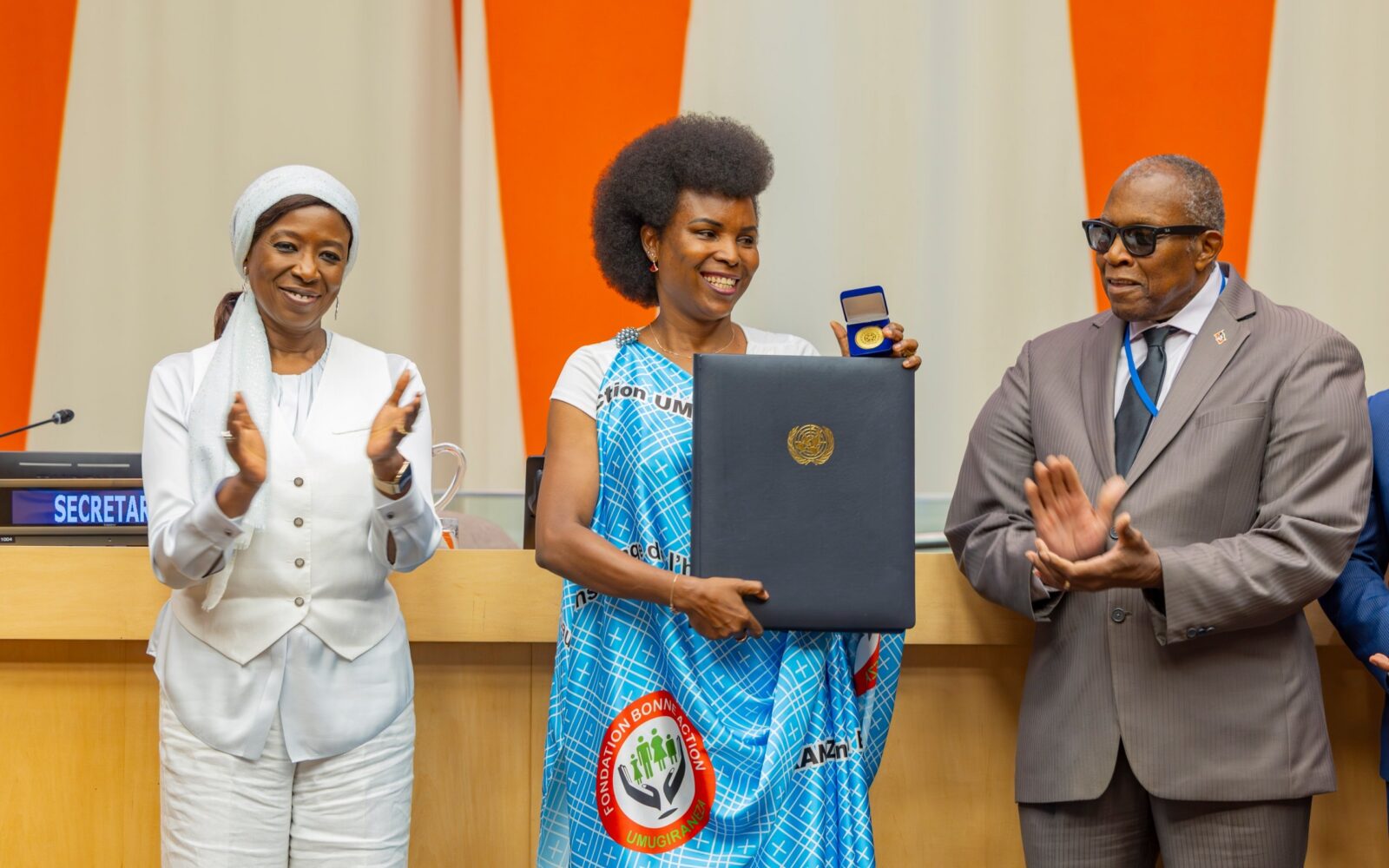
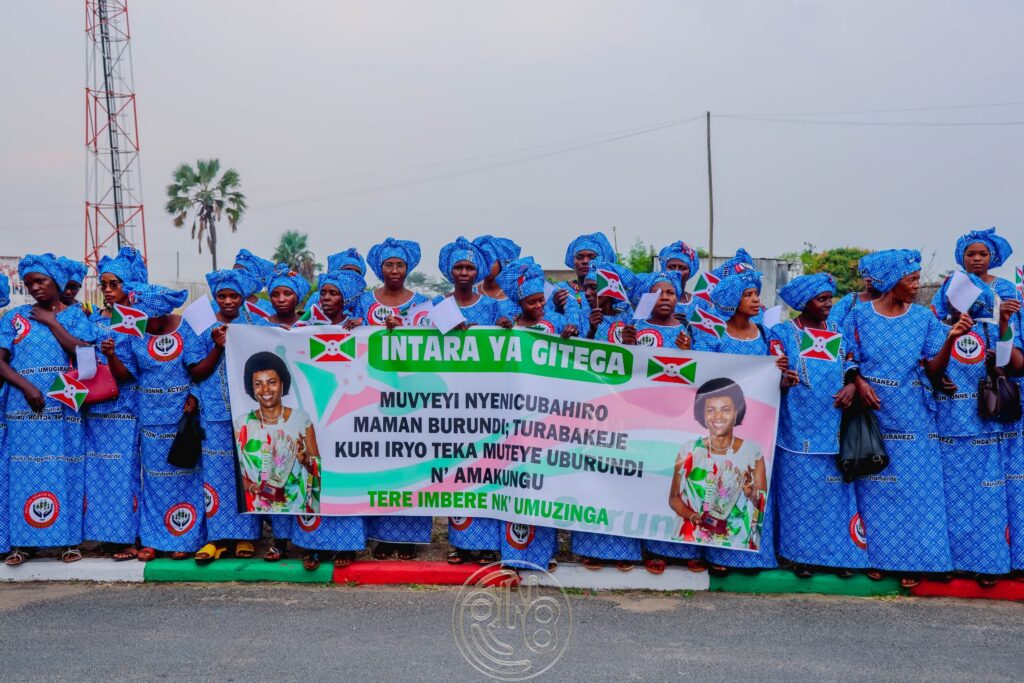
Burundi recently gave us an interesting example of this. The First Lady, Angeline Ndayishimiye, returned to Bujumbura after receiving two international distinctions recognising her work in health, education, women’s empowerment and social welfare. One distinction was reportedly received at the United Nations headquarters in New York, another at the British Parliament.
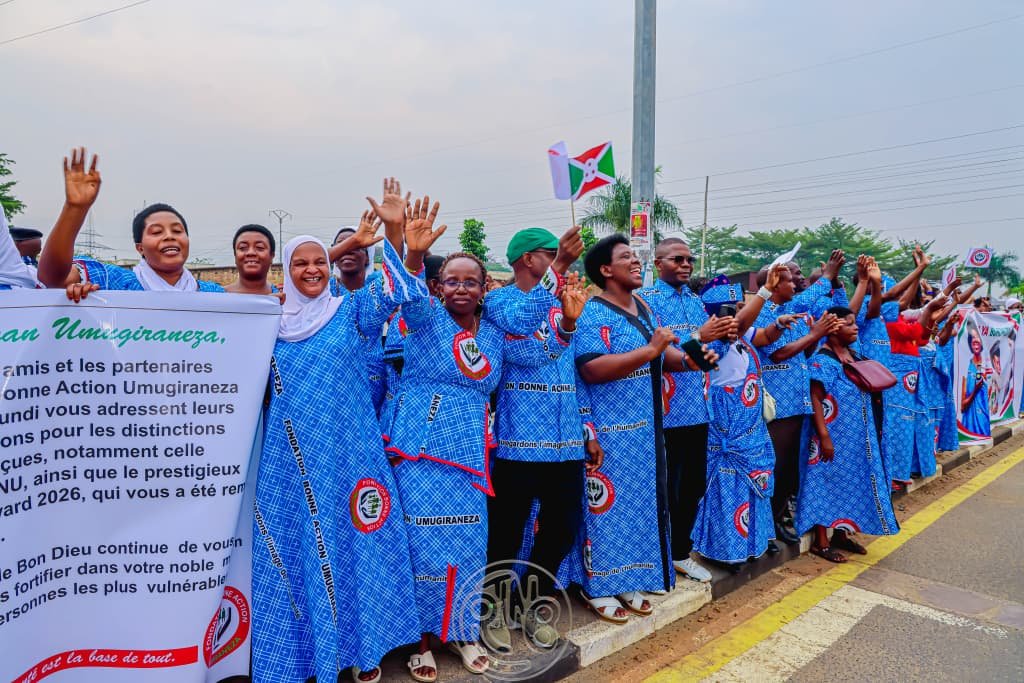
On her return, there were crowds. Many crowds, apparently.
Citizens gathered around Melchior Ndadaye International Airport and along major roads in Bujumbura. Women wore clothes in the colours of the Bonne Action Umugiraneza Foundation. People positioned themselves at Chanic, COTEBU, Gare du Nord and elsewhere to welcome the First Lady home. State media interviewed citizens who described the awards as an honour for the entire nation.
The language was magnificent. Prestigious distinctions. International recognition. National pride. Burundi shining on the global stage.
You could almost hear the trumpets.
Now, perhaps the awards were deserved. I have no reason to claim otherwise, and frankly, that is not even the interesting question here. Work to support maternal health, women suffering from obstetric fistula, victims of gender-based violence, education, nutrition and mental health is important. Very important, actually. If people are doing good work in those areas, they deserve recognition.
But I kept wondering about something else.
What exactly are we celebrating?
And maybe more importantly, why do we need to celebrate it this much?
What does it say about a society when an honorary distinction given to the president’s wife becomes an occasion for mass mobilisation? When citizens gather along roads, state television carries the excitement, political figures offer congratulations, and the entire event is presented almost as if Burundi has just won the World Cup?
And let us remember, Burundi has never been to the World Cup. So perhaps we should save some energy in case that day eventually comes.
There is nothing wrong with recognition. Good work should be acknowledged. The problem begins when we lose all sense of proportion. The scale of a celebration should tell us something about the scale of an achievement, but it can also tell us something about the society doing the celebrating.
Because when great victories are rare, small ones have to become enormous.
This is not just about Burundi, by the way. We see this all over the developing world, and particularly in Africa. A road is constructed, ministers arrive to cut a ribbon. Electricity finally reaches a village decades after electricity was invented, and somebody gives a two-hour speech about visionary leadership. A hospital receives new equipment and suddenly there are banners with the face of a politician who probably has never been treated in that hospital and never will be.
Someone does the job they are literally paid to do and we call them exceptional.
A public official doesn’t steal everything, only some of it, and we begin discussing whether he might be the Nelson Mandela of our generation.
Our standards have become interesting.
But this is what happens when failure lasts too long. Yesterday’s minimum becomes today’s miracle. Basic competence begins to look like genius. Survival becomes progress. Not falling further behind is presented as moving forward.
And because people desperately need hope, we participate in the illusion.
We clap.
Sometimes because we genuinely believe. Sometimes because everyone else is clapping. Sometimes because, well, not clapping can be a political statement too, and not everyone is looking for that kind of trouble on a Sunday morning.
The problem is that applause is addictive, especially for people in power.
There is a particular hunger to be recognised, to be praised, to be called visionary, historic, exceptional, transformative. Ordinary words are no longer enough. Nobody in politics simply does a decent job anymore. They are always champions. Icons. Visionaries. Fathers of development. Mothers of the nation.
Soon we may run out of titles.
And this hunger becomes even more troubling when everything else is scrambling. The economy is struggling. Young people are looking for ways to leave. Families are fighting rising prices. Public institutions remain weak. Hospitals lack basic resources. Ordinary people spend their days negotiating with scarcity, uncertainty and bureaucracy.
Then someone returns with a plaque.
And suddenly, we have won.
But have we?
Does the mother who cannot afford medicine become healthier because a dignitary received an international award? Does the unemployed graduate now have a job? Does the farmer have better access to markets? Are public schools better? Do hospitals suddenly have medicine? Has justice become more independent? Is corruption disappearing? Is the currency more stable?
These questions may sound harsh, but I don’t think they are cynical. In fact, I think they are necessary.
The danger begins when the recognition of one individual is transformed into evidence of national progress. An award can honour a person without validating a government. A ceremony can produce pride without producing development. International applause can feel wonderful while changing absolutely nothing in the daily life of the average citizen.
A trophy is a trophy. It is not a functioning institution.
And yet, political systems understand something fundamental about human beings: we want to belong to victory. If my country wins, somehow I have won. If our athlete wins a gold medal, we say, “We won!” despite the fact that most of us were sitting on a sofa eating something unhealthy during the race.
That feeling is natural. Beautiful, even.
But politics can exploit it.
The politician’s victory becomes our victory. The leader’s recognition becomes national recognition. Their trophy becomes our trophy. Their applause becomes proof that the country itself is moving forward.
This is how mediocrity can protect itself.
Not always through outright lies. Sometimes through disproportion.
One success is magnified until it blocks the view of ten failures. One international award is repeated until it becomes a national mythology. One kilometre of road gets photographed from seventeen different angles. One good harvest becomes an agricultural revolution. One moment of international applause is stretched as far as possible, perhaps far enough to cover several years of disappointment.
And there was something particularly ironic about the First Lady’s return. In her own remarks, she reportedly said that people should work not in pursuit of awards but in service to the population. A reasonable and admirable message.
But around her, the entire political machinery seemed busy doing exactly the opposite: organising crowds, media coverage, ceremonial welcomes, presidential congratulations and a national moment around… the awards.
You have to appreciate the contradiction, at least a little.
This is not an argument against celebrating small victories. Small victories matter. Every functioning school matters. Every woman receiving medical care matters. Every child educated matters. Every life improved is worth something.
But small victories should be building blocks, not hiding places.
They should push us towards higher standards, not give us an excuse to lower them. And perhaps this is the real issue. Burundi, like many struggling countries, does not need fewer reasons for hope. It needs a more demanding definition of victory.
A victory should expand the possibilities of ordinary life. It should strengthen institutions. It should improve human dignity. It should survive beyond the person currently occupying the palace. And ideally, it should not require thousands of people standing beside a road to convince us that it happened.
We should learn to ask uncomfortable questions about what we celebrate, whom we celebrate and why.
Because a society should not be judged only by how loudly it applauds its victories. It should also be judged by how honestly it counts its losses.
Perhaps the greatest evidence of decline is not that a nation has stopped winning.
It is that it has become so hungry for victory that almost anything will do.
A plaque. A ribbon. A title. A motorcade. A crowd.
And, of course, plenty of applause.