Burundi has taken an important step in modernising its financial system. On 5 February 2026, the Banque de la République du Burundi (BRB) completed the migration of its Automated Transfer System (ATS) to ISO 20022, an international standard for financial messaging. From 6 February 2026, all interbank transactions began operating under the new system, covering …

Burundi has taken an important step in modernising its financial system.
On 5 February 2026, the Banque de la République du Burundi (BRB) completed the migration of its Automated Transfer System (ATS) to ISO 20022, an international standard for financial messaging. From 6 February 2026, all interbank transactions began operating under the new system, covering domestic banks as well as the Régie Nationale des Postes (RNP).
The central bank says this move is a key part of its wider digital transformation programme and fits into Burundi’s long-term development plans under Vision 2040 and Vision 2060.
ISO 20022, promoted globally by SWIFT, provides a common language for electronic financial messages. Compared to older formats, it allows much richer and more structured data to travel with each transaction. Around the world, the standard is becoming essential for connecting with regional and international payment systems, while also improving speed and security.
The ATS is Burundi’s main interbank settlement platform. It handles large and time-sensitive payments between financial institutions. Until now, it relied on older message formats such as ISO 15022, also known as MT messages.
With SWIFT setting global deadlines to phase out MT messages, central banks everywhere are upgrading their systems. Burundi’s transition is part of this wider shift, aimed at staying compatible with international payment networks.
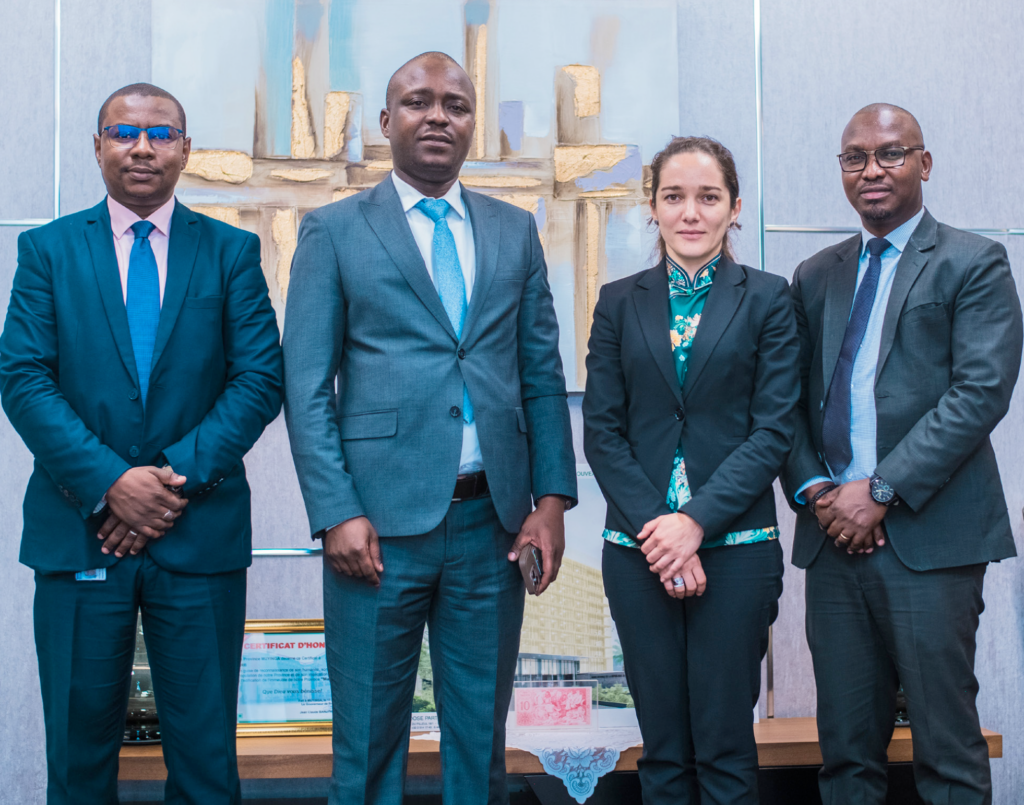
According to BRB, this is not just a technical update. The bank describes it as a strategic upgrade to align with global standards, support regional integration, and strengthen the country’s payment ecosystem.
Recent figures from the BRB’s 2024 annual report help explain why this modernisation push has become urgent.
Throughout 2024, the central bank continued operating the national payment and settlement systems that have been in place since 2017. After several years of steady growth, the volume of payments processed through the ATS fell by 10.2 percent, dropping from 598,682 transactions in 2023 to 537,586 in 2024.
The BRB links this decline mainly to the rapid expansion of fintech services, which are increasingly attracting users with faster, mobile-based payment options that are easier to access than traditional banking channels.
Transaction values also saw a sharp fall. After rising by nearly 11 percent in 2023, the total value settled through the ATS dropped by 26.9 percent in 2024, reaching BIF 30,410.6 billion, down from BIF 41,600.6 billion the previous year.
At the same time, the central bank noted that the global shift toward digital payments continues to accelerate, with no sign of slowing. In many countries, cashless payments are becoming the norm, reshaping how people pay for goods and services and forcing businesses to rethink how they manage money and engage with customers.
To respond to this trend, the BRB launched a wide-ranging national payments modernisation programme in 2024. The initiative is built around three major projects: upgrading the ATS (RTGS and ACH) to ISO 20022, rolling out a national Instant Payment System (IPS), and driving the full digitalisation of Burundi’s financial sector.
The effort has received financial support from the World Bank through Burundi’s Digital Economy Foundations Support Project (PAFEN), helping fund both the ATS upgrade and the implementation of the IPS. The programme has also involved close collaboration between the BRB leadership and PAFEN technical teams.
One of the biggest advantages of ISO 20022 is its ability to carry detailed information in a structured way. This improves accuracy, supports automation, and strengthens compliance checks, including anti-money-laundering controls.
With richer data, systems can verify and reconcile payments more easily, reducing manual work and lowering the risk of errors or fraud. Over time, this can lead to smoother operations across the banking sector.
Several African countries have already made similar moves. Central banks in Kenya, Namibia and South Africa, among others, have migrated key payment systems to ISO 20022. Kenya, for example, has cited better cross-border connectivity and stronger investor confidence as major benefits.
For Burundi, the upgrade supports broader goals to digitise finance and expand access to banking services. These are central pillars of Vision 2040 and Vision 2060. Modern payment messaging is seen as basic infrastructure for future services, including instant payments, mobile money links, and participation in regional payment platforms.
Past assessments of Burundi’s payment systems pointed out the continued use of legacy technologies. Experts said a clear path toward ISO 20022 was needed to improve interoperability across banks, ATMs, and point-of-sale devices.
Still, the transition does not come without difficulties. Banks must update internal systems, train staff, and make sure everyone follows the same standards. This can be costly and time-consuming. And while ISO 20022 offers richer data, the real benefits depend on stronger compliance frameworks and ongoing investment in digital infrastructure.