Burundi farmers block northern highway after fertiliser ration is halved
Residents of Busangana, in Matongo , lay across the RN1 on the day the government set for distributing fertiliser already paid for, after being told two farmers would have to share each 25-kilogram bag.

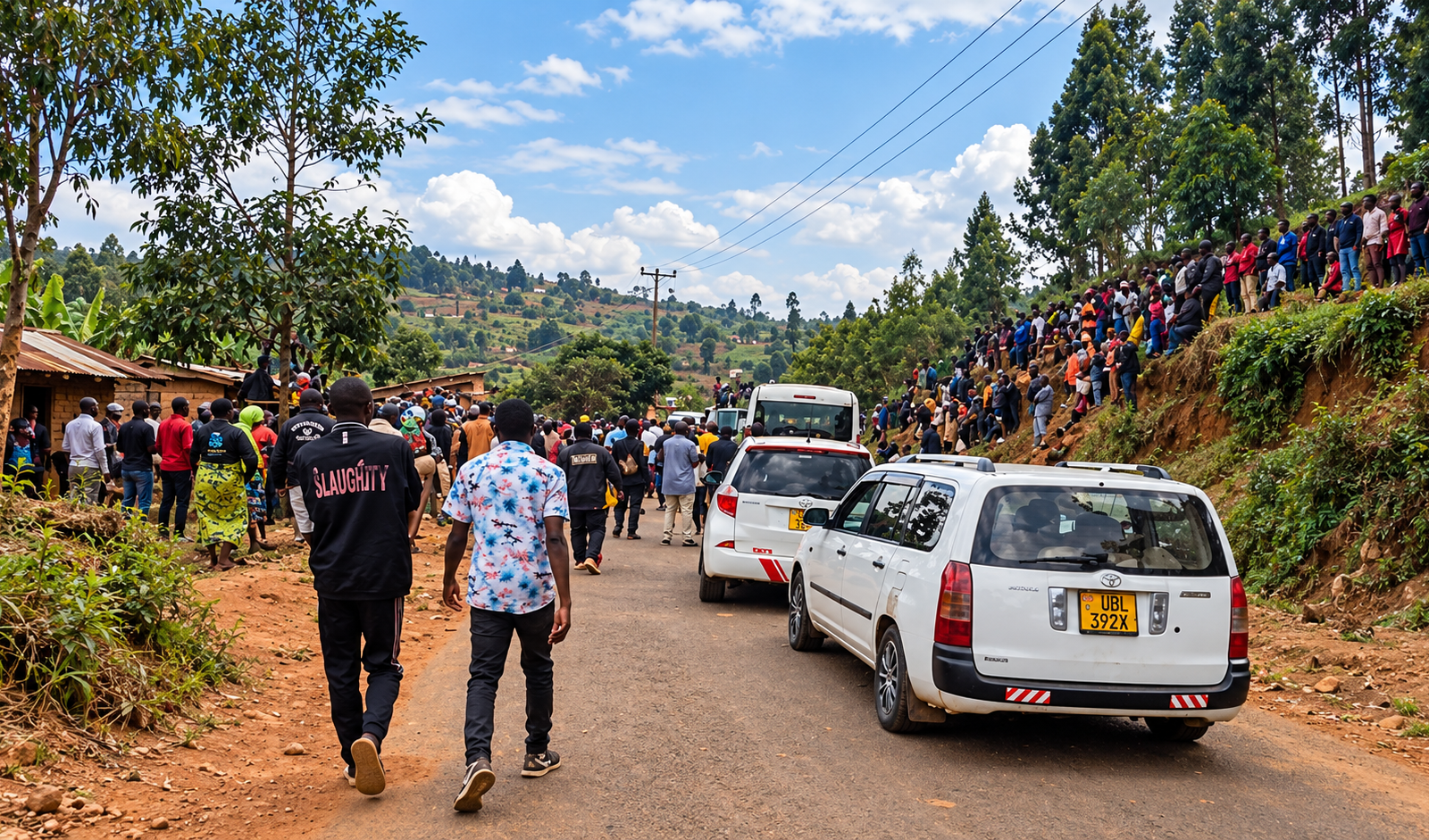
Farmers in Busangana, a zone of Matongo in northern Burundi, blocked the RN1 national highway on Monday morning. They were protesting after being told that the 25-kilogram bag of subsidised fertiliser each of them had been promised would be split between two people.
The protest was reported by local media. It took place on the day the government had chosen to begin handing out fertiliser nationwide. It is one of the most direct confrontations so far over a subsidy system that farmers, civil society groups and independent media have criticised for years as late, short and opaque. In Burundi, agriculture supports more than 70% of the labour force, most of them subsistence farmers.
A traveller whose vehicle was stopped told reporters that a large crowd of residents was lying across the road and blocking passing traffic. It was later reported that the road had reopened. Reports did not say how long the blockade lasted. There were no reports of arrests or injuries, and no official response had been published by Tuesday.
According to the complaints relayed by local media , residents had been called to collect their fertiliser on the understanding that each would receive one 25kg bag. At the distribution point they were told that two people would share a bag. They said they did not know how they would cope or where they would find money to make up the shortfall. They also said the halving was happening only in Busangana.
A second grievance concerned money for fertiliser ordered during the last dry season. Farmers said they had gone to the commune offices in Matongo to recover it, had been unsuccessful, and had been sent on to Kayanza.
The timing followed a government announcement. In a communiqué dated 21 October, the agriculture ministry extended the deadline for paying the balance on fertiliser to Saturday 24 October and said distribution of quantities already paid for would begin on Monday 26 October. The same communiqué opened a window for private importers. Faustin Ndikumana, national director of the watchdog PARCEM, warned that the new rules risked replacing the existing monopoly with a system reserved for a few privileged operators.
Under the national subsidy programme, farmers register with an authorised microfinance institution, pay an advance and receive vouchers that suppliers later redeem with the ministry. Most of the subsidised product comes from FOMI, a Burundian company whose organo-mineral blends are sold as Imbura, Bagara and Totahaza. Estimates of the split in costs differ. A review by the fertiliser development agency IFDC said the state’s share had risen to 60 per cent because of high prices from 2022, while the Forum for the Strengthening of Civil Society (FORSC) put farmers’ share at about 60 per cent.
The scheme matters particularly in this region. A national food security survey cited by Burundi Eco found that Kayanza had the highest share of farmers using fertiliser of any province, at 92.1 per cent. Under the 2025 administrative reform, the former Kayanza province was absorbed into the new province of Butanyerera. Busangana itself was transferred from the commune of Bukeye in Muramvya province as part of that reorganisation.
Complaints about shortfalls have grown steadily. In a statement dated 20 August, FORSC listed advance payments without delivery, recurring delays, insufficient quantities and diversion of fertiliser to influential traders and officials. In Kayanza commune, the group reported that some farmers were buying fertiliser on the black market at 4,500 Burundian francs a kilogram, while a 25kg bag was supposed to cost 33,000 francs at FOMI. In Gitega last March, a farmer told SOS Médias Burundi she had received one sack for five vouchers, and asked how a bag of urea could be shared between two farmers.
The dispute coincides with the main planting season, which depends on the rains that run until December. In July, the US-funded famine early warning network FEWS NET projected that the Northern Depressions would deteriorate into Crisis-level food insecurity between October and December 2026.
The ministry has not said how much fertiliser is available for this round of distribution, how local rations are being decided, or when farmers who are owed refunds will be paid. For the farmers of Busangana, half a bag is what they have been offered so far.