Burundi to refund farmers who paid for FOMI fertilizer but never received it
Farmers have until Friday to reclaim advance payments for the 2026B season, after months of shortages that drew criticism from parliament and warnings of weaker harvests.


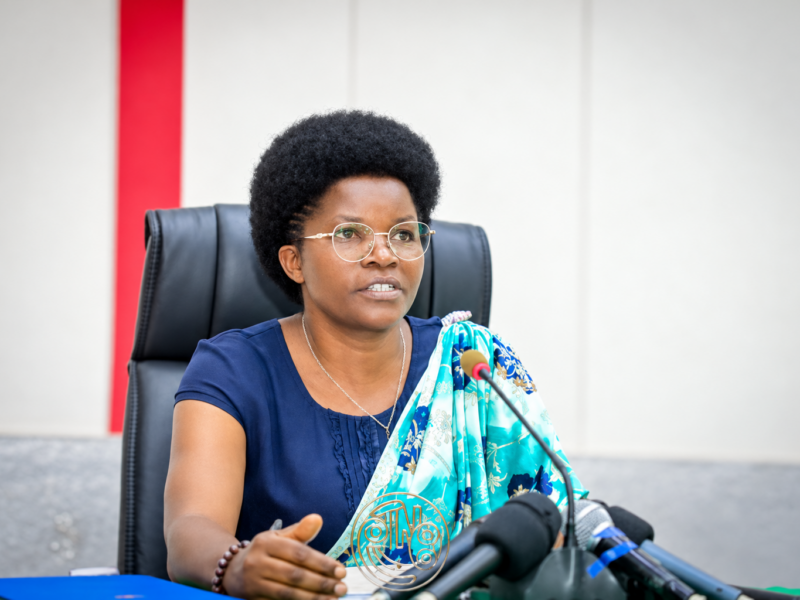
Burundi’s government began refunding farmers on Monday who paid in advance for fertilizer from the FOMI factory for the 2026B growing season but never received it, according to a communiqué signed on 16 October by Calinie Mbarushimana, the Minister of Environment, Agriculture and Livestock.
The refunds run from 19 to 23 October. The ministry says it is acting jointly with the ministry responsible for public finances, and that farmers must go to the institution where they made their payment: the national post office, COOPEC, BCAB, MUTEC, CECM, IHELA, DIFO, Twitezimbere or RECECA Inkingi.
The decision marks a shift for a government that had, until now, tried to clear arrears by delivering fertilizer late rather than returning money. The 2026B season, which began officially on 15 February, was marked from the outset by complaints from farmers who had ordered and paid for fertilizer in advance and had not received it. Some had waited much longer. Iwacu, the independent Burundian weekly, reported that FOMI had been accumulating delivery arrears for about two years.
The communiqué sets fixed amounts for each unserved voucher: 31,000 Burundian francs for FOMI Imbura, 33,000 for urea, 28,000 for FOMI Bagara and 5,000 for dolomite lime. These are the subsidised prices farmers pay. The state covers most of the cost; in 2025 the prime minister said the subsidy reached 65 per cent on FOMI Imbura and more than 60 per cent on FOMI Bagara.
To be repaid, a farmer must present four items: the coupon issued at hill level during the 2025 registration, showing what fertilizer was due and what was received; the payment voucher; a national identity card; and, written on the back of the voucher, their full name, ID number, commune, zone and hill, countersigned by the hill chief. Staff paying out the money must check that the claimant appears on the list of those who paid at that branch for 2026B and that the voucher belongs to that season, then record each refund. The ministry asked administrative and agricultural officials to make sure no eligible farmer is left out.
The communiqué does not say how many farmers are affected, how much money is involved or what will happen to those who cannot come forward within the five-day window. It concerns only the 2026B season. Earlier arrears are not mentioned, although the ministry held a census in January of farmers who had paid for fertilizer between 2022 and 2026 without receiving it.
FOMI, a privately owned company founded by the businessman Adrien Ntigacika, holds a dominant position in Burundi’s subsidised fertilizer programme. Chemical fertilizer imports were banned when the company was given its monopoly. One of the institutions now handling refunds, BCAB, was also set up by Mr Ntigacika, in 2020.
The company’s relationship with the state has deteriorated over the past year. Since late December 2025, the finance ministry and FOMI have been in a dispute over tens of billions of francs. The company says the state owes it more than 50 billion francs for fertilizer delivered beyond the contracted quantities. The finance ministry says those quantities appear in no signed contract. FOMI has attributed its difficulties to a shortage of the foreign currency needed to import raw materials.
On the ground, supplies fell short. In February, FOMI’s commercial director said the company had moved 15,000 tonnes of FOMI Imbura and 4,000 tonnes of urea to depots in Burundi’s five provinces, but agricultural officials in Butanyerera and Buhumuza said they had received only about a third of what they needed. In Bururi, distribution was suspended on 11 February after farmers protested, and the local agricultural office had only 30 tonnes of FOMI Imbura on hand.
The shortage reached parliament. On 25 August, Daniel Gélase Ndabirabe, the speaker of the National Assembly, asked why farmers were being urged to raise production while some who had paid for subsidised fertilizer still had none. “Those people have fertilizer vouchers,” he said. “They should receive their fertilizer first.” In May, Ms Mbarushimana had urged citizens to dig compost pits and make their own organic fertilizer.
The consequences are already showing in the fields. In its August outlook, the US-funded Famine Early Warning Systems Network said fertilizer shortages and high prices would reduce yields in the Season C harvest due in October and November, and would weigh on preparations for Season A. The refund window closes on Friday, as farmers prepare for a season in which the agency expects many to cultivate less land than usual for lack of inputs.