Burundi says Kenya-based traffickers are sending its citizens to Iraq and Afghanistan
The foreign minister told lawmakers that Burundians who leave through these networks are almost impossible to help when they get into trouble, because no licensed agency will take responsibility for them.


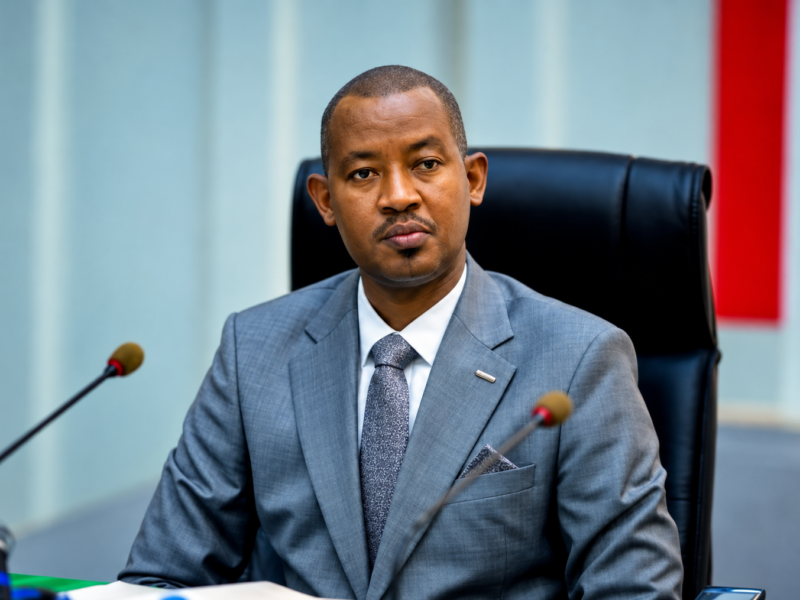
Trafficking networks based mainly in Kenya are recruiting Burundians and sending them to dangerous destinations in the Middle East and beyond, including Iraq and Afghanistan, Burundi’s foreign minister, Édouard Bizimana, told members of parliament. He described a route that begins with a road journey to Kenya, where traffickers take over and arrange the rest of the trip.
Mr Bizimana was answering MPs’ questions this week about how his ministry tracks Burundians who go abroad to work. He said that when these migrants run into difficulty and turn to their own government, the state struggles to help them because they left through channels Burundi does not recognise. “We go to the legally approved agencies that send Burundians abroad and ask them, and they tell us they were not the ones who sent them,” he said.
According to the minister, those inquiries led to an investigation, which found that the traffickers operate from Kenya. He said moving against them is difficult and slow, and that any Burundian who needs help after travelling this way can wait a long time for it.
Distance and the limits of Burundi’s diplomatic network add to the problem. Burundi has no embassy in Iraq, Mr Bizimana said, so consular cases there must be handled through its missions in Qatar or Saudi Arabia. He did not say how many Burundians are believed to have reached Iraq or Afghanistan, or give figures for the cases his ministry is handling.
His prescription was mostly education. Mr Bizimana said much more effort was needed to teach people about the countries where they go to work, so that they weigh their safety and their lives before the wages on offer.
The pattern he described is not new, although the destinations are. For years, the main concern has been women recruited as domestic workers for the Gulf. In 2021, a Burundian cabinet meeting ordered the suspension and prosecution of recruitment agencies linked to Gulf countries. Officials had found that the women recruited were reaching Saudi Arabia, Oman, the United Arab Emirates and Yemen after transiting through Tanzania or Kenya. That same year, the government asked Uganda, Tanzania, Rwanda and Kenya to step up screening for trafficking among Burundian migrants heading to the Gulf.
Kenya has featured repeatedly. In 2021, 26 Burundian women stranded there were helped home by the International Organization for Migration. They had been promised domestic jobs in Saudi Arabia and Oman, and recruiters had restricted their movements and, in some cases, taken their passports.
The official legal channel has its own problems. Burundi and Saudi Arabia signed an agreement in 2021 to regulate the working conditions of Burundian workers. Investigative reporting published last year nonetheless found that many women were stripped of their rights after arriving. The US State Department’s 2023 trafficking report cited government figures showing that 676 Burundian domestic workers in Saudi Arabia and Kuwait received consular, legal or repatriation help between 2020 and 2022. International organisations identified 1,409 potential trafficking victims among returning female migrant workers in 2022 alone.
The State Department has also noted that many Burundian officials do not understand the trafficking law or the difference between trafficking and migrant smuggling, and that this hampers investigations and prosecutions. Mr Bizimana’s account, in which migrants travel voluntarily before losing control of their journey abroad, falls into that grey area.
Mr Bizimana’s remarks come as relations with Nairobi are strained. Last month, after President William Ruto ordered a crackdown on undocumented foreigners and reserved small-scale trading for Kenyans, the minister warned that continued hostility towards Burundians in Kenya could lead Burundi to retaliate against Kenyans living there. Hundreds of Burundians queued at their embassy in Nairobi on 7 September for travel documents to return home.
The minister did not say whether Burundi had raised the trafficking networks with the Kenyan authorities, or what action it expects from them