Burundi health minister promises end to medicine shortages as audit exposes failings at state supplier
Burundi’s state medicine supplier insists it is recovering. But an explosive audit has left MPs asking a more uncomfortable question: where did the money go? With questionable drug purchases, nearly BIF 1 billion tied to an unfinished warehouse and BIF 2 billion invested without dividends, promises to end medicine shortages are colliding with demands for accountability.

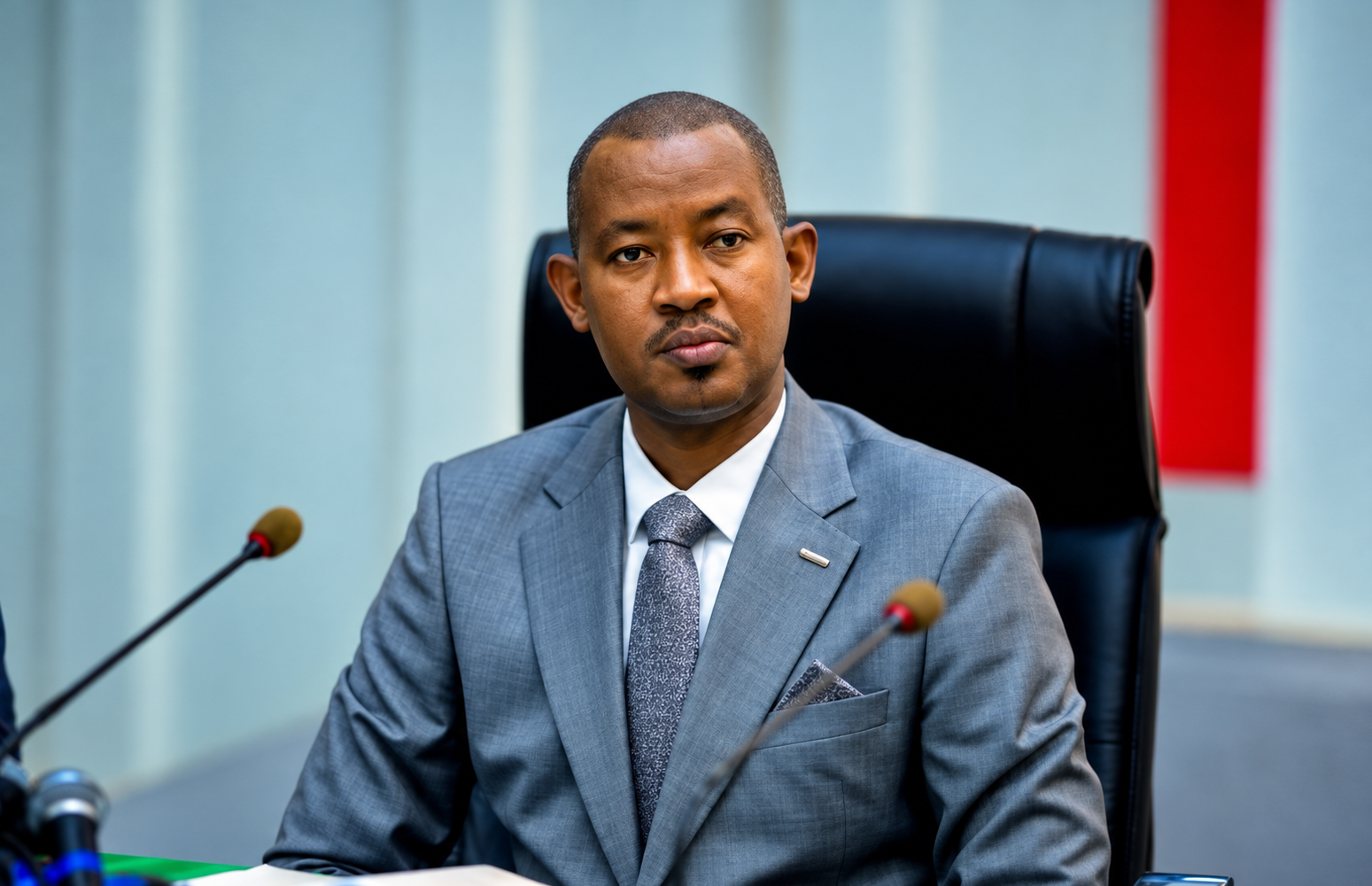
Fidèle Nkezabahizi says availability of medicines has improved, but MPs demand accountability over questionable spending, procurement practices and nearly BIF 2 billion tied up in a private hospital
Burundi’s health minister has pledged to tackle persistent medicine shortages within five years, as MPs raised concerns over financial irregularities and procurement practices at the country’s state pharmaceutical supplier.
Dr Fidèle Nkezabahizi told the National Assembly on Thursday that the availability of medicines had improved in recent months and insisted that CAMEBU, the state body responsible for supplying medicines to public and private health facilities, was recovering from its difficulties.
“CAMEBU is doing well at the moment; it is not sinking,” the minister told MPs at the National Assembly in Kigobe on Sept 3.
But his reassurances came as Burundi’s Court of Accounts presented an audit highlighting shortcomings in the management of the organisation, prompting MPs to demand greater scrutiny over the use of public money.
Among the issues raised was an arrangement under which the Mutuelle de la Fonction Publique, the civil servants’ health insurance scheme, had itself purchased medicines that would ordinarily be procured by CAMEBU.
According to the audit, the practice was based on an understanding between the two institutions but was not supported by a written agreement. MPs questioned whether the arrangement was lawful, pointing out that CAMEBU is supposed to be responsible for procuring medicines supplied to the scheme.
Gélase Daniel Ndabirabe, the president of the National Assembly, reacted sharply.
“Since when does the Mutuelle de la Fonction Publique buy medicines?” he asked. “Who gave it that authority?”
Mr Ndabirabe said the irregularities were particularly troubling because ordinary Burundians continued to contribute money towards the system while sometimes struggling to obtain medicines or, in some cases, receiving expired products.
He urged the health minister to pursue those responsible for losses, arguing that public funds collected from citizens could not be allowed to disappear without consequences.
“The Minister of Health has a very important job in following up on these people,” he said, adding that state money was being lost and, in many cases, not recovered.
Foreign currency blamed for shortages
Dr Nkezabahizi acknowledged that CAMEBU continued to face serious problems but argued that some of its greatest difficulties originated outside the organisation itself.
He singled out Burundi’s shortage of foreign currency, which can delay the importation of medicines and leave health facilities waiting for supplies.
The minister said the situation had nevertheless improved considerably compared with February and predicted further progress in the months and years ahead.
His ministry ultimately wants to eliminate medicine shortages within five years.
The government is also considering domestic pharmaceutical production as a longer-term solution. Dr Nkezabahizi said there were plans to establish a factory that would allow Burundi to begin manufacturing some of its own medicines, potentially reducing its dependence on imports and scarce foreign currency.
Questions over missing construction and hospital investment
The parliamentary debate went beyond medicine shortages.
MPs also raised concerns over nearly BIF 1 billion reportedly allocated for the construction of a CAMEBU warehouse in Gitega, amid questions over why the expected works had not been carried out.
Louis Kamwenubusa, an MP, argued that concerns over the management of public resources were not confined to CAMEBU and pointed to other state-linked institutions, including the INSS social security body, the postal service and Onatel, the telecommunications company.
Mr Ndabirabe called for irregularities identified by the Court of Accounts to result in sanctions rather than merely being recorded in audit reports.
CAMEBU’s investment in Kira Hospital has also come under scrutiny.
Nearly BIF 2 billion was invested in the hospital, but CAMEBU has received no dividends from the investment since 2014.
Dr Nkezabahizi told MPs that Kira Hospital’s poor financial performance up to 2021 had prevented it from paying dividends. A dispute over the matter has been before the courts since 2023.
The hospital has recorded positive results since 2023, according to the minister, but those gains are being used first to offset accumulated losses from previous years.
A five-year strategic recovery plan is now being prepared, with the aim of putting the hospital in a position eventually to distribute dividends to shareholders, including CAMEBU.
A test of accountability
The competing accounts presented in parliament exposed the challenge facing Burundi’s health authorities: ensuring that medicines reach patients while demonstrating that scarce public resources are being properly managed.
Dr Nkezabahizi said CAMEBU was implementing recommendations made by the Court of Accounts and addressing weaknesses identified by auditors. He appealed for support for the health ministry as it attempts to resolve the remaining problems.
Yet MPs made clear that improved medicine availability alone would not settle the questions raised by the audit.
For Mr Ndabirabe, the issue is also one of accountability: when public money is mishandled, he argued, those responsible must be identified and held to account.
The government’s promise of a stronger CAMEBU and, eventually, a Burundi less dependent on imported medicines — will now be measured against a more immediate concern for patients: whether the medicines they need are actually on the shelves.