Maybe it is time we apply “First Principles” to the issue of recurrent fires
We keep blaming the state every time a market burns, but here is the uncomfortable question: how much responsibility are we willing to take for protecting what belongs to us?Mediocrity is expensive, and perhaps the next fire should find us better prepared instead of better at blaming.

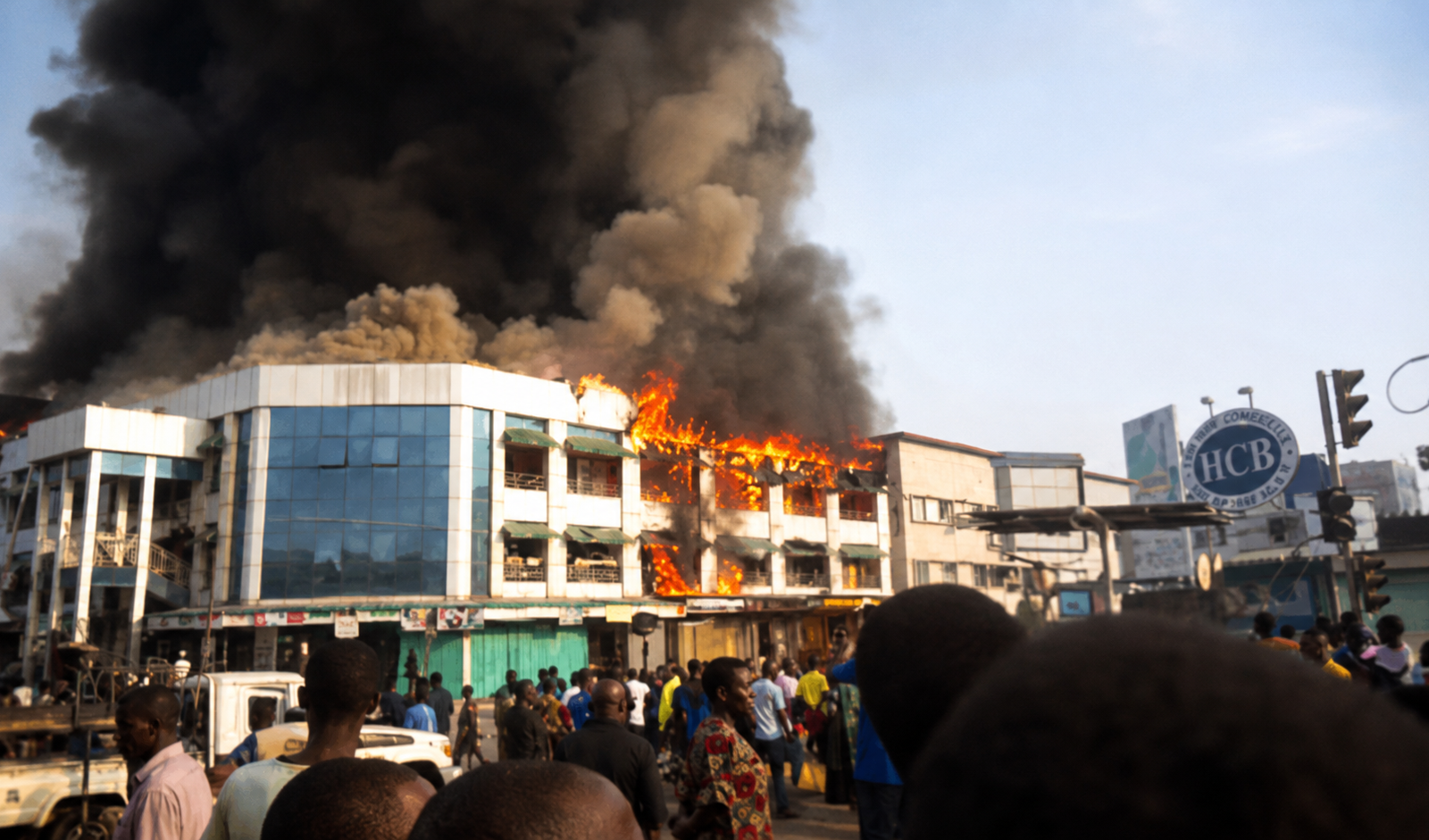
Not long ago, we wrote about the fire at Ngozi market. We asked questions, questioned the response and watched the usual finger-pointing begin. The authorities should have done this. The market management should have done that. The firefighters came late. It was the familiar Burundian soup of regret, incompetence and mediocrity, served when the damage was already done.
A few weeks later, here we are again. Galerie Ndayizamba and Le Parisien in Bujumbura caught fire. Traders rushed to rescue merchandise built up through years of work. People helped. Much was lost.
Today, that Ngozi article should not be written again. At some point, repeatedly being shocked by the same disaster becomes a form of comedy, except nobody is laughing.
So let us ask an uncomfortable question:
How seriously do Burundians take fire as a threat?
Perhaps we need first-principles thinking. Strip the problem down to its basics and ask what actually allows a fire to destroy a market.
Fire needs something to ignite, something to burn and enough time to spread. Our markets provide plenty of fuel: clothes, plastics, cardboard, mattresses and wooden shelves. Then come overloaded sockets, faulty wiring and some electrical installations whose technical philosophy seems to be: connect the wires and leave the rest to God.
The crucial factor is time. A fire detected in its first minutes may be controlled. Twenty minutes later, you are calling the fire brigade, journalists, relatives and perhaps your bank manager.
This is why every market needs a fire strategy: clear exits, extinguishers, alarms, evacuation procedures and assembly points. An assembly point is simply where everyone gathers after evacuation. Without one, emergencies become chaos: one trader runs outside, another runs back for his money, somebody searches for an employee who is already outside, while another gentleman blocks the entrance filming a WhatsApp documentary.
An emergency exit blocked by merchandise is equally useless. It is simply a wall with ambitions.
Then there is individual responsibility. The state absolutely has obligations: inspections, building standards, functioning emergency services, water access and roads that fire engines can use. But while we wait for the state to become efficient, our merchandise remains wonderfully combustible.
Suppose your shop contains 20 million FBu worth of goods. How much have you spent protecting it against fire?
We buy locks, metal doors, guards and cameras because we fear thieves. Yet a fire can remove in thirty minutes what a thief would need three trucks to steal.
This is where being cheap becomes expensive. A qualified electrician looks expensive until faulty wiring burns the shop. An extinguisher looks expensive until everything disappears. Insurance feels like wasted money until you need it.
Mediocrity is very expensive.
Small traders should also explore automatic ceiling fire extinguishers. Depending on the system, these devices activate automatically when heat reaches a specified level and release an extinguishing agent over a defined area. That matters at 2 a.m., when the shopkeeper is asleep and an electrical fault is beginning its career.
They are not magic. The correct system depends on the fire risk, shop size, merchandise and electrical equipment, so professional advice matters. But protecting merchandise worth millions with equipment costing a fraction of its value is basic business sense.
Markets can also organise collectively. Traders already contribute to guards, cleaning, weddings and funerals. Surely we can organise for something that might prevent the next funeral of an entire business. Associations can arrange electrical inspections, maintain alarms, buy equipment collectively, designate assembly points and conduct drills.
The challenge is maintenance. We love inaugurations. There will be speeches, photographs and perhaps matching T-shirts. Six months later, one extinguisher is behind sacks of rice, the alarm stopped working in March, and the only man who received training has moved to Kigali.
Fire safety requires boring consistency.
After Ngozi, we cried. After Galerie Ndayizamba and Le Parisien, we can cry again. Then perhaps we should invest in boring alarms, boring inspections, boring extinguishers, boring drills and boring insurance.
Because in fire safety, boring is beautiful.
Boring means tomorrow morning the trader opens his shop, complains about taxes, argues with a customer over 500 francs and goes home safely.
Nothing happened.
After watching enough markets burn, perhaps nothing happening is exactly the miracle we should start paying for.