Faced with the return of Ebola, the AU seeks a coordinated response
The return of Ebola has become an early test for the African Union's leadership, prompting renewed calls for continental coordination amid mounting health and security challenges.

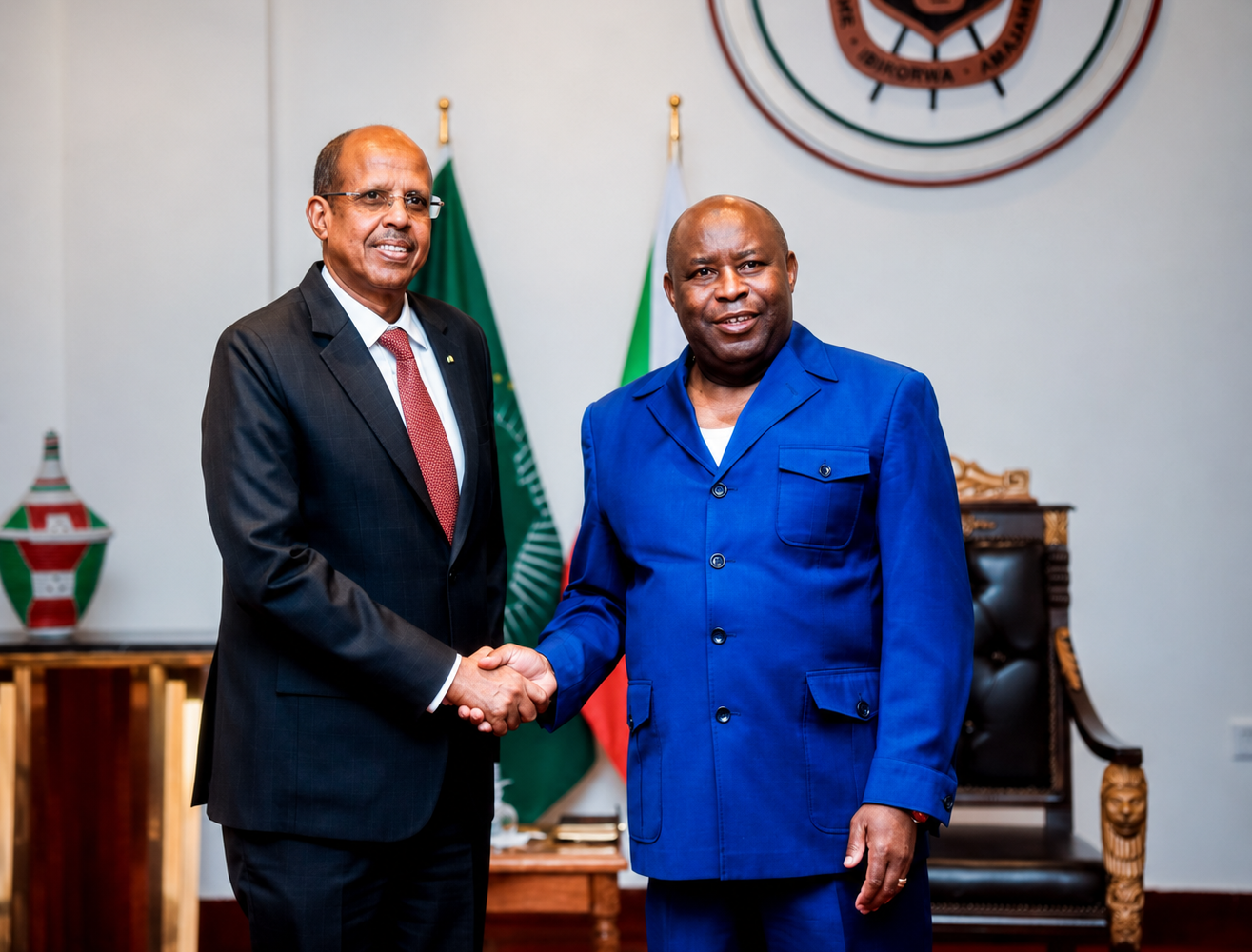
The resurgence of Ebola outbreaks in several parts of Africa has prompted the African Union to step up its response. On Monday, Burundi’s President Évariste Ndayishimiye, who currently chairs the continental organization, met with Mahmoud Ali Youssouf, President of the African Union Commission, ahead of a high-level summit dedicated to the health crisis.
The meeting, held in Burundi’s economic capital, comes as African governments seek to prevent a repeat of the devastating epidemics that have periodically struck the continent over the past two decades. While the scale of the latest outbreaks remains limited compared with previous crises, health authorities are concerned about the speed with which the disease can spread across borders if containment measures are not rapidly strengthened.
A virtual summit convened by the African Union is scheduled for Tuesday and is expected to bring together heads of state, government leaders and major international partners. Participants will assess the evolution of the epidemic and discuss ways to improve coordination between national health systems, regional institutions and international organizations.
Beyond the immediate health emergency, Monday’s discussions reflected broader concerns confronting the continent. According to officials, the two leaders reviewed a range of strategic issues, including economic development, regional security, humanitarian challenges and the acceleration of African integration.
For the African Union, the Ebola crisis is also a test of its capacity to act as a coordinating political force at a time when Africa faces multiple pressures. Armed conflicts continue to destabilize parts of the Sahel, Sudan and the Great Lakes region, while economic recovery remains fragile in several countries following years of global disruptions.
Since the COVID-19 pandemic, African institutions have sought to strengthen continental mechanisms for crisis management. The objective is to reduce dependence on external responses and improve the ability of member states to react collectively to emergencies, whether health-related, humanitarian or security-driven.
The meeting between Ndayishimiye and Youssouf therefore carried significance beyond the immediate issue of Ebola. It highlighted the African Union’s ambition to position itself as a central actor in addressing the continent’s most pressing challenges, while reinforcing cooperation among its 55 member states.
As concerns over public health security continue to grow, African leaders are expected to use Tuesday’s summit to reaffirm the principle of continental solidarity and to mobilize additional resources for prevention and response efforts. Whether those commitments translate into concrete action will be closely watched by both regional observers and international partners.