

Burundi’s new anti-corruption drive repeats past failures, says veteran campaigner
Faustin Ndikumana of PARCEM, once jailed for alleging graft in judicial appointments, wants the government to publish the reforms that civil society helped draft and to strengthen the institutions it already has.

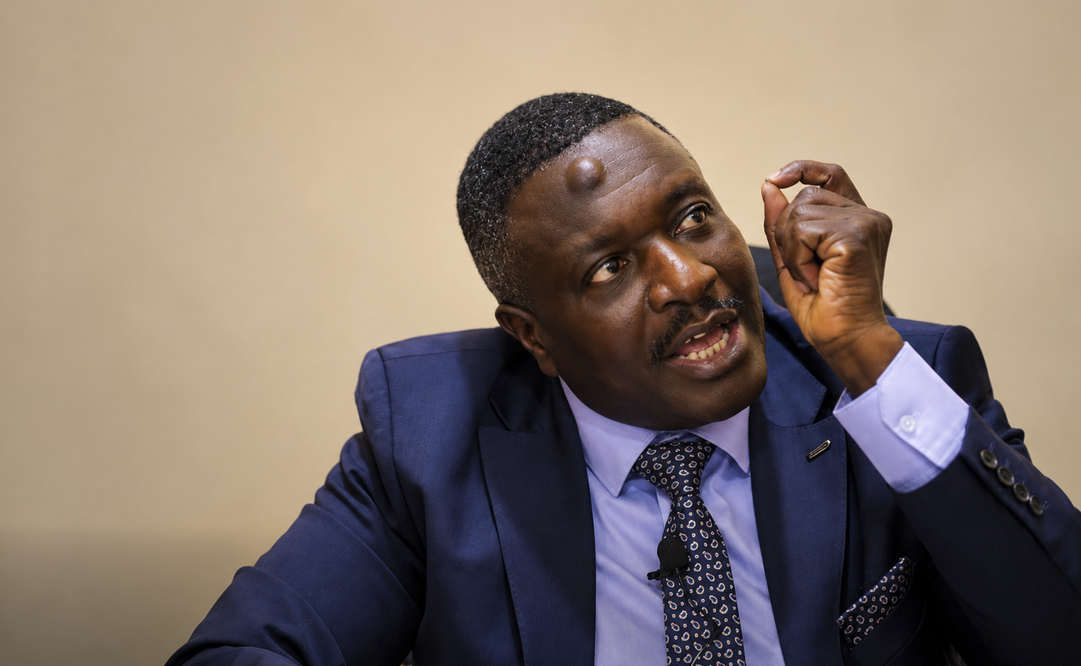
One of Burundi’s best-known anti-corruption campaigners has dismissed the government’s latest offensive against graft as a reworking of earlier efforts. He is calling on the authorities to publish the reforms they say they will carry out.
Faustin Ndikumana, who heads the civil society organisation PARCEM, said on Wednesday that the fight against corruption must rest on laws already in force rather than on new initiatives announced by political leaders. “Burundi has laws. It has a penal code and an anti-corruption law,” he said, speaking in Kirundi. He warned that measures taken outside that legal framework risk being used to punish some people while sparing others.
His comments came five days after President Évariste Ndayishimiye launched the implementation of the national strategy against corruption and economic malpractice on Friday 9 October, at a ceremony at Kiriri palace. A committee responsible for leading the effort was set up the same day, according to Burundian media.
In his speech, the head of state named the embezzlement of public resources, the concealment of revenue, bribery and the failure to meet professional obligations among the practices targeted. Joint committees are to be mobilised down to the level of the collines, Burundi’s most local administrative unit, and a three-month national awareness campaign was announced alongside the launch. Apart from that campaign, the presidency gave no quantified targets or detailed timetable.
The strategy has been in preparation for some time. A validation workshop for the document was held in Gitega in December, organised by the General State Inspectorate with support from the United Nations Development Programme. Ndikumana said civil society groups had taken part in that process and now wanted to see its results in writing. “If the plan is finished, we need a document setting out those reforms,” he said. “We contributed quite a few ideas. We went to Gitega for the meetings.”
His main objection is that Burundi has heard such promises before. He recalled that a “zero tolerance” policy was announced in 2010. In his account, it ended with the suspension of a handful of senior officials, among them the head of SOSUMO, the state sugar company. “It continued from 2011 to 2015, and on to 2020, but it achieved nothing,” he said. He added that the international anti-corruption day is no longer even marked as an occasion to rally citizens.
Ndikumana knows the risks of speaking out on the subject. In 2012 he was arrested after alleging that newly appointed judges had told his organisation they were asked to pay between $1,000 and $1,500 to secure their posts. The Anti-Corruption Court later sentenced him to five years in prison for “false statements” after a complaint from the justice minister. PARCEM was later suspended. Ndayishimiye’s government subsequently lifted that suspension, according to Human Rights Watch.
The specialised bodies that once handled such cases have since been dismantled. In April 2021, the National Assembly adopted a draft organic law transferring the powers of the Special Anti-Corruption Brigade, its prosecutor’s office and the Anti-Corruption Court, which had been created in 2006.
PARCEM argues that the problem is enforcement, and that corruption remains visible in the award of public contracts, in charges collected without receipts and in the misappropriation of public assets. Ndikumana asked the government to give anti-corruption bodies resources comparable to those of the Court of Auditors. He also called for prosecutions the public can see and a law protecting whistleblowers. He said investigations require trained specialists rather than recently qualified magistrates. “We need experts who have studied the field and refined their skills, who are incorruptible and not intimidated,” he said. “Then the courts must do their work.”
Burundi’s standing on international measures has changed little. The country scored 17 out of 100 on Transparency International’s 2025 Corruption Perceptions Index, the same as in 2024, and ranked 167th among the 182 countries and territories assessed.
For Ndikumana, the clearest test of the new plan is whether existing audit findings lead to action. “What have the reports of the state inspectorate changed?” he asked. That inspectorate is the same body that drafted the strategy the president has just launched.