

Putin courts Africa in Moscow as AU chair presses for factories over raw materials
With 48 African delegations in the Russian capital, Moscow promised grain, scholarships and a doubling of trade, while questions over Africans recruited to fight in Ukraine hung over the gathering.

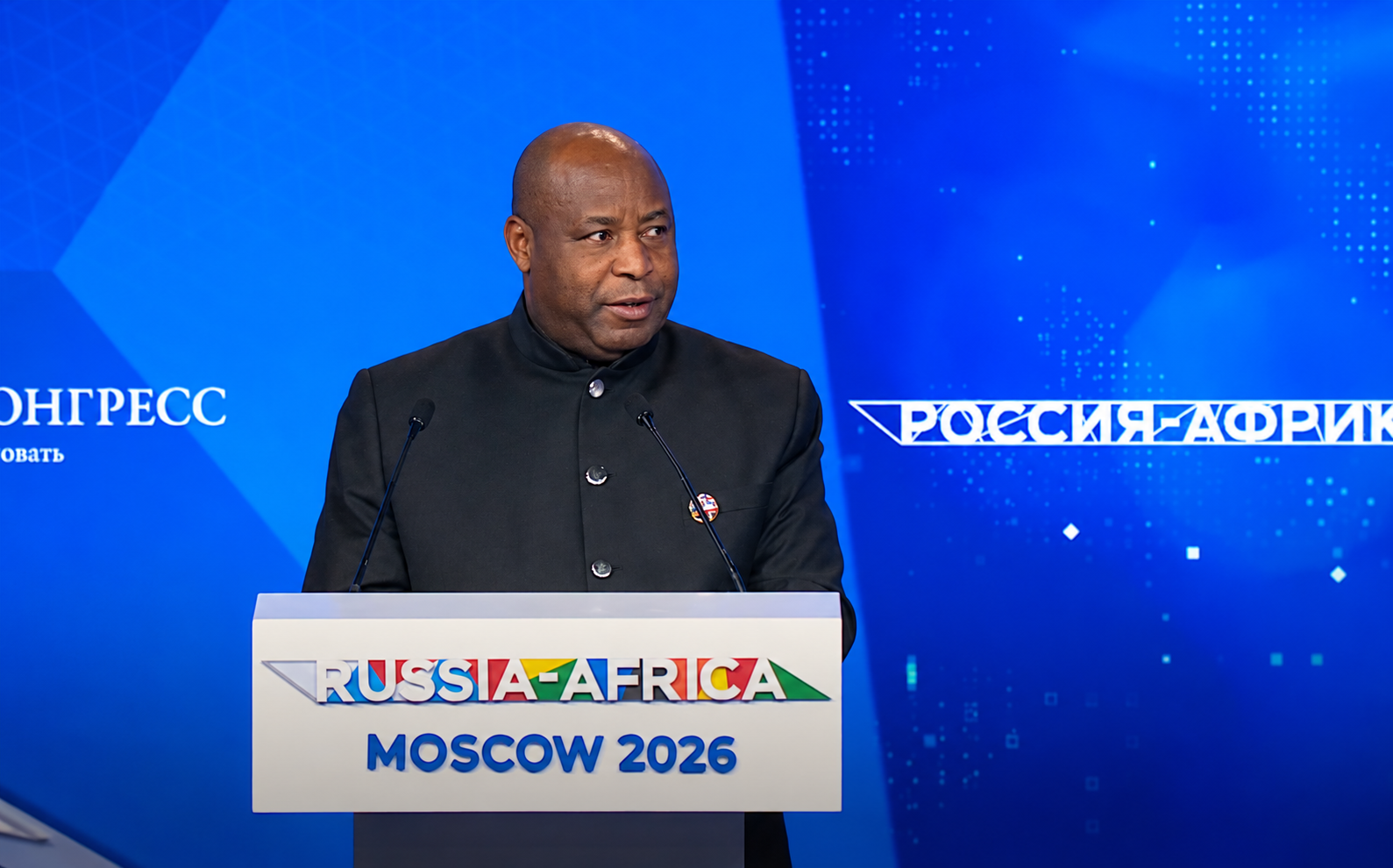
Vladimir Putin opened the third Russia-Africa summit on Wednesday by presenting Russia as Africa’s most reliable partner and accusing Western powers of keeping the continent in debt. Speaking on behalf of the African Union, Burundi’s President Évariste Ndayishimiye welcomed the cooperation but demanded a balanced partnership, insisting that Africa should no longer serve only as an exporter of raw materials.
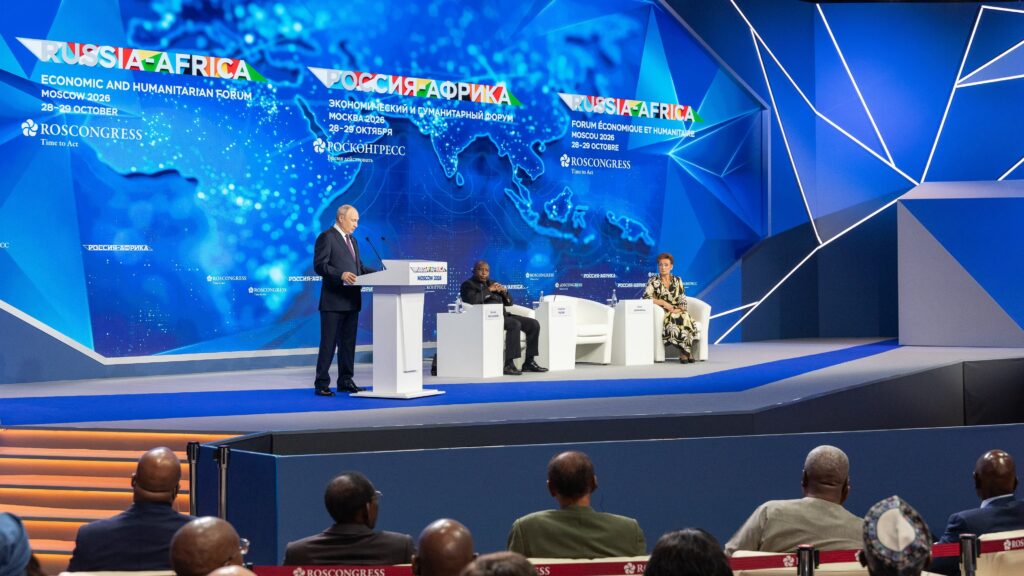
The two men are co-chairing the two-day meeting, the first of the series held in Moscow after Sochi in 2019 and St Petersburg in 2023. According to Kremlin aide Yury Ushakov, 48 of Africa’s 54 countries are taking part, 22 of them at head-of-state level. The Associated Press put the number of leaders at about 20. Either figure exceeds the 2023 turnout, when only 17 leaders travelled to St Petersburg.
For Moscow, the stakes are diplomatic as much as economic. Courting African and other Global South leaders has been central to Russia’s effort to counter Western pressure over its war in Ukraine. Africa’s 54 nations form the largest voting bloc at the United Nations.
Putin framed the summit as evidence of a shifting world order. He said the period in which a narrow group of states decided the fate of whole continents was ending for good. Without naming countries, he spoke of Western attempts to push Africans back into debt bondage and to impose financing on predatory terms, and said Russian business did not practise “predatory, neo-colonial exploitation of natural and human resources.”
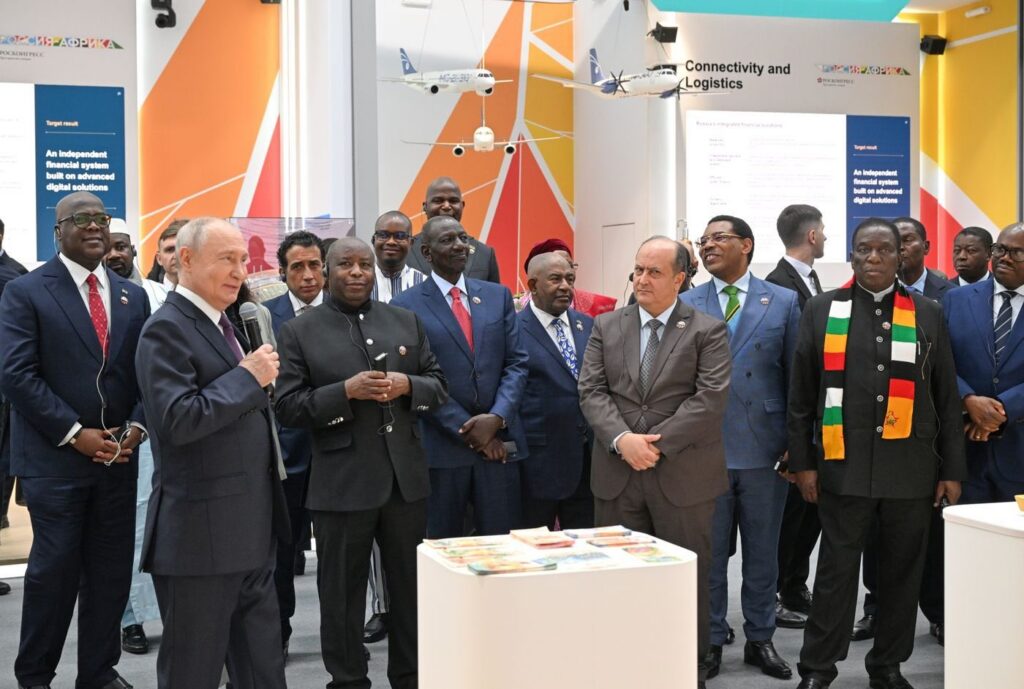
The offer that followed was concrete. Putin said Moscow aims to double trade with the continent to more than $50 billion and proposed payment mechanisms in national currencies, using existing pan-African systems, to reduce reliance on Western financial networks. He said Russia backs a greater African voice at the IMF and World Bank, and that about 40,000 Africans are now studying at Russian universities. The scholarship quota has been raised to 5,500 for the 2026–2027 academic year.
Food remains Moscow’s strongest card. Putin said Russia supplies grain and fertiliser to more than 40 African countries and delivered 13 million tonnes of agricultural products in the first nine months of this year.
The trade figures behind the ambition are more modest than the rhetoric. Foreign ministry spokeswoman Maria Zakharova put Russia-Africa trade at $25 billion in 2025, according to the Senegalese news agency APS. Nikolay Golovko of the Higher School of Economics puts it at $27.1 billion, up from $16.8 billion in 2019, with Russian exports of $22.7 billion against $4.4 billion of African imports. Egypt alone accounts for about a third of that total, largely through wheat purchases.
That imbalance shaped Ndayishimiye’s message. He urged Russian companies to invest directly in local processing, technology transfer and infrastructure, so that value and jobs are created on African soil. Earlier in the visit, the Burundian presidency said he had received an honorary doctorate from Moscow’s Patrice Lumumba Peoples’ Friendship University, where he described youth as Africa’s greatest strategic asset.
Security cooperation is the less advertised side of the relationship. Military governments in the Sahel that broke with Western partners first relied on the Wagner group, since replaced by the Africa Corps under the Russian Defence Ministry. In August, the Africa Corps helped Niger’s junta put down a mutiny in Niamey; estimates of Russian personnel in Niger, Mali and Burkina Faso range from 1,700 to 2,000. Burkina Faso’s Ibrahim Traoré and Niger’s Abdourahamane Tchiani are on the guest list.
The war in Ukraine has also reached African households directly. Amnesty International used the run-up to the summit to publish an open letter urging attending leaders to demand that Moscow end what it calls the deceptive and coercive recruitment of Africans to fight in Ukraine. Kenya’s National Intelligence Service has estimated the number of Kenyan recruits at about 1,000, and South Africa came under public pressure to bring home 17 citizens who sent distress calls from the front line in late 2025. Moscow denies illegal recruitment and maintains that foreigners serve voluntarily under Russian law.
The leaders’ plenary session takes place on Thursday. The Kremlin says the summit is expected to adopt a final declaration, a Russia-Africa Partnership Forum action plan for 2027–2029 and a declaration on civilian uses of artificial intelligence, alongside a substantial package of intergovernmental agreements. Egypt’s President Abdel Fattah al-Sisi, who co-chaired the first summit in 2019, is due to address the plenary and hold bilateral talks with Putin