

Burundi pitches its AI ambitions in Seoul as most of the country remains offline
Finance minister Alain Ndikumana told a World Bank summit that digitised public finances and a new national AI strategy are central to Burundi’s growth plans, though only about one Burundian in nine uses the internet.

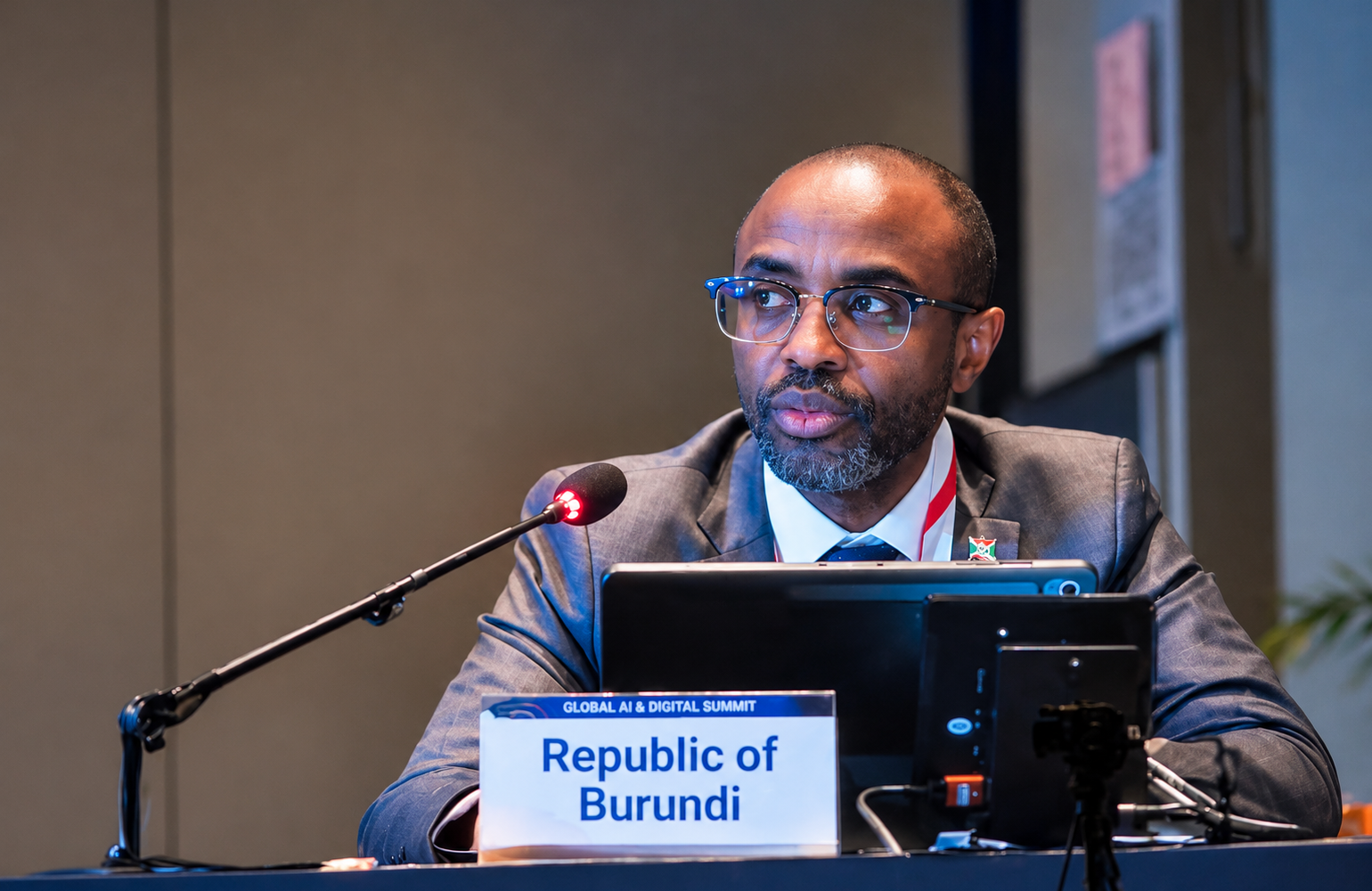
Burundi’s finance minister, Alain Ndikumana, presented his government’s plans for artificial intelligence and digital public services to a World Bank gathering in Seoul this week. He described technology as an engine of growth for one of the least connected economies in the world.
The Global AI and Digital Summit runs from October 19 to 22 at the Grand Hyatt in Seoul. It is hosted by the World Bank Group with South Korea’s Ministry of Science and ICT and its Ministry of Finance and Economy. The organisers have framed it around employment, noting that 1.2 billion young people in developing countries will enter the workforce over the next 10 to 15 years. They have also given particular weight to “small AI”: tools adapted to local languages and to places where internet connections remain weak.
Ndikumana’s portfolio covers finance, the budget and the digital economy. According to an account released by his ministry, he cited progress in digitising public financial management, widening financial inclusion and strengthening digital governance. He argued that AI could speed Burundi’s economic transformation, reinforce its “digital sovereignty” and create opportunities for young people. The full text of the speech has not been published.
Those ambitions start from a low base. DataReportal estimates that about 1.60 million people in Burundi were using the internet at the end of 2025, a penetration rate of 11.1 percent. The national telecoms regulator has reported higher figures: it put internet penetration at 23.36 percent in the second quarter of 2024. Gaps of this size between subscription counts and estimates of actual users are common. International rankings put the country near the bottom. The ITU’s 2024 ICT Development Index ranked Burundi 46th of 47 African countries, with a score of 24.4 out of 100. The UN’s e-government index gave it 0.2480 out of 1, against a world average of 0.6382.
The government’s main policy instrument is a national AI strategy, validated in Bujumbura on April 22 and developed by Ndikumana’s ministry with support from the UN Development Programme. It provides for modernised data centres, sectoral hubs, a sovereign cloud, wider telecoms networks and university courses adapted to AI. The government also intends to train more than 1,000 public officials and launch about fifteen pilot projects, notably in health and agriculture. It also creates a National AI Commission and a Centre for Strategic Intelligence.
Most of the money for the underlying infrastructure comes from the World Bank. The Digital Foundations Project, known by its French acronym PAFEN, is described as a $92 million initiative to modernise public services and expand high-speed internet. An additional tranche linked to the minister’s claims about public finance adds the aim of managing public resources more effectively.
The rural network contracts are where the plans become concrete. In March, the operator Lumitel signed a $10 million agreement with PAFEN, with the World Bank providing $4.37 million and Lumitel investing $5.62 million of its own funds. A separate $5.9 million contract with the state operator Onatel is intended to bring service to 92 communities that currently have no 2G or 3G network, benefiting 372,035 rural residents. Ndikumana said at the time that the aim was “ensuring that digital transformation becomes a tangible reality throughout the country”.
Seoul is the minister’s second visit to South Korea in six weeks. In September he represented Burundi at the 8th Korea-Africa Economic Cooperation ministerial conference, where he called for infrastructure that is solid, secure and interoperable, and pressed for relations with Korea to focus on concrete projects, skills transfer and private investment. At that meeting Seoul announced a “K-AI Package” combining AI solutions, data centres and energy infrastructure, along with plans for a Korea-Africa AI hub with the African Development Bank. In July, in Geneva, Ndikumana had argued that AI must first serve citizens’ needs.
Burundi is one of several African governments using the summit to court partners. Togo’s digital transformation minister, Cina Lawson, attended the opening on Monday.
Neither the ministry’s account nor the summit materials published so far mention new financing for Burundi. The AI strategy has yet to move from a national framework to its first applications, and the World Bank’s public finance tranche of PAFEN is scheduled to close on August 30, 2028.