

Burundi signs $1.4bn grid deal with Anzana to lift power access from 12% to 70%
The 25-year concession gives Weza Power, Anzana’s local unit, the task of building or upgrading 52,000km of distribution lines while the state utility Regideso keeps the national backbone.

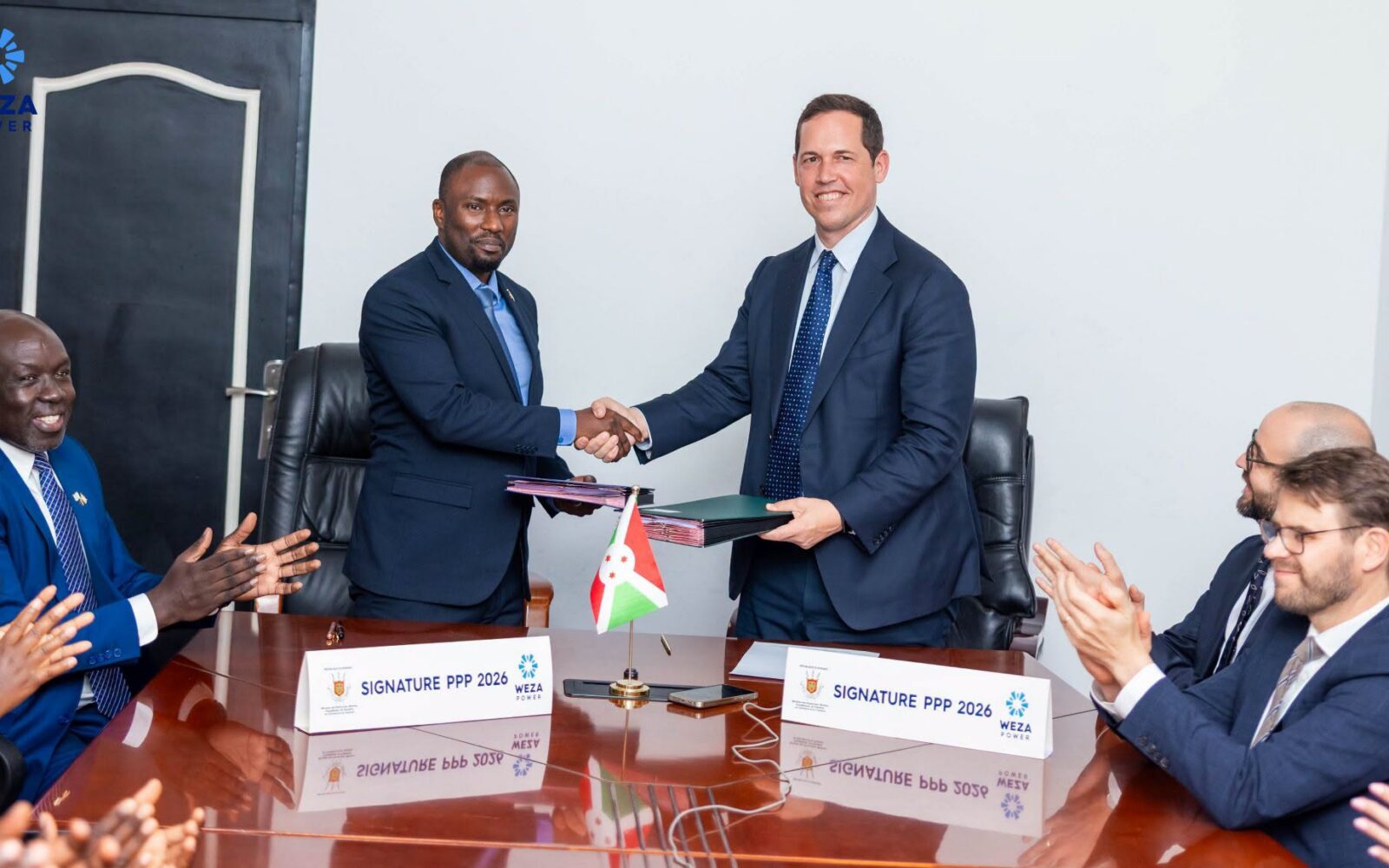
Burundi has signed a $1.4 billion, 25-year public-private partnership with Anzana Electric Group to modernise and expand the country’s electricity distribution network. Washington describes it as the largest investment in the country’s history. The deal aims to raise electrification from a stated baseline of 12 percent to 70 percent over the next several years.
According to Anzana, the agreement was signed on October 15 through Weza Power, its Burundian subsidiary. The US State Department’s Bureau of African Affairs made it public two days later. The concession provides for the construction or upgrade of approximately 52,000 kilometers of distribution lines and more than 1.2 million new household and business connections. Regideso, the state-owned utility, will keep running the national backbone and distributing power in one part of the country. Weza will operate in another. The published statements do not set out where the boundary lies.
The scale of the ambition reflects how far Burundi has to go. The country’s electricity access rate stood at just 11.6% in 2023, according to the World Bank, which placed it #211 out of 215 countries. Access is far lower in the countryside. The World Bank’s guarantee arm put it at just 1.8% in rural areas.
Generation has not been the main constraint. Burundi tripled its electricity capacity in five years, reaching 166.29 MW in 2025, helped by the Jiji-Mulembwe hydropower scheme. The World Bank said that project would supply 235 GWh a year, almost half of the country’s power generation at the time. The weak point is distribution. A 2024 World Bank study found that the Bujumbura network, which carried more than 80 per cent of national demand, was old and short of capacity. It warned that poor networks could stop electricity from new dams reaching consumers, and it listed the replacement of worn cables and the installation of higher-capacity transformers as urgent priorities.
The agreement formalises a plan several years in the making. Weza Power was announced at the Africa Climate Summit in Nairobi as the result of a multi-year development partnership between Virunga Power and the Government of Burundi; Virunga later became Anzana. Its first phase was meant to mobilise a two-year US$60 million investment, giving approximately 300,000 Burundians access to grid electricity. In October 2024, Bloomberg reported that Weza planned to roll out 20,000 kilometers of power lines by 2030, with the goal of reaching 9 million people by the end of the decade.
Multilateral lenders have backed the venture. In December 2024, MIGA, part of the World Bank Group, issued a $10.9 million guarantee to Anzana for its investments in Weza Power, covering the risk of breach of contract for up to three years. A separate World Bank programme, ASCENT Burundi, supports Regideso’s network expansion and is designed to leverage private investment in grid distribution through the private utility Weza Power. Anzana also generates power in the country. It closed a US$35 million long-term debt facility to finance the construction of the 1.65 MW Upper Ruvyironza and 9 MW Upper Mulembwe hydropower plants.
The State Department presented Anzana as an American company. Earlier filings give a more complicated picture. MIGA describes the group as Anzana Electric Group (formerly Virunga Power) of Mauritius, and Gridworks became a controlling shareholder of Anzana in April 2023. Gridworks is an investment platform owned by British International Investment, the UK’s development finance institution. Saturday’s announcement did not address the group’s current ownership.
Washington’s interest goes beyond electrification. The State Department said a modern grid would draw further US private investment and would strengthen U.S. supply chains, naming mining and agro-processing in particular. The statement also said the project would create jobs. Burundi has nickel and rare-earth deposits, and they fit within the broader US effort to secure critical minerals in the region.
Important details remain unclear. Financing relies on a blended structure that combines private capital with concessional funding, but neither party has said how much of the $1.4 billion is already committed and how much has yet to be raised. Earlier plans set 2030 as the date for reaching 70 per cent of the population. The new announcement gives no firm date for that target. Nor has Weza published how many of the 300,000 people promised in its first phase are now connected.