

Burundi marks 65 years since the assassination of Prince Louis Rwagasore
The independence leader was shot dead at 29, less than a month after his party won the 1961 elections, and Belgium’s role in his killing is still being disputed.

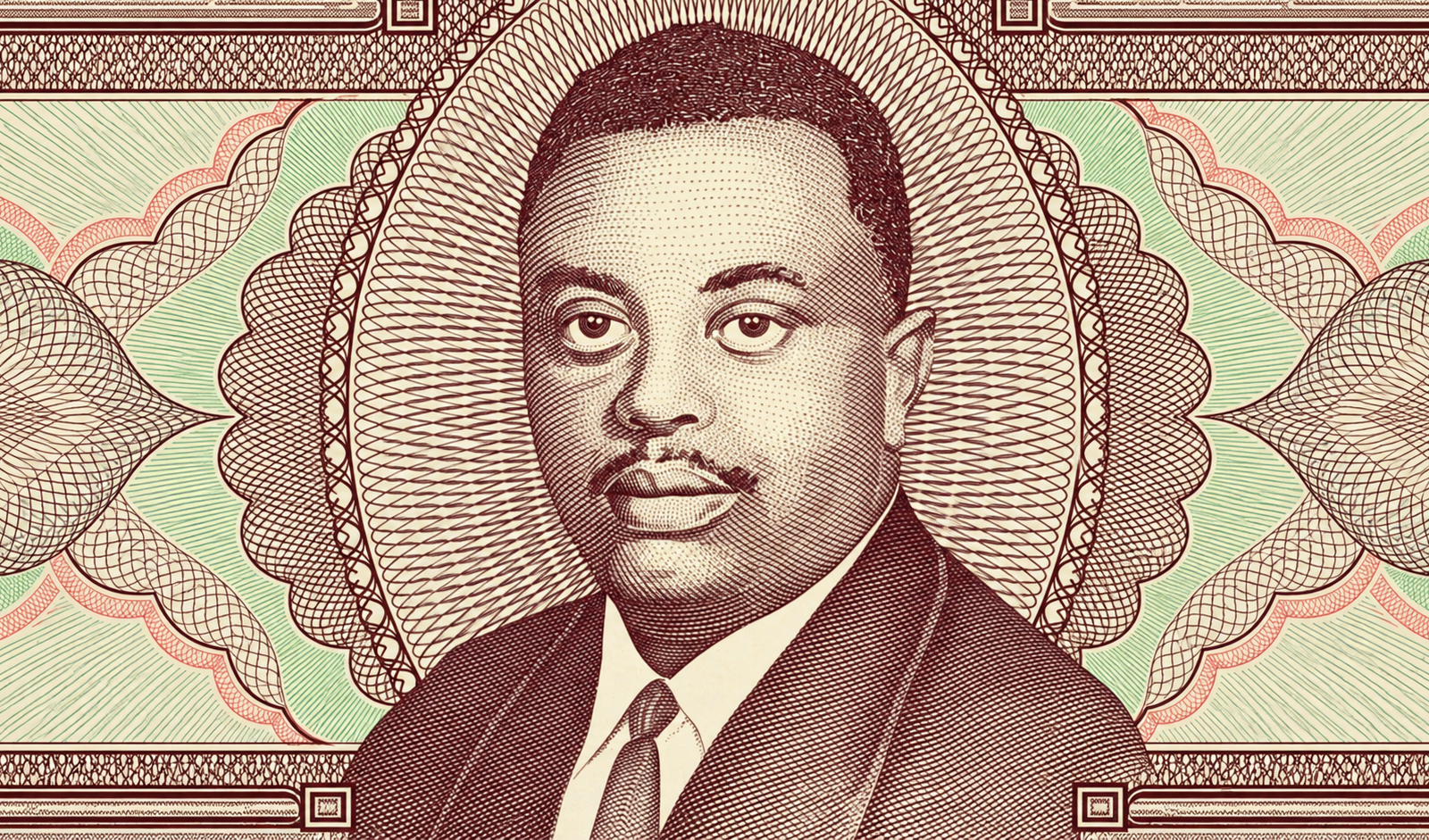
Burundi on Tuesday marked 65 years since the assassination of Prince Louis Rwagasore, the leader of its independence movement. He was killed on 13 October 1961, weeks after being named prime minister. The anniversary is a public holiday, and it is one of the few dates in Burundi’s history that people across its political divides commemorate together.
Rwagasore was killed at 29, nine months before Burundi became independent from Belgium. He had united the main currents of Burundian nationalism into one party and led it to a large election victory. Historians and the Burundian state still argue over who ordered his killing, and the question remains politically sensitive.
He was born on 10 January 1932, the son of Mwami (King) Mwambutsa IV Bangiricenge and Thérèse Kanyonga. Burundian accounts give his birthplace as Gitega, while some English-language biographies place it in Muramvya, the seat of the royal court. According to Burundian tradition, he was born carrying seeds, which was believed to mark a future king. As the eldest son, he was the apparent heir to the throne.
He went to primary school in Bukeye in Muramvya, Kanyinya in Kirundo, and Gitega. He attended secondary school at Astrida, now Huye, in Rwanda, and then university in Belgium. The colonial administration made him chief of Butanyerera, an area covering parts of what are now Ngozi and Kayanza provinces.
His political base came first from economic organising. In June 1957 he founded the Traders’ Cooperatives of Burundi, intended to give Burundians control of their own trade, and gained support among Swahili traders in the capital. He also promoted coffee growing. Colonial officials disliked the cooperatives. Governor Jean-Paul Harroy warned Brussels that detaining or deporting the king’s eldest son could provoke unrest among peasants.
UPRONA, the Union for National Progress, grew from a coalition that Rwagasore assembled. It brought together the Swahili communities of Buyenzi, the elder Barnabé Ntunguka and his party UNARU, and Paul Mirerekano, who was popular in Muramvya. The party was officially recognised on 7 January 1960.
Rwagasore also told Burundians not to pay the colonial head tax. According to Burundian accounts, this was one reason he was detained. He was held under house arrest in Bururi province before the 1960 municipal elections. This kept him from campaigning, and UPRONA lost to the pro-Belgian Christian Democratic Party (PDC). Rwagasore helped prepare complaints to the United Nations asking for the vote to be rerun. With UN supervision, UPRONA won about 80 percent of the vote in the legislative elections of 18 September 1961, and Rwagasore became prime minister.
He held the office for about two weeks. On the evening of 13 October 1961 he was dining at the Hotel Tanganyika in Bujumbura when he was shot with a hunting rifle of the kind used for big game. The gunman was a Greek national, Jean (Ioannis) Kageorgis. Police arrested him within three days, along with three Burundian accomplices linked to the PDC. Belgium executed Kageorgis, and Burundi executed the Burundian accomplices.
Belgium’s responsibility has been argued over ever since. In 2018 the Burundian government accused Belgium for the first time of backing the killing and announced a commission to investigate. In a 2021 book, “Murder in Burundi”, the Flemish sociologist Ludo De Witte used Belgian and British archives to argue that Belgian officials in Burundi organised the assassination while Brussels looked away. Belgium has not formally accepted that conclusion.
The killing also had lasting political consequences. Rwagasore’s lieutenants fought over who would lead UPRONA, and that split was followed by years of instability and ethnic violence.
Successive governments have used his memory for their own purposes. President Jean-Baptiste Bagaza abolished the 13 October holiday after taking power in 1976, and it was restored after the 1987 coup. Rwagasore now has a mausoleum overlooking Bujumbura, and stadiums, schools and roads across the country carry his name. His portrait appears on the 100-franc and 10,000-franc banknotes.